
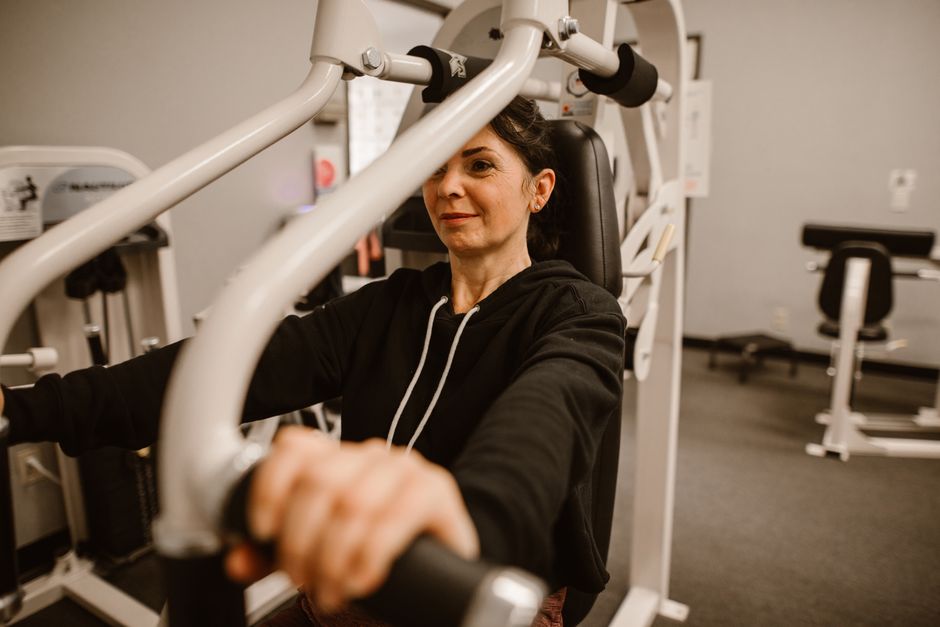
The leg press is a machine-based exercise where you sit and push a weighted platform away from you using your legs. It primarily works the muscles of your lower body, most notably the quadriceps, hamstrings, and glutes. Unlike a squat, the leg press supports your back and spine, allowing you to isolate the pushing power of your legs with less balance required.
What Muscles Does the Leg Press Actually Target?
The leg press is a compound exercise, meaning it moves more than one joint at a time. Your hips and knees both bend and straighten during the movement. This motion requires several major muscle groups to work together to extend your legs and push the weight.
The primary muscles worked are the quadriceps, located on the front of your thigh. These muscles straighten your knee. The gluteus maximus in your buttocks and the hamstrings on the back of your thigh work to extend your hip. These three groups handle the majority of the workload.
Secondary muscles include the calves, which help stabilize the foot, and the inner and outer thigh muscles, which guide the tracking of your knees. Your core muscles also activate to keep your body stable against the backrest, but they do not move the weight.
How Foot Placement Changes the Muscle Focus
Where you place your feet on the platform changes which muscles work hardest. This is the most practical way to shift the emphasis of the exercise without changing the machine.
A high foot placement on the platform increases hip flexion. This places more stretch and demand on the glutes and hamstrings. A low foot placement keeps the knees more involved, shifting more of the work to the quadriceps.
A narrow stance generally emphasizes the outer quadriceps. A wide stance increases recruitment of the inner thigh adductors and the glutes. Your toes should always point in the same direction as your knees to keep the joints aligned safely.
These differences are subtle. The leg press is not a precision tool for isolating one specific head of a muscle. However, adjusting foot height is a reliable way to bias the movement toward either the quads or the posterior chain of the glutes and hamstrings.
Leg Press vs. Squat: What the Evidence Shows
The squat and the leg press are often compared. Both exercises strengthen the same primary muscles, but they are not identical.
Research consistently shows that squats require more balance, core stability, and full-body coordination. Because the barbell rests on your back, your torso muscles must work hard to keep your spine upright. The leg press removes most of this demand because the machine supports your back.
Studies indicate that the leg press allows you to lift heavier loads than a squat because you are not limited by lower back strength or balance. However, the squat produces a higher demand on the trunk muscles and may transfer better to athletic movements like jumping or running.
For general leg strength, both are effective. For someone with lower back pain or balance limitations, the leg press is often the safer and more comfortable option. For an athlete needing to strengthen the entire kinetic chain, the squat is generally considered the superior choice.




Is the Leg Press Safe for Your Knees and Back?
The leg press is widely considered a safe machine-based exercise, but it has specific risks when performed incorrectly. The most common mistake is lowering the platform too far. This causes the lower back to curl off the pad and the pelvis to tuck under. This position places excessive shearing force on the lumbar spine.
Set the safety stops so that your knees cannot pull your hips off the seat. Your lower back should remain flat against the backrest for the entire repetition. If your pelvis lifts, you have gone too deep.
For the knees, the leg press is generally well tolerated. Keeping your feet higher on the platform reduces the degree of knee flexion, which can help people with knee sensitivity. The machine does not allow your knees to track side-to-side like a free-weight lunge might, which adds a measure of stability for beginners.
No exercise is entirely risk-free. The leg press can strain the knee if you lock it out forcefully at the top of the movement. Keep a slight bend in your knees at the top rather than snapping them straight to lock the weight out.
How Heavy Should You Go on the Leg Press?
Because the machine stabilizes your body, your leg press weight will likely be much higher than your squat weight. This is normal. Do not compare the two numbers.
For most people, performing 8 to 12 repetitions per set is a safe range for building muscle. Choose a weight that makes the last two repetitions feel challenging but doable with good form. If you cannot keep your back flat on the pad, the weight is too heavy.
If your goal is pure strength, lower repetitions in the range of 4 to 6 with heavier weight are appropriate. If your goal is muscular endurance, higher repetitions of 15 or more with lighter weight work well. The leg press is versatile enough to accommodate all these training goals.
Always control the weight on the way down. Letting the platform drop quickly and bouncing it off your chest or knees removes tension from the muscles and increases the risk of joint injury. Lower the weight slowly for a count of two to three seconds, then push forcefully back to the start.
Common Leg Press Mistakes to Avoid
Several errors show up frequently in the gym. Correcting these will make the exercise more effective and safer.
- Going too deep: Lowering the platform until your lower back rounds off the pad puts your spine at risk. Stop when your hips stay flat.
- Locking your knees: Forcefully straightening the knees at the top of the movement places stress on the knee joint. Keep a slight bend.
- Lifting your heels: If your heels come off the platform, you are pushing mostly with your toes. Keep your entire foot planted firmly.
- Using momentum: Bouncing the weight or using your hands on your knees to help push defeats the purpose of the exercise.
- Raising your hips: If your butt lifts off the seat, the load transfers to your lower spine. Reduce the range of motion.
Most of these mistakes happen when people load the machine with more weight than they can control. Dropping the weight down by ten to twenty percent and focusing on form will produce better results over time than lifting heavy with poor mechanics.
How to Add the Leg Press to Your Workout
The leg press fits well into any lower body strength routine. It can be performed as a primary exercise or as an accessory movement after squats.
If you squat first in your workout, place the leg press second or third. Your legs will already be fatigued, so you will use lighter weight than if you performed it fresh. If the leg press is your main lower body lift, perform it first when your energy levels are highest.
A typical approach is 3 to 4 sets of the leg press per session. Rest for about two minutes between heavy sets, or one minute for lighter endurance work. Training your legs twice per week with at least one rest day between sessions is a common and effective frequency for most people.
You do not need to do every leg exercise in one day. Choosing two or three quality exercises that cover the quads, hamstrings, and glutes is sufficient. The leg press can be one of those exercises.
Who Should Avoid the Leg Press?
Most healthy adults can perform the leg press safely. However, certain conditions warrant caution or avoidance.
People with uncontrolled high blood pressure should use caution with any heavy lower body exercise. The leg press can cause a significant spike in blood pressure during the pushing phase, particularly if you hold your breath. If you have high blood pressure, talk to your doctor before starting a heavy leg press routine.
People with recent knee or hip surgery should generally avoid the leg press until cleared by their surgeon or physical therapist. The machine allows for heavy loading, which may be too much stress during early healing stages.
People with active lower back injuries may find the leg press more comfortable than squats, but they should still proceed with caution. The compressive force on the spine during heavy pressing is significant. Starting with light weight and short range of motion is the safest approach.
Pregnant women should generally avoid heavy leg pressing, especially in the third trimester. The weight of the platform can compress the abdomen, and the Valsalva maneuver used during heavy lifting may not be safe during pregnancy. Always consult a healthcare provider for exercise guidance during pregnancy.
Frequently Asked Questions
Does the leg press work the glutes?
Yes, the glutes are a primary muscle worked during the leg press. Placing your feet higher on the platform increases glute activation.
Is leg press better than squats?
Neither is universally better. Squats build more core strength and balance, while the leg press is safer for your lower back and easier to learn.
How much weight should I leg press?
Use a weight that allows you to complete 8 to 12 repetitions with good form. Your leg press weight will likely be heavier than your squat weight because the machine supports your back.
Can the leg press hurt your knees?
The leg press is generally safe for knees when performed correctly. Avoid locking your knees at the top and do not lower the platform so far that your hips lift off the seat.
