

Irritable bowel syndrome (IBS) changes how your intestines move food through your body, and those changes show up directly in your stool. IBS poop can look like hard pellets, loose watery stools, or a mix of both, depending on whether you have IBS-C, IBS-D, or IBS-M. The color is usually normal—brown—but the shape, consistency, and mucus content are where the real differences appear.
What Does IBS Poop Look Like in Terms of Shape?
The shape of your stool is one of the clearest signs of IBS. The Bristol Stool Chart is the standard tool doctors use to classify poop shape, and it runs from Type 1 to Type 7.
Type 1 and Type 2 are hard, lumpy, or sausage-shaped but difficult to pass. These are common in IBS-C. The stool spends too much time in the colon, and water gets pulled out, leaving it dry and cracked.
Type 5, 6, and 7 are soft blobs, mushy fragments, or entirely liquid. These appear in IBS-D. The stool moves through the colon too quickly, so the body does not absorb enough water back out of it.
People with IBS-M, the mixed type, alternate between these shapes. You might pass hard pellets one day and urgent watery stool the next. This variation is a hallmark of IBS and one reason the condition is so disruptive to daily life.
Normal stool is Type 3 or Type 4—smooth, soft, and sausage-shaped. If your stool consistently falls outside those types, IBS or another digestive condition could be at play.
What Color Is IBS Poop?
IBS does not typically change stool color. Brown is normal because bile from the liver breaks down fats and gives stool its characteristic color. If your stool is brown—even if the shape or consistency is off—color alone is not a red flag for IBS.
Some colors do warrant attention. Black or tarry stool can indicate bleeding in the upper digestive tract. Bright red blood on or in the stool suggests bleeding in the lower tract, such as from hemorrhoids or fissures. Pale, clay-colored, or gray stool can point to a bile duct or liver problem.
Green stool is usually harmless. It often happens when food moves through the colon too quickly—which is exactly what happens in IBS-D—so bile does not have time to fully break down. Green is not a sign of IBS specifically, but it fits the picture of rapid transit.
If you see black, bright red, or pale stool, do not assume it is IBS. Talk to a doctor promptly. IBS does not cause gastrointestinal bleeding, and these colors need a proper workup.
Why Is There Mucus in IBS Poop?
Mucus in stool is one of the more unsettling IBS symptoms, but it is well documented. The intestines naturally produce mucus to lubricate the lining and help stool pass smoothly. In IBS, some research indicates that the gut produces more mucus than usual, and it becomes visible in or around the stool.
The mucus in IBS poop is typically white or clear. It may coat the outside of the stool, appear as streaks, or mix into the stool itself. Some people notice it only when wiping.
Passing some mucus with IBS is not dangerous. It does not mean you have an infection or inflammatory bowel disease. However, large amounts of mucus, especially with blood, should be evaluated. Conditions like ulcerative colitis and Crohn’s disease can also cause mucus, so persistent or heavy mucus deserves medical attention.
If you see mucus with blood, fever, or severe abdominal pain, seek care. Those symptoms go beyond typical IBS and need a proper diagnosis.

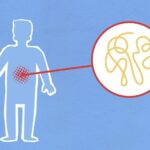



What Are the Main Types of IBS and How Do They Affect Poop?
IBS is divided into subtypes based on your dominant stool pattern. Knowing your subtype helps you understand what is normal for you and guides treatment.
IBS-C (constipation-predominant) means more than a quarter of your stools are hard or lumpy, and less than a quarter are loose or watery. Stool is often Type 1 or Type 2. You may strain, feel incomplete evacuation, and go days without a bowel movement.
IBS-D (diarrhea-predominant) means more than a quarter of your stools are loose or watery, and less than a quarter are hard. Stool is often Type 6 or Type 7. Urgency is common, and you may need to rush to the bathroom shortly after eating.
IBS-M (mixed) means both hard and loose stools occur, each in more than a quarter of your bowel movements. The unpredictable alternation is often the most frustrating part of this subtype.
Your subtype can shift over time. Someone with IBS-C may develop IBS-D after a few years, and vice versa. The diagnosis is based on your current pattern, not a permanent label.
How Can You Tell IBS Poop Apart from Other Conditions?
IBS shares symptoms with several other digestive conditions, and stool appearance alone is not enough to diagnose it. The key differences lie in what else is happening.
Inflammatory bowel disease (IBD)—which includes Crohn’s and ulcerative colitis—can cause diarrhea, mucus, and abdominal pain. But IBD also causes inflammation visible on colonoscopy, and it often involves blood in the stool, weight loss, and fever. IBS does not cause visible blood or inflammation.
Celiac disease can cause loose stool, bloating, and fatigue. It is triggered by gluten and diagnosed with blood tests and intestinal biopsy. IBS is a diagnosis of exclusion, meaning doctors rule out conditions like celiac first.
Colon cancer can change bowel habits, but it typically appears in older adults and may come with blood, unexplained weight loss, or a change in stool caliber that persists. Any new bowel changes after age 50 deserve a prompt evaluation.
No stool test can diagnose IBS. Doctors use the Rome IV criteria, which focus on recurrent abdominal pain linked to changes in stool frequency or form. If you have these symptoms for at least three months, with onset at least six months prior, IBS is a possibility.
When Should You See a Doctor About Your Poop?
IBS is a real condition, but it is not the only explanation for abnormal stool. Some warning signs require immediate medical attention.
See a doctor if you notice blood in your stool, black or tarry stool, unexplained weight loss, fever, or severe pain that wakes you at night. These symptoms are not typical of IBS and may indicate a more serious condition.
Also seek care if your bowel habits change suddenly after age 50, if you have a family history of colon cancer, or if your symptoms have been present for more than a few weeks. New or worsening symptoms deserve a workup even if you already have an IBS diagnosis.
Most people with IBS do not develop serious complications. The condition affects quality of life but does not damage the intestinal lining or raise the risk of colon cancer. Still, a proper diagnosis is essential because the symptoms overlap with conditions that do carry risk.
Frequently Asked Questions
Can IBS cause yellow poop?
Yes, IBS-D can produce yellow stool because food moves through the colon too quickly for bile to fully break down. Yellow stool can also indicate a gallbladder or liver issue, so persistent yellow stool without diarrhea should be evaluated.
Is mucus in stool always a sign of IBS?
No. Mucus in stool can appear with IBS, but it also occurs with infections, inflammatory bowel disease, and other conditions. If mucus appears with blood, fever, or severe pain, seek medical evaluation.
How often should you poop with IBS?
There is no single normal frequency. Some people with IBS go three times a day, others three times a week. What matters is a change from your own baseline combined with pain or discomfort.
Does IBS poop smell different from normal poop?
IBS stool can smell stronger because rapid transit leaves less time for digestion and absorption. The smell itself is not a diagnostic sign, but very foul stool with oily appearance may suggest a different condition like malabsorption.
