
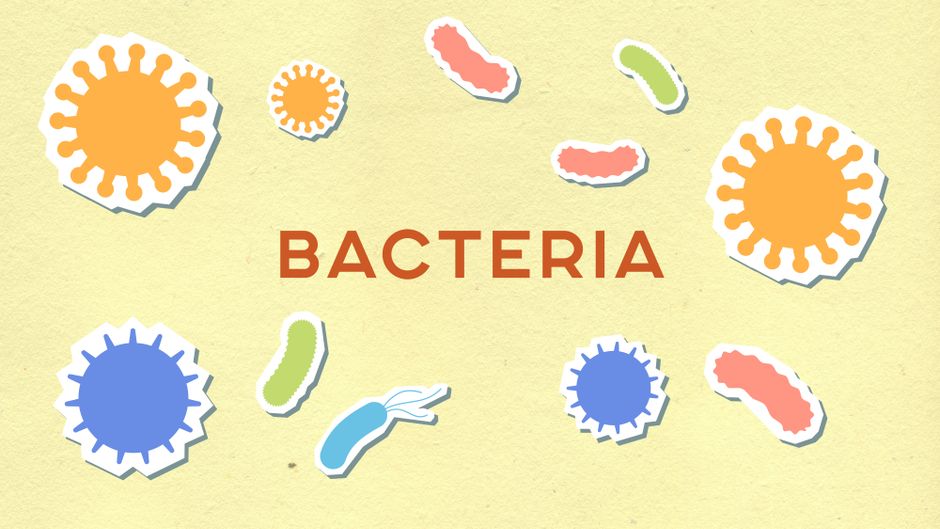
A prokaryotic cell has no nucleus and no membrane-bound organelles. Its key structures are the cell wall, cell membrane, cytoplasm, ribosomes, a single circular chromosome, and in many species, a capsule, flagella, pili, and small rings of DNA called plasmids. These structures handle everything the cell needs to survive, grow, and divide.
Prokaryotes are the oldest and most abundant forms of life on Earth. Bacteria and archaea belong to this group. They are single-celled organisms that carry out all the processes of life without the internal compartments found in plant, animal, and fungal cells.
What Are the Main Parts of a Prokaryotic Cell?
Every prokaryotic cell shares a core set of structures. Each one performs a specific job.
- Cell wall — a rigid outer layer that gives the cell its shape and protects it from bursting. In bacteria, the wall contains peptidoglycan, a mesh-like molecule made of sugars and amino acids.
- Cell membrane — a thin layer just inside the wall that controls what enters and leaves the cell.
- Cytoplasm — the gel-like fluid filling the cell, where chemical reactions take place.
- Ribosomes — tiny structures that build proteins by reading instructions from RNA.
- Chromosome — a single circular loop of DNA containing most of the cell’s genetic instructions.
- Plasmids — small circular DNA molecules separate from the main chromosome. They often carry genes for antibiotic resistance or other useful traits.
Many prokaryotes also have a capsule, flagella, or pili. Not every species has all three. The core structures listed above are what define the group.
One detail worth knowing: the cell wall of bacteria and the cell wall of archaea are chemically different. Archaeal walls lack peptidoglycan. This difference matters because many antibiotics target peptidoglycan, which is why they work against bacteria but not archaea.
How Is a Prokaryotic Cell Different From a Eukaryotic Cell?
The biggest difference is the nucleus. Eukaryotic cells — found in plants, animals, and fungi — keep their DNA inside a membrane-bound nucleus. Prokaryotic cells do not. Their DNA sits free in the cytoplasm.
Eukaryotic cells also contain membrane-bound organelles such as mitochondria, the endoplasmic reticulum, and the Golgi apparatus. Prokaryotic cells have none of these. They rely on the cell membrane and cytoplasm to carry out the same jobs.
Size is another clear difference. Prokaryotic cells are generally much smaller than eukaryotic cells. Their small size gives them a high surface-area-to-volume ratio, which helps them absorb nutrients quickly.
| Feature | Prokaryotic Cell | Eukaryotic Cell |
|---|---|---|
| Nucleus | Absent | Present |
| DNA form | Single circular chromosome | Multiple linear chromosomes |
| Membrane-bound organelles | Absent | Present |
| Ribosomes | Present (smaller) | Present (larger) |
| Typical size | Roughly 0.1–5 micrometers | Roughly 10–100 micrometers |
| Cell wall | Usually present | Present in plants and fungi, absent in animals |
These size ranges are general. Some exceptions exist on both sides, but the overall pattern holds across most species.
What Does the Cell Wall Do in a Prokaryotic Cell?
The cell wall gives the cell structural support and protects it from changes in its surroundings. Without a wall, a bacterial cell placed in a dilute solution could take in too much water and burst.
In bacteria, the wall is built from peptidoglycan. This mesh surrounds the entire cell and holds it together. The thickness and exact makeup of the wall vary between bacterial groups. Gram-positive bacteria have a thick peptidoglycan layer. Gram-negative bacteria have a thinner layer plus an additional outer membrane.
This structural difference is not just academic. It affects how bacteria respond to certain antibiotics and how they interact with the human immune system. The Gram stain test, developed in the 1880s, still helps clinicians sort bacteria into these two groups today.




What Role Do Ribosomes Play in Prokaryotic Cells?
Ribosomes build proteins. They read the genetic instructions carried by messenger RNA and assemble amino acids into chains. Without ribosomes, a cell could not make the enzymes and structural proteins it needs to function.
Prokaryotic ribosomes are smaller than eukaryotic ones. Bacterial ribosomes are classified as 70S, while eukaryotic ribosomes are 80S. The “S” stands for Svedberg units, a measure of how fast particles settle in a centrifuge.
This size difference has real medical importance. Many antibiotics work by binding to bacterial ribosomes and blocking protein production. Because human ribosomes are structurally different, these drugs can stop bacterial growth without shutting down protein production in human cells. That is the basis for how antibiotics like tetracyclines and macrolides work.
It is worth noting that antibiotics do not work on viruses, which have no ribosomes at all. This is one reason antibiotics are not prescribed for viral infections.
What Are Plasmids and Why Do They Matter?
Plasmids are small, circular DNA molecules that exist separately from the main chromosome. They replicate on their own and can be passed between bacteria.
Plasmids often carry genes that give the cell an advantage in specific situations. Some carry genes for antibiotic resistance. Others carry genes that help the cell use unusual nutrients or survive in harsh conditions.
The transfer of plasmids between bacteria is one way antibiotic resistance spreads. A bacterium that carries a resistance plasmid can pass it to another bacterium, even one of a different species. This process is called conjugation, and it happens through a physical connection between two cells.
Plasmids are also important tools in biotechnology. Scientists use them to insert genes into bacteria so the bacteria produce useful proteins, such as insulin. This has been standard practice in medicine for decades.
How Do Prokaryotic Cells Move and Attach?
Many prokaryotes use flagella for movement. A flagellum is a long, whip-like structure that rotates like a propeller. The cell can swim toward nutrients or away from harmful substances.
Pili are shorter, hair-like structures on the cell surface. They help the cell attach to surfaces, including the cells of a host organism. Some pili are also involved in conjugation, the transfer of DNA between cells.
Not all prokaryotes have flagella or pili. Some rely on other methods of movement or stay in one place. The presence or absence of these structures varies widely across species.
Some bacteria also form a capsule — a thick outer layer made of polysaccharides or proteins. The capsule helps the cell stick to surfaces and can protect it from being engulfed by immune cells. Capsules are one reason some bacteria cause disease more easily than others.
How Do Prokaryotic Cells Reproduce?
Prokaryotes reproduce by binary fission. The cell copies its chromosome, then splits into two identical daughter cells. This is simpler than the mitosis used by eukaryotic cells.
Binary fission is fast. Under ideal conditions, some bacteria can divide every 20 minutes. In practice, conditions are rarely ideal, so growth slows. Still, this speed explains how bacterial populations can grow so quickly.
Prokaryotes can also exchange genetic material through three processes: transformation, conjugation, and transduction. Transformation is when a cell takes up DNA from its surroundings. Conjugation is direct transfer through a pilus. Transduction is when a virus carries DNA from one bacterium to another. These processes increase genetic diversity without sexual reproduction.
Why Do These Structures Matter for Human Health?
Many antibiotics target structures unique to prokaryotic cells. Penicillin and related drugs disrupt cell wall construction. Tetracyclines and macrolides block bacterial ribosomes. Because human cells lack these structures, the drugs can harm bacteria while leaving human cells largely unaffected.
This selectivity is the basis of antibiotic safety. It also explains why antibiotics do not treat viral infections, fungal infections, or parasites. Those organisms have different structures.
Understanding prokaryotic cell structure also helps explain how bacteria develop resistance. When a bacterium acquires a plasmid carrying a resistance gene, the drug may no longer be able to bind its target. This is why antibiotic resistance is a growing concern in medicine.
The structures of a prokaryotic cell are not just textbook material. They are the reason some infections can be treated with a pill and others cannot.
Frequently Asked Questions
What structures does a prokaryotic cell have?
A prokaryotic cell has a cell wall, cell membrane, cytoplasm, ribosomes, and a single circular chromosome. Many also have plasmids, flagella, pili, or a capsule.
Does a prokaryotic cell have a nucleus?
No, a prokaryotic cell has no nucleus. Its DNA sits freely in the cytoplasm rather than being enclosed in a membrane.
What is the difference between a prokaryotic and eukaryotic cell?
Prokaryotic cells lack a nucleus and membrane-bound organelles, while eukaryotic cells have both. Prokaryotic cells are also generally much smaller than eukaryotic cells.
Why do antibiotics target prokaryotic cell structures?
Many antibiotics target structures found only in prokaryotic cells, such as the cell wall or bacterial ribosomes. Because human cells lack these structures, the drugs can stop bacteria without harming human cells.
