
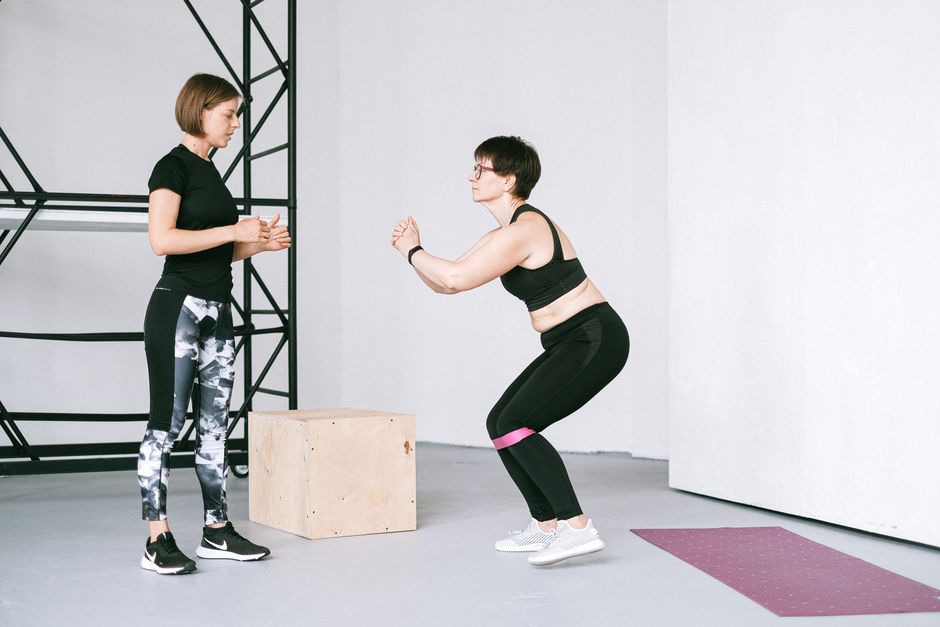
Blood flow restriction (BFR) training uses a cuff or band to partly slow blood flow out of a limb while you exercise. The three things that decide whether it works safely are placement, tightness, and reps. Place the band high on the upper arm or upper thigh. Tighten it to a firm but not painful level — most clinicians use a 7 out of 10 pressure feel, or a device set to about 40 to 80 percent of limb occlusion pressure. Then do a high-rep, low-load set: often 30 reps, rest 30 seconds, then 15 reps, rest 30 seconds, then 15 more.
What Is Blood Flow Restriction Training?
BFR training means exercising a limb while a band or cuff restricts venous return — the flow of blood back toward the heart. Arterial blood still flows in. The band mainly slows what flows out.
That trapped blood creates a low-oxygen environment in the muscle. The muscle responds to that stress even when the weight is light. Research consistently shows that low-load BFR can build muscle and strength in ways that resemble heavier training, though the effect is not identical.
This matters most for people who cannot lift heavy loads. That includes people recovering from surgery, older adults with joint problems, and athletes rehabbing an injury. For a healthy person who can already train heavy, BFR is a tool, not a replacement.
The method was developed in Japan in the 1960s and 1970s and has since spread into physical therapy and sports training worldwide.
How To Use BFR Bands: Placement, Tightness, and Reps
Get one of these three wrong and you either get no benefit or raise your risk of harm. Here is how each piece works.
Placement
Put the band on the limb you are training, above the working muscle and as close to the body as the band allows.
- For the arm: high on the upper arm, near the armpit, above the biceps and triceps.
- For the leg: high on the upper thigh, near the groin crease, above the quadriceps and hamstrings.
Do not place the band over a joint. Do not place it on the forearm or calf. The point is to slow blood leaving the whole limb, so the band sits at the top of the limb, not over the muscle you are working.
For the arms, a narrow cuff is typical. For the legs, a wider cuff is used. Wider cuffs spread pressure over more surface area, so they usually need a lower pressure setting to achieve the same effect. A narrow cuff and a wide cuff set to the same number are not the same stimulus.
Tightness
Tightness is the part people get wrong most often. Too loose and nothing happens. Too tight and you risk nerve compression, bruising, and dizziness.
Two approaches are used in practice:
- Perceived pressure: Tighten to about a 7 out of 10, where 10 is the tightest you could tolerate. It should feel snug and firm, never painful.
- Device-based: A BFR device measures limb occlusion pressure (LOP) and sets the cuff to a percentage of that. Many protocols use roughly 40 to 80 percent of LOP.
LOP is the pressure at which blood flow into the limb is fully blocked. You do not want full occlusion. You want partial restriction. That is why device-guided pressure is more precise than guessing.
Warning signs the band is too tight: numbness, tingling, a cold limb, or a pulse you cannot feel. Loosen it if any of these appear.
Reps
The classic BFR set structure is a high-rep, low-load protocol. A common version looks like this:
- Set 1: 30 repetitions
- Rest: 30 seconds
- Set 2: 15 repetitions
- Rest: 30 seconds
- Set 3: 15 repetitions
You keep the band on during the rest periods. The weight stays light — often 20 to 30 percent of your one-rep max. That is far lighter than standard strength training, which typically uses 70 percent or more of your one-rep max.
You do not need to reach failure. The point is the metabolic stress from the restricted blood flow combined with the high rep count, not maximum muscle effort.
How Tight Should BFR Bands Be?
Firm enough to restrict blood flow out of the limb, loose enough that blood still flows in. That is the target.
A simple field test: tighten the band, then check that you can still feel a pulse below it and that the limb does not go numb or cold. If you can feel a pulse, you are likely in a reasonable range. If the limb tingles or feels icy, you have gone too far.
The “7 out of 10” guideline is widely used because it is practical without a device. It is also imprecise. Two people can rate the same pressure very differently. Devices that measure LOP remove that guesswork, which is why clinics tend to use them.
One clarification worth knowing: the goal is not to cut off blood flow. The name “blood flow restriction” is slightly misleading. What you are doing is restricting venous return while keeping arterial flow mostly intact. Full occlusion is not the aim and is not used in standard BFR protocols.





What Load and Reps Should You Use for BFR?
Keep the load light. This is the whole point of BFR — you get a training stimulus without heavy weight.
Typical loads fall in the range of 20 to 30 percent of your one-rep max. For many people that is a weight they could lift 30 or more times without the band. With the band on, that same light weight becomes challenging by the end of the set.
Rep ranges in published protocols vary. The 30-15-15 structure is common, but you will also see 30-15-15-15 and other variations. What stays consistent is the pattern: one longer set, then shorter sets with brief rests, all at light load.
Rest periods between sets are short — usually around 30 seconds. Longer rests let the metabolic stress fade, which may reduce the effect.
Total work per limb is usually kept to a few sets. BFR is demanding on the tissue, and more is not better.
Is BFR Training Safe?
For healthy adults using appropriate pressure and supervision, BFR has a reasonable safety record in research settings. The most common side effects are mild: bruising, soreness, and temporary numbness.
More serious concerns exist but are uncommon. They include nerve compression from too much pressure, fainting, and in rare cases blood clots. The evidence on clot risk is limited, and it is a genuine area of uncertainty rather than a settled question.
Some people should not use BFR without medical clearance. This includes people with a history of blood clots, severe heart disease, uncontrolled high blood pressure, or sickle cell trait or disease. If you are pregnant, no clinical guidelines currently exist for BFR use, so treat it as a topic to discuss with a clinician first.
BFR is not a do-it-yourself free-for-all. It is best learned from a physical therapist or qualified trainer, especially if you are using it for rehab.
Common Mistakes With BFR Bands
Most problems come from a handful of errors.
- Placing the band over a joint or on the forearm or calf instead of high on the limb.
- Cranking the band as tight as it will go. Full occlusion is not the goal.
- Using heavy weight. BFR is designed for light loads.
- Taking long rests between sets. Short rests are part of the protocol.
- Leaving the band on far longer than the session requires. Remove it when the sets are done.
- Using it without knowing your health risks.
The single most common mistake is tightness. People assume tighter equals better. It does not. Once you pass the point of useful restriction, you add risk without adding benefit.
Does BFR Training Actually Build Muscle?
Yes, within limits. Studies have found that low-load BFR training can increase muscle size and strength, particularly when compared with low-load training without the band.
What the evidence does not show is that BFR beats heavy traditional training for building maximum strength in healthy, able-bodied people. Heavy lifting remains the strongest stimulus for raw strength. BFR’s real value is as a substitute when heavy loading is not possible or not advisable.
For someone recovering from knee surgery who cannot load the joint heavily, BFR can help limit muscle loss during that period. For an older adult who cannot tolerate heavy weights, it offers a way to train muscle with less joint stress. That is where the method earns its place.
It is not a shortcut that replaces hard training for someone who can already train hard.
Frequently Asked Questions
Where exactly do you place BFR bands?
Place the band high on the limb, above the muscle you are working and close to the body — near the armpit for arms and near the groin for legs. Never place it over a joint or on the forearm or calf.
How tight should BFR bands be?
Tighten to a firm but not painful level, roughly a 7 out of 10, or about 40 to 80 percent of limb occlusion pressure with a device. You should still feel a pulse below the band, and the limb should not go numb or cold.
How many reps should you do with BFR bands?
A common protocol is 30 reps, rest 30 seconds, then 15 reps, rest 30 seconds, then 15 more, all at a light load. The band stays on during the short rests.
Can you use BFR bands at home safely?
Some people do, but the evidence supports supervised use more strongly, and pressure is hard to judge without a device. If you have any clot history, heart disease, or uncontrolled blood pressure, get medical clearance first.
