
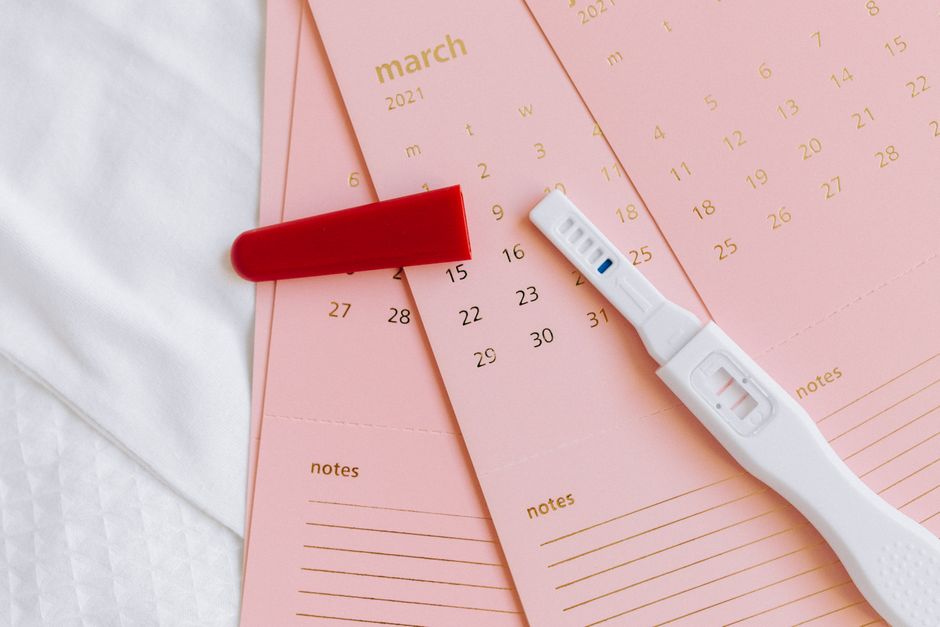
A positive ovulation test means your body is releasing a surge of luteinizing hormone (LH), the signal that triggers the release of an egg. Ovulation usually follows within about 24 to 36 hours of that surge. The test does not confirm that you ovulated — it detects the hormone that tells your ovary to do so.
How Ovulation Tests Actually Work
Ovulation predictor kits measure LH in your urine. LH is a hormone made by the pituitary gland. In the first half of your cycle, it circulates at low levels. Near the middle of the cycle, it spikes sharply. That spike is what the test strip detects.
Most kits use a threshold — often around 25 to 40 milli-international units per milliliter (mIU/mL) — above which the test reads positive. When the line on your test is as dark as or darker than the control line, the LH level has crossed that threshold.
Here is the part many people miss: the test is detecting a hormone signal, not an egg. A positive result tells you the surge is happening. It does not tell you that an egg has been released, that a tube is open, or that the egg is healthy. Those are separate questions.
The LH surge and ovulation are tightly linked in most cycles, but the timing varies from person to person and even from cycle to cycle in the same person.
What Does A Positive Ovulation Test Mean for Timing?
Ovulation typically happens 24 to 36 hours after the LH surge begins. This is why many clinicians suggest that the two days after a first positive test are the most fertile window for trying to conceive.
Sperm can survive in the reproductive tract for several days. The egg, once released, lives for roughly 12 to 24 hours. That short window is why timing matters. Intercourse on the day of the first positive test and the following day covers the most likely ovulation window for most couples.
Some kits detect a “peak” reading with a digital display. A peak usually means the LH level is at its highest, which often means ovulation is closer — sometimes within 12 to 24 hours. But peak readings are not standardized across brands, so the timing guidance is approximate, not exact.
Does a Positive Test Guarantee Ovulation?
No. A positive ovulation test confirms an LH surge, not ovulation itself. This is one of the most important distinctions in fertility tracking.
In a small number of cycles, the body produces an LH surge but the egg is not released. This is sometimes called a luteinized unruptured follicle. The follicle matures and produces hormones, but the egg stays inside. The cycle may look normal on a test strip and even produce a rise in progesterone afterward, but no egg was released.
Certain conditions make this more likely. Polycystic ovary syndrome (PCOS) is a common example. In PCOS, LH levels can be elevated at baseline, which can cause frequent or confusing positive tests without reliable ovulation. Some research suggests that women with PCOS may need additional monitoring — such as ultrasound or progesterone testing — to confirm ovulation, because urine LH tests alone can be misleading in this group.
If you are tracking for medical reasons or have a known ovulatory disorder, a positive test should be interpreted with your clinician rather than on its own.





Why You Can Get Multiple Positive Tests in a Row
Seeing two or three positive tests in a row is common and usually not a problem. The LH surge is not a single spike — it rises, plateaus, and falls over roughly 24 to 48 hours. If you test once a day, you may catch the surge on more than one day.
The first positive test is the one that matters for timing. That is the point at which the surge has begun. Later positives in the same cycle do not reset the clock.
There is one situation where repeated positives need a closer look. If tests stay positive for many days — longer than a typical surge — or if you get positive results at random points throughout your cycle, that can point to a persistently elevated baseline LH. PCOS, perimenopause, and some medications can cause this pattern. In that case, the tests are not giving you reliable ovulation information, and a different tracking method may be more useful.
What a Positive Test Does Not Tell You
A positive ovulation test gives you one piece of information: LH is surging. It does not tell you:
- Whether an egg was actually released
- Whether your fallopian tubes are open
- Whether the egg quality is good
- Whether your uterine lining is ready for implantation
- Whether your progesterone will rise normally after ovulation
This matters because many people assume a positive test means “everything is working.” It does not. Fertility depends on multiple steps, and ovulation is only one of them. If you have been tracking with positive tests for several months without conceiving, that is a reason to talk to a clinician — not a reason to keep testing harder.
When to Test and How to Read the Results
Timing your tests correctly makes a real difference. LH surges usually happen in the morning and can take a few hours to show up in urine. Testing in the afternoon or early evening may catch the surge sooner than testing first thing in the morning for some people, though this varies.
Here is a general approach that many clinicians suggest:
- Start testing a few days before you expect to ovulate based on your typical cycle length
- Test at roughly the same time each day
- Reduce fluid intake for about two hours before testing, since diluted urine can lower LH readings
- Follow your kit’s instructions — thresholds differ between brands
If your cycles are irregular, predicting when to start testing is harder. Some apps and clinicians suggest starting earlier and testing until you get a positive, or using a different method entirely.
Positive Test With No Period — What It Can Mean
A positive ovulation test is not a pregnancy test. They measure different hormones. LH and hCG (the pregnancy hormone) are structurally similar, though, and at high concentrations, an ovulation test can sometimes cross-react with hCG. This is not reliable and should never be used to confirm pregnancy.
If you have a positive ovulation test and then miss a period, take a pregnancy test. If it is negative and your period still does not come, that is worth discussing with a clinician. A missed period with no pregnancy can have many causes — stress, thyroid changes, weight changes, perimenopause, and others — and none of them are diagnosed by an ovulation test.
How Ovulation Tests Compare to Other Tracking Methods
No single at-home method confirms ovulation on its own. Each gives you a different piece of the picture.
| Method | What It Detects | Limitation |
|---|---|---|
| Urine LH test | LH surge (predicts ovulation) | Does not confirm egg release |
| Basal body temperature | Progesterone rise (confirms ovulation happened) | Only shows it after the fact; affected by sleep, illness, alcohol |
| Progesterone blood test | Confirms ovulation occurred | Requires a clinic visit; timed to mid-luteal phase |
| Ultrasound | Follicle growth and collapse | Requires a clinic; used mainly in fertility treatment |
Used together, an LH test and a basal body temperature chart can give a more complete picture than either alone. The LH test predicts; the temperature shift confirms. Neither is perfect.
The Bottom Line on a Positive Result
A positive ovulation test means your LH is surging and ovulation is likely within a day or so. For most people trying to conceive, that is useful, actionable information. It narrows the window when pregnancy is most possible.
What it does not do is prove that ovulation happened or that your fertility is otherwise normal. If you have irregular cycles, PCOS, or have been trying for several months without success, a positive test is a starting point for a conversation with a clinician — not a finish line.
Frequently Asked Questions
How soon after a positive ovulation test do you ovulate?
Ovulation usually occurs about 24 to 36 hours after the LH surge begins. The first positive test marks the start of that window.
Can you get a positive ovulation test and not ovulate?
Yes. A positive test confirms an LH surge, not the release of an egg. In some cycles, especially with conditions like PCOS, the surge happens without ovulation.
How many days after a positive ovulation test should you try to conceive?
The day of the first positive test and the following one to two days cover the most likely fertile window for most couples. Sperm can survive several days, while the egg lives roughly 12 to 24 hours.
Does a positive ovulation test mean you are pregnant?
No. Ovulation tests measure LH, not the pregnancy hormone hCG. A positive result only indicates that ovulation is likely approaching.
