
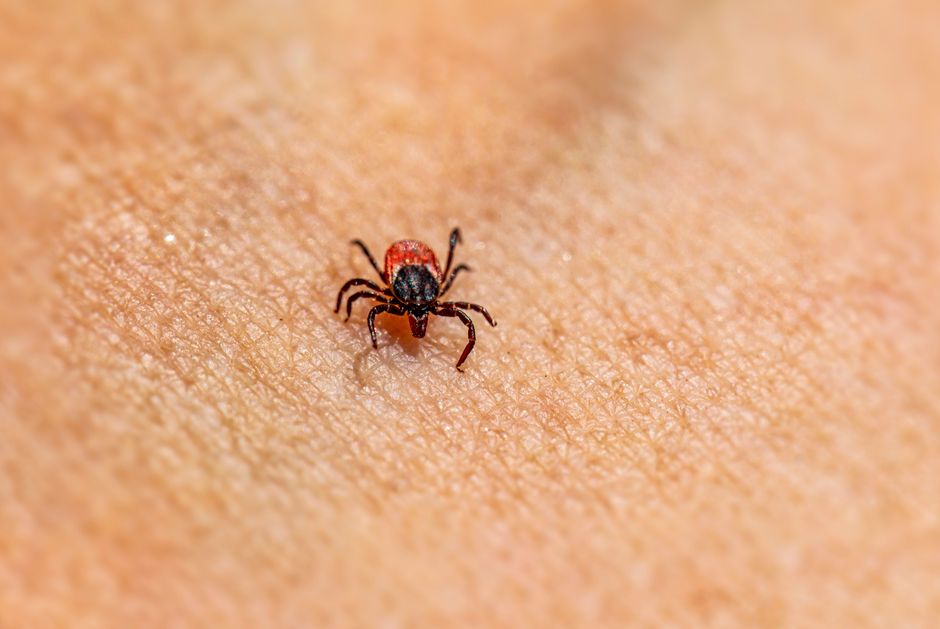
A flea bite on a human usually looks like a small, red, raised bump with a tiny dark dot in the center where the flea broke the skin. The bites often appear in clusters or short lines of two or three, most often on the ankles, lower legs, and feet. They itch intensely, and the itch tends to get worse for a day or two before it starts to fade.
That is the textbook picture. Real life is messier. Not every bite looks the same, not everyone reacts the same way, and by the time most people notice the bites, the flea that caused them is long gone. What follows is what the evidence actually shows about how these bites look, how they behave, and how to tell them apart from other things that bite at night.
What Does a Flea Bite on a Human Look Like?
A fresh flea bite is a small papule — a solid, raised bump — that is typically red on lighter skin and can look purple, brown, or darker than the surrounding skin on darker skin tones. The bump is often no bigger than a pencil eraser.
In the center, many people can see a tiny puncture mark or a speck of dried blood. This is where the flea inserted its mouthparts. Around the bite, a red halo of inflammation often develops within minutes to hours.
Fleas do not usually bite once and move on. They tend to feed in a series, which is why bites show up in groups of two or three in a rough line or cluster. This pattern is one of the more useful clues, though it is not unique to fleas.
The itch is the dominant symptom. It is often described as intense and out of proportion to how small the bite looks. For most people, the itch peaks within 24 to 48 hours and then gradually settles over several days.
Why Do Flea Bites Itch So Much?
The itch is an immune reaction, not a direct effect of the bite itself. When a flea feeds, it injects saliva into the skin to keep blood flowing. That saliva contains proteins and other compounds the human immune system recognizes as foreign.
The immune system responds by releasing histamine and other chemical signals. Histamine widens blood vessels, which produces the redness and swelling, and it stimulates nerve endings, which produces the itch. This is the same basic mechanism behind mosquito bite itch.
An important detail: the reaction is not immediate for everyone. People who have been bitten many times before often develop a faster, stronger response. People who have never been exposed may show little reaction at first. Sensitivity to flea saliva appears to build with repeated exposure, which is why some people in a household get covered in bites while others seem barely affected.
Scratching makes things worse. It damages the skin barrier and pushes bacteria deeper, which is how a simple itchy bump turns into an infected sore.
Where on the Body Do Flea Bites Usually Appear?
Fleas typically bite the lower body. The ankles, feet, lower legs, and the area around the waistband are the most common sites. This is because fleas live close to the ground and to their animal hosts.
When a flea jumps onto a person, it usually lands low. It then crawls and feeds where it lands, which is why the bites cluster on the legs rather than spreading evenly across the body.
There are exceptions. If a person sleeps with an infested pet, bites can appear on the arms, neck, or anywhere skin touched the animal or bedding. If fleas are established indoors, they can bite almost anywhere on the body over time.
One common mix-up: bites around the ankles are often blamed on fleas when the cause is actually something else. Bedbugs, chiggers, and scabies can all produce itchy bumps in similar places. Location alone is not enough to identify the culprit.




How Do Flea Bites Differ From Bedbug Bites and Other Bites?
Flea bites and bedbug bites look similar enough that even clinicians sometimes cannot tell them apart by appearance alone. The pattern and the context usually matter more than the individual bump.
Bedbugs tend to bite in a line or a small cluster of three, sometimes called a “breakfast, lunch, and dinner” pattern. Fleas also bite in small groups, so this clue overlaps. The bigger difference is where the bites happen and what is nearby.
Chiggers produce intensely itchy bumps, often around the ankles and waist, but they tend to appear after time outdoors in tall grass or brush. Scabies causes a rash with tiny burrow lines, usually between the fingers, on the wrists, or in skin folds, and the itch is often worse at night.
Here is a comparison of the features that most often help tell these apart:
| Feature | Flea bites | Bedbug bites | Chigger bites |
|---|---|---|---|
| Common location | Ankles, feet, lower legs | Anywhere, often exposed skin during sleep | Ankles, waist, skin under tight clothing |
| Pattern | Small clusters or short lines | Lines or clusters of three | Scattered clusters |
| Central mark | Sometimes a tiny dark dot | Usually none | Sometimes a small red dot or blister |
| Itch timing | Starts within hours, peaks in 1-2 days | Can be delayed for days | Intense, often within hours |
None of these features is definitive on its own. If you are not sure what is biting you, the most useful step is to look for the source — check pets, bedding, and carpets — rather than trying to diagnose from the bites alone.
Can Flea Bites Cause More Than Itchiness?
For most people, flea bites are a nuisance and nothing more. The bites heal on their own within a week or so, and the main risk is secondary infection from scratching.
Signs of infection include increasing redness, warmth, swelling, pus, or pain that gets worse instead of better. If these appear, medical care is warranted. In rare cases, a bite can trigger a more widespread allergic reaction.
Fleas can also carry bacteria. The most well-known is Bartonella henselae, the bacterium associated with cat scratch disease, which has been linked to fleas that infest cats. The evidence for flea bites directly transmitting this to humans is limited, and the more common route is a cat scratch or bite. This is an area where the science is not fully settled, and it is reasonable to say the risk is low but not zero.
Fleas that live on rodents can carry other pathogens, including the bacterium that causes plague. Human cases in the United States are rare, and they are typically linked to contact with infected wild rodents or their fleas rather than to common household pet fleas.
What fleas are not known to transmit is any bloodborne virus to humans through a simple bite. Claims that flea bites spread serious viral diseases to people are not supported by current evidence.
What Actually Helps Once You Have Been Bitten?
The goal is to reduce itch and prevent infection. Most bites do not need any specific treatment beyond that.
Washing the area with soap and water is a reasonable first step. A cool compress can reduce swelling and calm the itch. Over-the-counter hydrocortisone cream or an oral antihistamine may help with itching, and these are commonly used for insect bites in general. Keeping fingernails short and avoiding scratching matters more than most people realize.
If bites become infected, a clinician may prescribe an antibiotic. This is not something to self-treat.
Treating the bites without treating the source is a losing battle. Fleas in a home usually come from a pet or from wildlife that has been in or near the house. Effective control generally means treating the pet with a veterinarian-recommended flea product, washing pet bedding in hot water, and vacuuming floors, carpets, and furniture thoroughly and often. Flea eggs and larvae live in the environment, not on the host, so cleaning the environment is essential.
No single step reliably eliminates an infestation on its own. It usually takes consistent effort over several weeks.
Frequently Asked Questions
How do I know if a bite is from a flea?
Flea bites usually appear as small red bumps in clusters on the ankles and lower legs, often with a tiny dark dot in the center. The strongest clue is finding fleas or flea dirt on a pet or in the home.
Do flea bites go away on their own?
Yes, most flea bites heal within about a week without treatment. The main concern is infection from scratching, which can delay healing and require medical care.
Can flea bites make you sick?
Serious illness from common household flea bites is rare in the United States. The most realistic risk is a skin infection from scratching, though fleas can carry bacteria that cause disease in uncommon situations.
What is the fastest way to stop flea bites from itching?
Washing the area, applying a cool compress, and using an over-the-counter hydrocortisone cream or oral antihistamine are the standard approaches. Avoiding scratching is the single most important step to prevent infection.
