
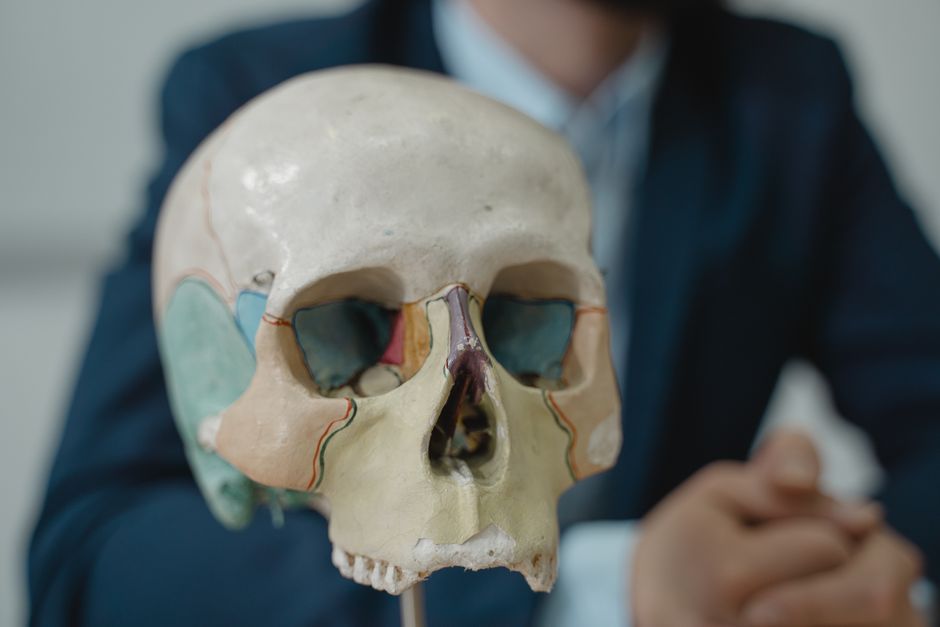
The smallest bone in the human body is the stapes. It sits deep inside your ear and is roughly the size of a grain of rice. Despite its tiny size, it plays a major role in how you hear.
Most people never think about the bones inside their ears. Yet three of the smallest bones in the body are packed into a space smaller than a pea. The stapes is the smallest of them all. It weighs just a few milligrams and measures about 3 millimeters across in most adults.
This article explains what the stapes is, where it sits, what it does, and what happens when something goes wrong with it. It also clears up a few common mix-ups about the smallest bones in the body.
What Is The Smallest Bone Of Human Body?
The stapes is the smallest bone in the human body. It is one of three tiny bones in the middle ear, collectively called the auditory ossicles.
The other two are the malleus (hammer) and the incus (anvil). The stapes is the innermost of the three. It connects to the oval window, a membrane-covered opening that leads into the inner ear.
Its shape gives it its name. Stapes is Latin for “stirrup,” and the bone does look like a tiny stirrup. It has a head, two curved arches called crura, and a flat base called the footplate.
In adults, the stapes measures roughly 3 millimeters in height and weighs about 2 to 4 milligrams. Its footplate is much smaller — around 1 by 3 millimeters. These dimensions vary slightly from person to person.
For comparison, the largest bone in the body is the femur, or thigh bone. In a typical adult, the femur can be over 40 centimeters long. The stapes is thousands of times smaller.
Where Is the Stapes Located?
The stapes sits in the middle ear, inside a hollow space in the temporal bone of your skull. That space is called the tympanic cavity.
Sound travels through the ear in a specific order:
- Sound waves enter the ear canal and hit the eardrum.
- The eardrum vibrates and passes those vibrations to the malleus.
- The malleus passes them to the incus.
- The incus passes them to the stapes.
- The stapes pushes against the oval window, sending vibrations into the fluid-filled cochlea of the inner ear.
The stapes is the last bone in this chain. It acts as a bridge between the middle ear and the inner ear. Without it, sound vibrations would have no direct path to the cochlea.
This chain of bones does something important. It amplifies sound. The eardrum has a much larger surface area than the oval window. When vibrations are focused from a large area onto a small one, the pressure increases. The ossicles also work like a lever system. Together, these effects help match the air-filled outer ear to the fluid-filled inner ear.
What Does the Stapes Do?
The stapes transmits sound vibrations from the middle ear to the inner ear. It is the final link in the mechanical chain that carries sound inward.
When sound reaches the stapes, the bone rocks back and forth like a tiny piston. Each push sends a pressure wave into the fluid of the cochlea. Hair cells in the cochlea convert that pressure into electrical signals. Those signals travel along the auditory nerve to the brain, where they are interpreted as sound.
The stapes is also part of a protective reflex. Two small muscles in the middle ear — the stapedius and the tensor tympani — can tighten in response to loud sounds. The stapedius muscle pulls on the stapes to reduce how much vibration reaches the inner ear. This is called the acoustic reflex. It is not instant, and it does not protect against sudden very loud noises like gunshots or explosions.
Here is a detail many people miss. The stapes is the smallest bone, but it is not the smallest structure involved in hearing. The hair cells inside the cochlea are far smaller, and there are thousands of them. The stapes is simply the smallest bone, not the smallest part of the auditory system.





How Big Is the Stapes Compared to Other Bones?
The size gap between the stapes and the rest of the skeleton is enormous. The table below shows how it compares to a few well-known bones.
| Bone | Typical Adult Size | Location |
|---|---|---|
| Stapes | About 3 mm tall | Middle ear |
| Malleus | About 8–9 mm long | Middle ear |
| Incus | About 5–6 mm long | Middle ear |
| Stirrup-shaped pisiform | About 1 cm | Wrist |
| Femur | Up to 40+ cm | Thigh |
People often guess the smallest bone is somewhere in the fingers, toes, or wrist. That is a reasonable guess, but it is wrong. The pisiform bone in the wrist is small, but it is still several times larger than the stapes. The smallest bones in the hand and foot are larger too.
All three ossicles are fully formed at birth. They are also among the few bones in the body that do not keep growing or remodel much over a lifetime. Most other bones grow, fuse, and change with age.
What Happens When the Stapes Stops Working?
When the stapes cannot move properly, sound cannot reach the inner ear efficiently. This causes a type of hearing loss called conductive hearing loss.
The most common condition affecting the stapes is otosclerosis. In this condition, abnormal bone growth forms around the stapes and stiffens its footplate. The bone can no longer rock freely, so sound vibrations are blocked. Otosclerosis usually develops in adulthood and often runs in families. It tends to affect both ears over time, though one ear may be worse than the other.
Other problems can affect the stapes as well. Head injury, certain infections, and some congenital conditions can damage or malform the ossicles. In rare cases, the stapes footplate can fracture.
Symptoms of conductive hearing loss often include:
- Difficulty hearing soft sounds
- Sounds that seem muffled or distant
- Needing to turn up the volume on devices
- Difficulty following conversation in groups or noisy places
Some people with otosclerosis also notice ringing in the ears, called tinnitus. The severity varies widely. Some people have mild hearing loss for years. Others progress faster.
Treatment options exist for stapes-related hearing loss. Hearing aids can help amplify sound. Surgery, called stapedectomy or stapedotomy, can replace or bypass the stiffened stapes with a small prosthesis. Outcomes vary, and any surgery carries risks, including further hearing loss, dizziness, and changes in taste. Whether surgery is appropriate depends on the individual case and should be discussed with an ear, nose, and throat specialist.
The evidence for surgery in otosclerosis is generally favorable for selected patients, but it is not risk-free and not right for everyone. Hearing aids remain a reliable non-surgical option.
Common Myths About the Smallest Bone
Several myths about the smallest bone in the body circulate widely. Here are the facts.
Myth: The smallest bone is in the finger or toe. The stapes is much smaller than any bone in the hand or foot. The smallest bones in the fingers and toes are still several millimeters long and thicker than the stapes.
Myth: The smallest bone is the hyoid. The hyoid is a small U-shaped bone in the neck. It is unique because it does not connect directly to any other bone. But it is around 2 to 3 centimeters wide, far larger than the stapes.
Myth: The stapes is the smallest bone in all animals. This article is about humans. Some other animals have even smaller ear bones. That is a separate topic.
Myth: You can feel the stapes if you press on your ear. The stapes is buried deep inside the skull. You cannot touch it or see it from outside. It is protected by the temporal bone.
Why the Stapes Matters More Than Its Size Suggests
A bone that weighs a few milligrams carries almost every sound you hear. That is a remarkable fact of human anatomy.
The stapes shows how much function can be packed into something tiny. It also shows how fragile hearing can be. A stiffened stapes can quietly reduce hearing over years, often without pain or visible signs.
If you notice gradual hearing loss, muffled sound, or ringing in your ears, it is worth getting checked. An audiologist or ear, nose, and throat doctor can test how well sound moves through your ear. Early evaluation gives you more options, whether that means hearing aids, monitoring, or in some cases surgery.
The smallest bone in your body is easy to ignore. But it works every second of every day, turning vibrations in the air into the sounds of your life.
Frequently Asked Questions
What is the smallest bone in the human body?
The stapes, located in the middle ear, is the smallest bone in the human body. It is about 3 millimeters tall and weighs just a few milligrams.
Is the stapes smaller than the smallest bone in the finger?
Yes, the stapes is much smaller than any bone in the fingers or toes. The smallest bones in the hand and foot are still several times larger than the stapes.
What happens if the stapes stops working?
If the stapes cannot move properly, sound cannot reach the inner ear efficiently, causing conductive hearing loss. The most common cause is otosclerosis, which stiffens the bone.
Can the stapes be replaced?
Yes, in a surgery called stapedectomy or stapedotomy, the stapes can be replaced with a small prosthesis. Outcomes vary, and the procedure carries risks, so it is not right for everyone.
