
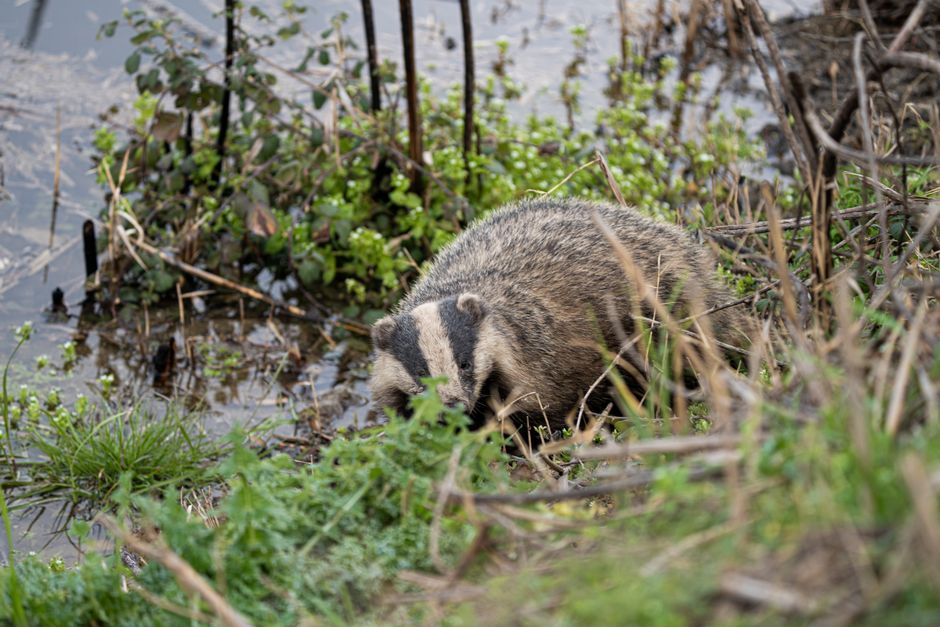
Badgers are opportunistic omnivores, meaning they eat whatever is available and easiest to find. In the wild, their diet shifts with the seasons and consists mostly of earthworms, insects, small mammals, fruits, and plant matter. They are not picky eaters, but they are also not scavengers in the way many people imagine; they prefer fresh, live prey over rotting food.
What Do Badgers Eat In The Wild?
Earthworms are the single most important food source for most badger species, especially the European badger. On a good night, a single badger can consume hundreds of worms, pulling them from damp soil with surprising speed. When worms are scarce, badgers switch to insects, grubs, and beetle larvae, which they dig out of the ground with their powerful front claws.
Badgers are also skilled hunters of small animals. They catch mice, voles, shrews, rabbits, and moles. They will take birds’ eggs and nestlings when they find them, and they occasionally eat frogs, toads, and snakes. This hunting is not a primary strategy; it is a backup plan that becomes more important when earthworms are hard to find.
How Does a Badger’s Diet Change With the Seasons?
Seasonal changes drive nearly every food choice a badger makes. In spring and autumn, earthworms are plentiful in damp soil, so they make up the majority of the diet. During dry summer months, worms burrow deeper and become harder to reach, so badgers turn to insects, fruits, and small mammals instead.
Late summer and autumn bring berries, nuts, and fallen fruit. Blackberries, apples, acorns, and beech mast are all eaten eagerly. Badgers store fat during this period to survive the winter, though they do not hibernate. They remain active but reduce their activity levels significantly during cold spells, living off their fat reserves when food is buried under snow or frozen ground.
In winter, badgers rely heavily on whatever they can find. They will dig through leaf litter for insects and worms, raid compost heaps, and take advantage of any easy meal. This is when they are most likely to visit gardens or farmyards, not because they prefer human food, but because natural options are limited.
Do Badgers Eat Plants and Fruits?
Yes, plant material makes up a substantial portion of a badger’s diet, particularly in late summer and autumn. Cereal crops like oats and wheat are eaten when available, and badgers will graze on young grass shoots in spring. They also eat roots, bulbs, and tubers, which they dig up with their strong claws.
Fruit is a favorite when in season. Wild berries, fallen apples, plums, and pears are all consumed in large quantities. Badgers have a sweet tooth and will actively seek out ripe fruit, sometimes traveling significant distances to reach a productive tree or bush. This fruit-heavy diet helps them build fat reserves before winter.
Some research suggests that plant material can make up more than half of a badger’s annual diet in certain regions. The exact proportion varies widely depending on location, season, and what other food sources are available. In areas with rich soil and abundant worms, plant matter plays a smaller role. In drier or more marginal habitats, badgers depend more heavily on vegetation.





What Do Different Badger Species Eat?
There are several species of badger around the world, and their diets differ noticeably. The American badger, found in the grasslands of North America, is a much more dedicated carnivore than its European cousin. It hunts ground squirrels, pocket gophers, mice, and other burrowing rodents, using its powerful digging ability to chase prey underground. It eats far less fruit and plant material than the European badger.
The honey badger, found in Africa and parts of Asia, has the most varied diet of all. It hunts rodents, snakes, birds, and insects, and is famous for raiding beehives to eat the larvae and honey. It is also known to take larger prey like young antelope on occasion, and it readily eats carrion when fresh meat is not available.
Asian badger species, including the hog badger and the Asian badger, have diets more similar to the European badger. They are omnivorous and eat worms, insects, small mammals, roots, and fruit. The hog badger, which has a pig-like snout, is particularly skilled at rooting through soil and leaf litter for insects and grubs.
Do Badgers Eat Human Food or Garbage?
Badgers will eat human food when they find it, but it is not their preference. They are cautious animals and generally avoid areas with high human activity. However, in suburban and rural areas where homes border wild habitat, badgers may raid compost bins, pet food bowls, and bird feeders.
This behavior is more common in winter when natural food is scarce. A badger that discovers an easy food source will return to it repeatedly, which can lead to property damage as they dig under fences or through garden beds. Feeding badgers intentionally is not recommended, as it can make them dependent on humans and cause them to lose their natural foraging skills.
Processed human food is not good for badgers. Their digestive systems are adapted to a diet of worms, insects, and plant material. Bread, dairy, and highly processed foods can cause digestive problems and do not provide the nutrition badgers need. If you want to support local wildlife, leaving natural food sources like fallen fruit or undisturbed compost is a better option than putting out scraps.
How Do Badgers Find Their Food?
Badgers have an excellent sense of smell, which is their primary tool for locating food. They can detect earthworms underground and will dig down to reach them. Their sense of hearing is also sharp, allowing them to locate small mammals moving through grass or under the soil.
Their physical build is perfectly suited to foraging. Badgers have short, powerful legs, strong shoulders, and long claws on their front feet. These claws are their main digging tools, allowing them to excavate burrows, rip open rotting logs, and tear through soil to reach grubs and worms. They are surprisingly fast diggers and can disappear into the ground in minutes when threatened.
Badgers are primarily nocturnal, doing most of their foraging at night. They follow established paths and trails through their territory, checking known food sources along the way. They have strong spatial memory and will return to productive foraging spots night after night until the food is exhausted.
What Do Baby Badgers Eat?
Baby badgers, called cubs, drink their mother’s milk for the first several weeks of life. They are born in underground dens, usually in late winter or early spring, and remain there for about eight weeks. During this time, the mother leaves them only briefly to forage and returns to nurse them.
Once the cubs emerge from the den, they begin eating solid food. The mother brings them worms, insects, and small prey, and the cubs learn to forage by following her and watching what she eats. Weaning is gradual, and cubs continue to rely on their mother for food and guidance for several months.
By late summer, cubs are largely self-sufficient and forage on their own, though they may stay with their mother’s social group. They learn which foods are safe and where to find them through observation and practice. This learning period is critical, as cubs that do not learn proper foraging skills have lower survival rates.
Frequently Asked Questions
Are badgers dangerous to humans?
Badgers are generally shy and avoid human contact, but they will defend themselves if cornered or threatened. They have powerful jaws and sharp claws, so it is best to give them plenty of space.
Do badgers eat cats or small dogs?
Badgers do not typically hunt cats or dogs, and attacks are extremely rare. They may scavenge a pet that has already died, but they do not actively pursue animals larger than a rabbit.
What should I do if a badger is digging in my yard?
Secure compost bins, remove fallen fruit, and block access to areas under decks or sheds. Do not leave pet food outside overnight, as this attracts badgers and other wildlife.
