
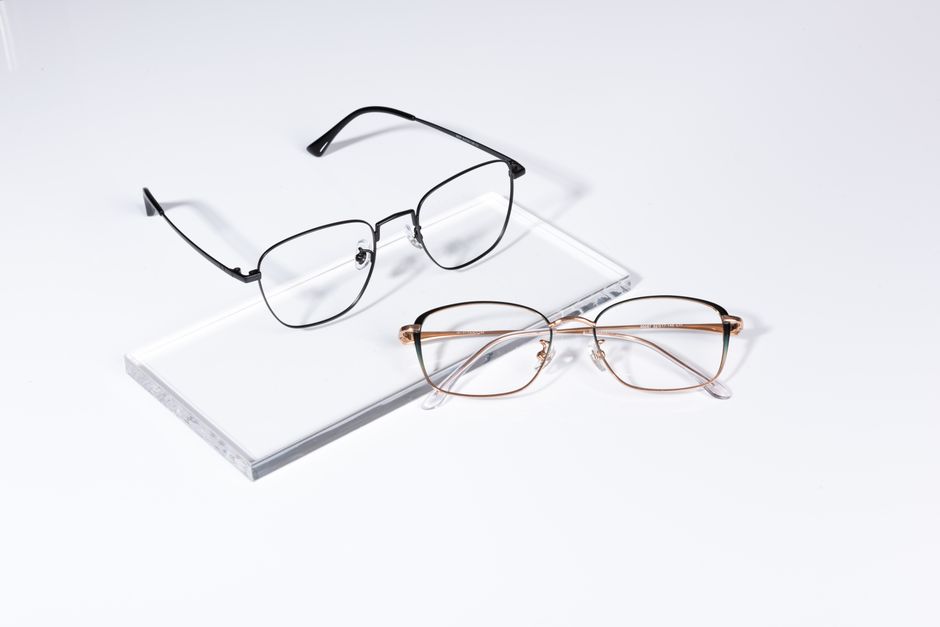
There is no single number that fits everyone, but most eye care professionals suggest at least two pairs: one for daily wear and one backup. If you wear glasses every waking hour, that backup stops being a luxury and becomes a practical necessity. The right number depends on how much you rely on your glasses, what you use them for, and how much risk you can tolerate if one pair breaks.
How Many Pairs Of Glasses Should I Have?
Two pairs is the common baseline. One to wear, one to keep as a spare. That recommendation shows up in patient education from many optometry practices, and it makes sense for a simple reason: glasses break, get scratched, get lost, and get sat on.
If you can function fine without glasses for a day or two, one pair may be enough. If you cannot drive, read, work, or safely move through your day without them, one pair is a genuine risk. The number is not about having a collection. It is about not being stranded.
Beyond two, the count rises with your specific needs. Someone who works at a computer all day and also reads at night may want a dedicated pair for each task. Someone with a strong prescription may want a spare in the car and another at home. There is no clinical rule that says more than two is better. Extra pairs add convenience, not better vision.
Why Do Eye Care Professionals Recommend A Backup Pair?
Because the failure of a single pair of glasses is not a minor inconvenience for many people. It is a functional outage.
Consider what happens when your only pair breaks on a Saturday evening. Replacement lenses are not made in minutes. Many optical shops need days to fabricate new lenses, and some prescriptions take longer. If you drive, work, or care for others, that gap matters.
There is a second reason that gets less attention. Prescription glasses are medical devices, not accessories. For people with high prescriptions, going without them can mean more than blurry vision. It can affect depth perception and safe navigation, which is why a spare is often framed as a safety issue rather than a style choice.
This is also why some clinicians recommend keeping a backup specifically for driving. If your vision without glasses does not meet your state’s licensing standard, a broken pair can take you off the road entirely until replacements arrive.
When Is One Pair Actually Enough?
One pair is reasonable if your glasses are a convenience rather than a requirement.
This applies to people with very mild prescriptions who can read, work, and drive comfortably without correction. It also applies to people who use glasses only for specific, optional situations, like reading in bed or watching a screen at a certain distance.
Even then, the honest position is that a spare reduces risk at low cost. Whether that trade is worth it depends on your budget and how much a few days without glasses would disrupt your life. There is no evidence that one pair harms your eyes. The downside is logistical, not medical.




What About People Who Wear Contacts?
Contact lens wearers should have a current pair of glasses. This is not optional in most clinical guidance.
Contacts are not meant to be worn continuously without breaks, and situations arise where they must come out. Eye irritation, infection, a lost lens, or a doctor’s instruction to remove them all require a backup. If you wear contacts and have no working glasses, you may have no way to see clearly once the lenses are out.
That backup pair needs to be current. An old prescription that no longer matches your vision is not a real backup. Many clinicians recommend updating your glasses prescription at the same time you update your contact lens prescription, so the two stay in sync.
Does The Number Of Pairs Change With Age Or Eye Condition?
Yes, in some cases. The more your vision changes or the more conditions you manage, the more a spare matters.
People with progressive eye conditions such as macular degeneration, glaucoma, or diabetic eye disease often benefit from having a reliable backup, because their vision may already be limited and losing their correction adds a real burden. This is a practical recommendation, not a claim that extra glasses treat any condition. Glasses correct refractive error. They do not treat eye disease.
Age also matters in a simpler way. As presbyopia develops, usually starting in the mid-40s, many people need reading correction in addition to distance correction. That can mean separate pairs, or one pair of bifocals or progressive lenses. The choice between those options is about how you use your eyes, not about a set number.
Should You Buy Cheap Backup Glasses Or A Second Quality Pair?
A backup pair only works if it actually corrects your vision. That is the deciding factor, not the price.
Online and budget retailers can produce accurate lenses, and many people use them successfully for spares. The risk is in the details: an outdated prescription, a wrong pupillary distance measurement, or lenses that do not match what you actually need. A cheap pair that gives you headaches or blurry vision is not a backup. It is a paperweight.
If you go the budget route for a spare, use a current prescription. If your main pair is complex, such as progressives or lenses with prism, a simple spare may not replicate it well, and that is worth discussing with your optician.
How Often Should You Replace Glasses?
There is no fixed schedule, but several factors push toward replacement.
- Your prescription has changed. This is the most common reason.
- The lenses are scratched enough to affect clarity or cause glare.
- The frames are bent, cracked, or no longer fit well.
- The lens coating is peeling or clouding.
Many eye care providers recommend a comprehensive eye exam on a regular schedule, and your prescription is confirmed or updated at that visit. If your vision has shifted, your old glasses are no longer a valid backup. This is the point where people often discover they have been relying on a spare that no longer matches their eyes.
How Many Pairs Do You Really Need?
A practical way to decide is to ask what happens if your only pair is unavailable for three days.
If the answer is “nothing much,” one pair is fine. If the answer involves missed work, unsafe driving, or being unable to read or function, you need at least two. If you wear contacts, you need a current pair of glasses regardless of how many contacts you own.
Two is the number most often recommended because it covers the most common failure: the single pair that breaks, gets lost, or goes out for repair. Everything beyond that is about convenience, specific tasks, or managing a condition that already limits your vision. There is no evidence that owning more pairs improves eye health. The benefit is practical, and for many people, that is reason enough.
Frequently Asked Questions
How many pairs of glasses should I have?
Most eye care professionals suggest at least two: one for daily wear and one as a backup. If you cannot function safely without glasses, two is a practical minimum, not a luxury.
Do I need a backup pair of glasses if I wear contacts?
Yes. Contact lenses should not be worn continuously, and situations like irritation, infection, or a lost lens require you to remove them. Without a current pair of glasses, you may have no way to see clearly.
Can I use an old pair of glasses as a backup?
Only if the prescription still matches your current vision. An outdated prescription can cause blurry vision, headaches, and eye strain, which defeats the purpose of a backup.
Is one pair of glasses enough if my prescription is mild?
Often yes, if you can read, work, and drive comfortably without them. A spare still reduces the risk of being stranded if your only pair breaks, but for mild prescriptions that risk is smaller.
