
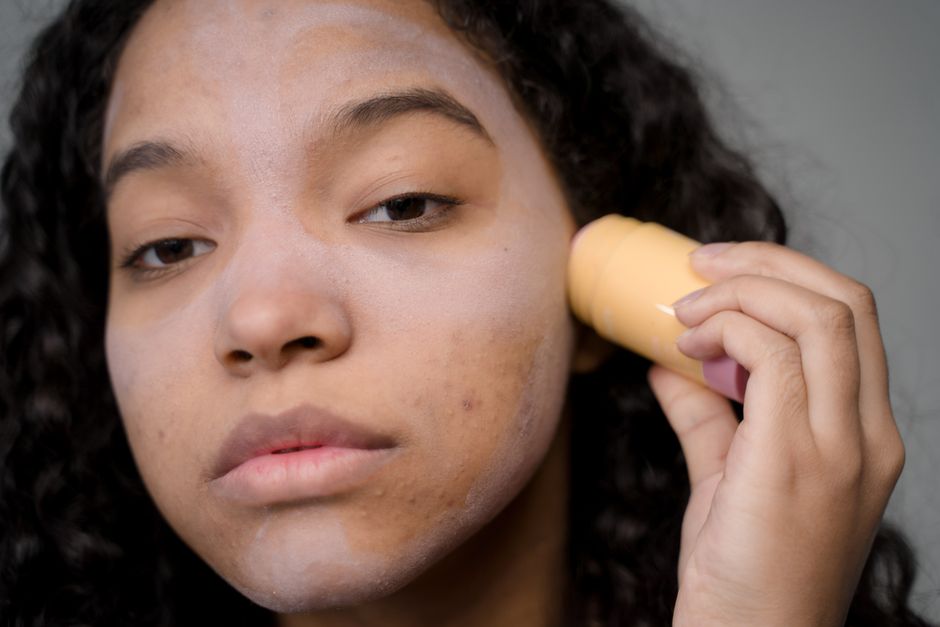
Skin tone names can feel like a moving target. The same shade might be called “medium” by one brand, “tan” by another, and “warm beige” by a third. That confusion is real, and it usually comes from mixing two different systems: the everyday words we use to describe complexion, and the technical scales dermatologists and makeup companies use behind the scenes.
For most people, the everyday answer is simple. Complexion is described as fair, light, medium, olive, tan, brown, or deep. Those are broad categories, not precise measurements. When a label gets more specific — like “light-medium with warm undertones” — it is usually combining a shade range with an undertone description. Two people can share the same depth of skin color and still have different undertones, which is why one foundation looks right on one person and wrong on another.
What Is the Difference Between Skin Tone and Undertone?
Skin tone is how light or dark your skin is. Undertone is the underlying hue beneath that surface color, and it stays fairly consistent whether you have a tan or not.
Undertones are usually grouped into three broad types: warm (often described as golden, yellow, or peachy), cool (often described as pink, red, or bluish), and neutral (a balance of the two). Some people also use the term “olive” for undertones that lean green or gray. These labels are useful shorthand, but they are not scientific categories. They were built mainly for matching cosmetics, not for describing biology.
This distinction matters because it explains a common frustration. You can find a foundation that matches your skin depth perfectly and still have it look off, because the undertone is wrong. Depth and undertone are two separate variables.
What Are the Standard Skin Tone Categories?
The most common everyday system runs from fair to deep, with several stops in between. Most brands and beauty publications use something close to this range:
- Fair — very light skin that burns easily and rarely tans
- Light — light skin that may burn before tanning
- Medium — a middle range that tans more readily
- Olive — a descriptor often used for skin with green or golden undertones, across several depths
- Tan — a deeper medium range, sometimes called caramel
- Brown — medium-deep to deep skin
- Deep — the darkest range, sometimes called rich or espresso
These categories are cultural and cosmetic, not medical. They vary by region and by brand. A “medium” in one product line can be a “tan” in another. That inconsistency is a known problem in the cosmetics industry and one reason shade matching remains difficult for many people.
What Is the Fitzpatrick Skin Type Scale?
The Fitzpatrick scale is the closest thing to a technical standard, and it is used in dermatology rather than in makeup aisles. It was developed in 1975 by dermatologist Thomas Fitzpatrick to estimate how skin responds to ultraviolet light.
It has six types, numbered I through VI. Type I is very pale skin that always burns and never tans. Type VI is deeply pigmented skin that rarely burns. The scale is based on how skin reacts to sun exposure and on self-reported ancestry, not on a color swatch.
The Fitzpatrick scale is widely used in clinical settings to estimate sunburn and skin cancer risk, and to guide some laser and light-based treatments. It is a practical tool, but it has limits. It was originally developed with lighter skin types in mind, and researchers have noted that it does not always capture the full range of darker skin tones accurately. Some clinical settings now use additional or alternative scales for that reason.





Why Do People Describe the Same Skin Differently?
Language, lighting, and context all change how a complexion gets named. Two people looking at the same skin can genuinely see different words for it.
Lighting is a big factor. Skin reflects the color of the light around it. The same face can look warmer under indoor bulbs and cooler in daylight. Cameras and phone screens add another layer, because they process color differently than the human eye.
Culture shapes the vocabulary too. Different regions have different beauty traditions and different words for similar shades. Terms like “wheatish,” “dusky,” “fair,” and “swarthy” carry meaning in some places and not others, and some of these words have complicated histories. There is no single global standard, which is why a description that makes perfect sense in one country can confuse someone in another.
How Do You Figure Out Your Own Undertone?
Undertone is easier to observe than to measure, and a few simple checks can give you a reasonable idea. None of these are exact, but they are the methods most commonly suggested.
- Look at the veins on your inner wrist. Veins that appear blue or purple often suggest a cool undertone. Veins that look green often suggest a warm undertone. If it is hard to tell, you may be neutral.
- Notice how your skin reacts to sun. Skin that burns easily and tans poorly tends to be lighter and often cooler. Skin that tans easily and rarely burns tends to be deeper.
- Try jewelry. Some people find gold flatters warm undertones and silver flatters cool ones. This is a common guideline, not a rule.
- Hold white and cream fabric near your face. If white looks better, that can point toward cool. If cream looks better, that can point toward warm.
These tests are informal. They can help narrow things down, but they are not reliable enough to treat as fact. If you are trying to match foundation, testing shades in person under natural light is more dependable than any single trick.
Does Skin Tone Affect Health or Sun Risk?
Skin tone affects how much natural protection your skin has against ultraviolet radiation, and that has real health implications. More melanin means more built-in defense against the sun, but it does not make anyone immune to sun damage.
People with lighter skin types burn more easily and carry higher risk for sun-related skin damage. People with darker skin types have lower risk of sunburn but can still develop skin cancer, and it is often diagnosed later because it can appear in less obvious places, such as the palms, soles, and under the nails. That later diagnosis can make outcomes worse.
This is a case where a common assumption causes harm. The idea that deeper skin does not need sun protection is not supported by evidence. Dermatology organizations generally recommend sun protection for all skin types, and anyone can develop skin cancer regardless of complexion. If you notice a new or changing spot on your skin, having it checked is reasonable no matter your tone.
What Complexion Is This Skin Tone Called?
If you are trying to put a name to a specific shade, the most useful approach is to describe it in two parts: depth first, then undertone. For example, “medium depth with warm undertones” or “deep with neutral undertones.” That combination communicates far more than a single word.
For casual description, the everyday categories — fair, light, medium, olive, tan, brown, deep — are usually enough. For anything medical, the Fitzpatrick scale is the tool clinicians use, though it has known limits. For makeup, the brand’s own shade system is the only one that will match its products, and those systems are not standardized across companies.
There is no single correct name for any complexion. There are several systems, each built for a different purpose. Knowing which one you are using, and why, clears up most of the confusion.
Frequently Asked Questions
What are the main skin tone categories called?
The everyday categories are usually fair, light, medium, olive, tan, brown, and deep. These are broad cosmetic labels, not medical ones, and they vary between brands and regions.
What is the difference between skin tone and undertone?
Skin tone is how light or dark your skin is, while undertone is the underlying hue beneath it, such as warm, cool, or neutral. Undertone tends to stay consistent even when your skin tans or lightens.
What is the Fitzpatrick skin type scale?
It is a six-point dermatology scale, developed in 1975, that estimates how skin responds to ultraviolet light. It is used to gauge sun risk and guide some clinical treatments, though it does not capture every skin tone equally well.
Can darker skin still get skin cancer?
Yes. People with darker skin have lower risk of sunburn but can still develop skin cancer, and it is often found later because it may appear in less obvious places. Sun protection is generally recommended for all skin types.
