
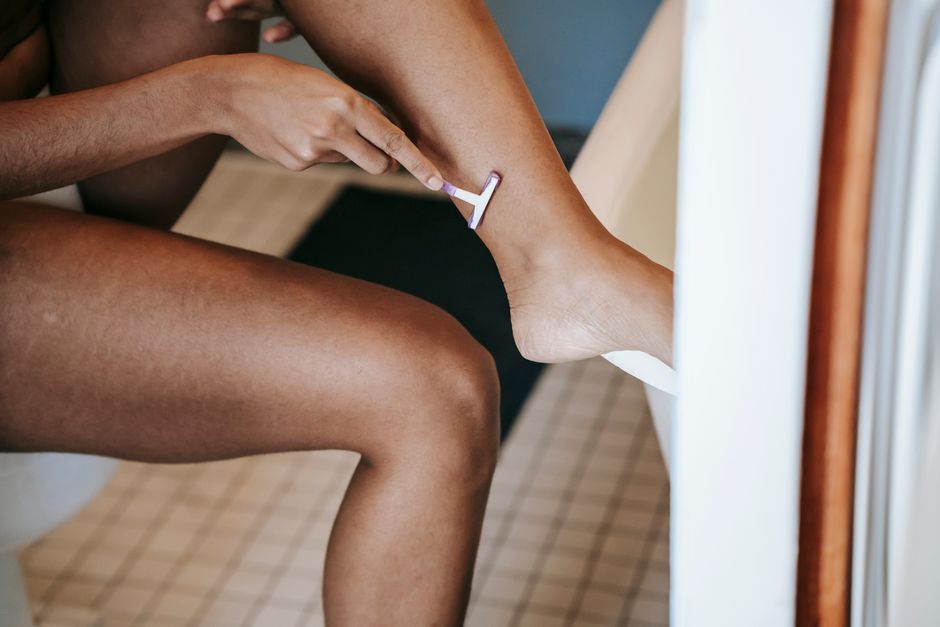
Shaving bumps are inflamed hairs that curl back into the skin after shaving, or hairs that get trapped beneath the surface as they try to grow out. This condition, known medically as pseudofolliculitis barbae, happens when the sharp, freshly cut edge of a hair pierces the skin instead of growing straight out. The body then treats the embedded hair like a foreign object, triggering redness, swelling, and sometimes infection.
What Causes Shaving Bumps?
Shaving bumps start with the shaving process itself. When a razor cuts a hair, it leaves a sharp, pointed tip. As that hair grows back, the pointed tip can easily penetrate the skin, especially if the hair is naturally curly or coarse.
There are two ways this happens. The hair can exit the follicle and then curve back down into the skin nearby, which is called extrafollicular penetration. Or the hair can never fully leave the follicle and instead grows directly into the follicle wall, which is called transfollicular penetration. Both trigger an inflammatory response.
Men of African descent and others with tightly coiled hair are most affected. The curvature of the hair follicle itself makes re-entry into the skin more likely. However, anyone with coarse or curly hair can develop shaving bumps, regardless of skin tone.
How Shaving Bumps Differ From Razor Burn
Shaving bumps are frequently confused with razor burn, but they are different problems. Razor burn is a surface irritation caused by friction from the razor blade dragging across the skin. It appears as redness and a burning sensation, usually within minutes of shaving. It fades within a day or two.
Shaving bumps are not a surface issue. They are an ingrown hair problem. They develop days after shaving, as the hair begins to regrow. They look like small, firm pimples or pustules. They can be itchy and tender. Understanding this difference matters because the prevention strategies are not the same.
Razor burn requires gentler shaving technique and better lubrication. Shaving bumps require changing how the hair is cut and how the skin is prepared before and after shaving.
Why Curly Hair Increases Your Risk
Hair shape determines how it grows out of the follicle. Straight hair exits the follicle and grows away from the skin at a relatively straight angle. Curly hair, however, grows in a curved path. The follicle itself is often curved or even spiral-shaped.
When a curly hair is cut short, it loses the length that normally helps guide it away from the skin. A very short, sharp hair has nowhere to go but sideways or backward. This is why shaving bumps are most common on the neck and jawline, where hair grows in multiple directions and is often shaved against the grain.
Studies have shown that leaving hair longer reduces the risk of ingrown hairs. When hair is longer, it has more mass and is less likely to bend back into the skin. This is why many men who grow a short beard find their shaving bumps disappear entirely.




Shaving Technique Mistakes That Make Bumps Worse
Several common shaving habits increase the likelihood of developing bumps. The most significant is shaving too close to the skin. A razor that pulls the skin taut and cuts the hair below the skin surface guarantees a sharp tip will be left just beneath the epidermis.
Shaving against the grain is another major contributor. Going against the natural direction of hair growth cuts the hair at a sharper angle, creating a more pointed tip. It also increases the chance of cutting the hair below the skin line.
Using a dull blade is equally problematic. A dull blade does not cut cleanly. It tugs at the hair and can leave a jagged or frayed tip. A frayed tip is more likely to catch the skin as the hair grows. Some research suggests that single-blade razors may be better than multi-blade razors for people prone to bumps. Multi-blade razors lift the hair before cutting it, which allows the hair to retract below the skin surface after the razor passes.
Other factors that worsen bumps include:
- Shaving dry skin without proper lubrication
- Stretching the skin tight while shaving
- Repeated passes over the same area
- Shaving too frequently, not allowing hair to grow out between shaves
Effective Ways to Prevent Shaving Bumps
Prevention focuses on keeping the hair tip above the skin surface and reducing skin irritation. The most reliable method is to change how you shave.
First, soften the hair and skin before shaving. Shave after a warm shower, or hold a warm, wet towel on the area for several minutes. Warm water hydrates the hair, making it softer and easier to cut cleanly.
Second, shave in the direction of hair growth. This produces a less sharp angle on the cut hair. You may not get as close a shave, but you will significantly reduce bumps. If you must shave against the grain for a closer result, do it only on the final pass and use a fresh blade.
Third, use a sharp blade every time. Replace blades frequently. A sharp blade cuts hair cleanly, leaving a smooth tip that is less likely to penetrate skin.
Fourth, do not pull the skin tight while shaving. Pulling the skin makes the hair stand up taller, which means the razor cuts it lower. When the skin springs back, the hair is below the surface.
Fifth, use a single-blade razor or an electric razor. Electric razors do not cut as close as blade razors, which works in your favor. Leaving a small amount of hair above the skin prevents the sharp tip from embedding.
Treatment Options for Existing Shaving Bumps
If bumps have already formed, treatment depends on severity. Mild bumps often resolve on their own if you stop shaving the area for several days. Letting the hair grow out allows the embedded tip to emerge from the skin naturally.
For bumps that are visible but not infected, gentle exfoliation can help. Using a soft brush or a mild scrub in a circular motion can free the trapped hair tip. Do this before shaving, not after, to avoid further irritation.
Warm compresses can help bring the hair closer to the surface. Apply a warm, damp cloth for several minutes. This softens the skin and may help the hair work its way out.
Do not pick at or squeeze the bumps. Picking increases inflammation and can introduce bacteria, turning a simple ingrown hair into a true infection. If a bump does not resolve within a few days, a clinician can gently release the trapped hair with a sterile needle.
Topical treatments are available. Products containing salicylic acid or glycolic acid help exfoliate the skin and reduce inflammation. These are available over the counter. Products with benzoyl peroxide can help if bacteria are present, but they can be drying and irritating.
For chronic, severe cases, prescription options exist. A clinician may recommend topical antibiotics, retinoids, or low-dose steroids to reduce inflammation. In some cases, laser hair removal is the most effective long-term solution. Laser treatment destroys the hair follicle, preventing hair from growing back and eliminating the problem at its source.
When Shaving Bumps Become Infected
Shaving bumps can become infected, especially when scratched or picked. Signs of infection include increasing pain, warmth, redness spreading beyond the bump, pus, or fever. An infected bump requires medical attention.
Clinicians can distinguish between simple ingrown hairs and conditions like folliculitis, which is an infection of the hair follicle. Bacterial folliculitis may require antibiotic treatment. Fungal folliculitis requires antifungal treatment. Using the wrong treatment can worsen the condition.
If you have diabetes or a weakened immune system, seek care early. Skin infections that are minor for healthy people can become serious quickly in these populations.
Long-Term Solutions for Chronic Shaving Bumps
Some people develop shaving bumps every time they shave, no matter how careful their technique. For these individuals, changing the method of hair removal is often more effective than changing the shaving routine.
Growing a beard is the simplest solution. Without shaving, there is no sharp hair tip to embed in the skin. Even a short, well-maintained beard eliminates the problem for most people.
Chemical depilatories, such as barium sulfide or calcium thioglycolate products, dissolve hair at the skin surface. They do not create sharp tips. However, these products can cause chemical burns on sensitive skin, so a patch test is essential before use.
Laser hair removal remains the most effective medical treatment for refractory pseudofolliculitis barbae. Multiple sessions are required, and results vary by hair color and skin type. The procedure is not guaranteed to be permanent but typically produces a significant reduction in hair growth.
Electrolysis is another option. It uses an electric current to destroy individual hair follicles. It is time-consuming and expensive but can be permanent. Both procedures should be performed by qualified professionals.
Frequently Asked Questions
Can shaving bumps be permanently cured?
Laser hair removal and electrolysis are the only treatments that can permanently reduce or eliminate hair growth, which stops shaving bumps at the source. All other methods require ongoing maintenance.
How long do shaving bumps take to heal?
Mild bumps typically heal within 3 to 7 days if you stop shaving the area. Infected or chronic bumps may take weeks and require medical treatment.
Is it better to shave with or against the grain to prevent bumps?
Shave with the grain to prevent bumps. Shaving against the grain creates a sharper hair tip that is more likely to grow back into the skin.
Are shaving bumps contagious?
No, shaving bumps are not contagious. They are an inflammatory response to an ingrown hair, not a bacterial or viral infection that spreads between people.
