
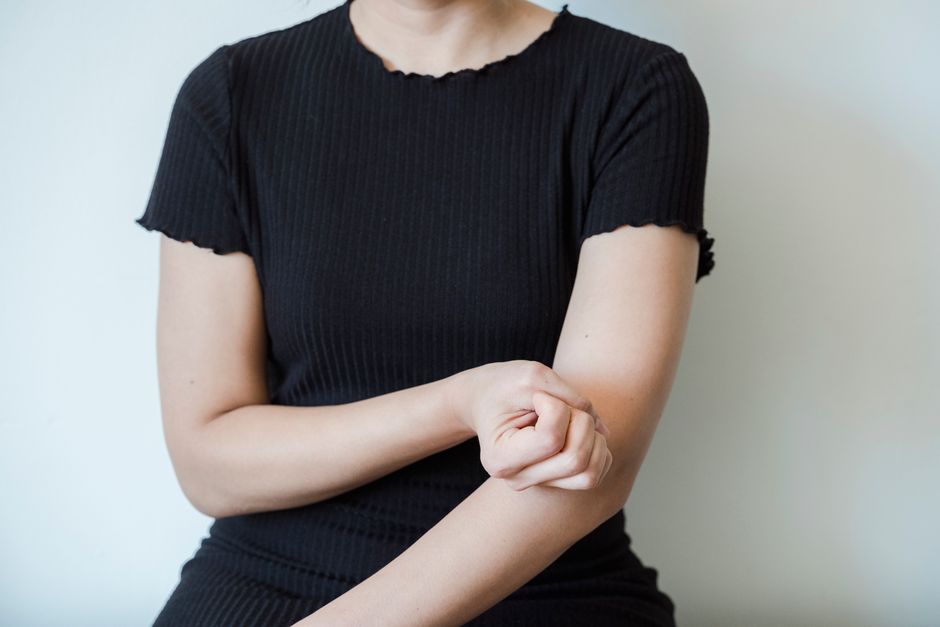
Psoriasis on the elbows is caused by an overactive immune response that speeds up skin cell turnover, producing thick, silvery scales on the bony points of the joint. It is a form of plaque psoriasis, the most common type. It is not contagious and not caused by poor hygiene. Treatment usually starts with topical medications, and more persistent cases may need light therapy or systemic drugs.
What Causes Psoriasis On Elbows And How To Treat It?
Psoriasis is an immune-mediated disease. That means the root problem sits in the immune system, not in the skin itself. The skin is where you see it.
In people with psoriasis, immune cells called T cells become overactive. They release signaling proteins, including a group called interleukins, that tell skin cells to multiply too fast. Normal skin cells mature and shed in about a month. In psoriasis, that cycle can shrink to a few days. Cells pile up on the surface before they can shed, forming the raised, scaly plaques you see.
The elbows are a common spot for a reason. They are a site of repeated friction and pressure, and psoriasis often appears where skin is subjected to mechanical stress. This is called the Koebner phenomenon. It is well documented in dermatology: trauma or irritation to the skin can trigger a new psoriasis lesion in someone who already has the disease. The elbows and knees are also classic locations for plaque psoriasis by pattern alone.
Psoriasis runs in families. Genetics play a real role, and researchers have identified multiple gene variants linked to the disease, particularly in the human leukocyte antigen system that helps the immune system tell self from non-self. But having the genes does not guarantee you will get psoriasis. Something has to trigger it.
Known triggers
- Infections, especially strep throat, which can set off a type of psoriasis called guttate psoriasis
- Skin injury, scratching, or friction at pressure points
- Certain medications, including some beta-blockers, lithium, and antimalarial drugs
- Psychological stress
- Smoking and heavy alcohol use
- Hormonal changes, including those around puberty and menopause
If you have psoriasis on your elbows, it does not mean you did something wrong. It is not an allergy, a fungus, or a hygiene problem. It is a chronic condition that can be managed but not cured.
How Do You Know It Is Psoriasis And Not Something Else?
Elbow psoriasis has a fairly recognizable look. Plaques are raised, well-defined, and covered with silvery-white scale. The skin underneath is red or pink. They tend to appear symmetrically on both elbows. They may itch, crack, or bleed when scratched.
Several other conditions can look similar, and this is where self-diagnosis goes wrong:
- Eczema is usually itchier and less sharply defined, and the scale is less silvery. It often affects the inside of the elbow crease rather than the bony point.
- Psoriatic arthritis does not cause skin changes, but it can occur alongside skin psoriasis. If you have joint pain, stiffness, or swelling, especially in the morning, tell your doctor. Up to a third of people with skin psoriasis develop joint involvement, and early treatment matters.
- Fungal infections tend to have a different border and scale pattern and usually respond to antifungal treatment.
- Lichen simplex chronicus results from chronic scratching and produces thickened skin, often from an itch-scratch cycle rather than psoriasis.
No single blood test diagnoses psoriasis. A dermatologist typically makes the diagnosis by examining the skin. In some cases, a small skin biopsy is used to confirm it.
What Topical Treatments Work For Elbow Psoriasis?
Topical treatments are the first line for mild to moderate psoriasis, including most elbow plaques. They are applied directly to the affected skin.
Topical corticosteroids are the most commonly prescribed. They reduce inflammation and slow cell turnover. Potency matters. Elbow skin is thicker than facial skin, so medium to high-potency steroids are often used there, while low-potency products are reserved for thinner skin. Long-term use of strong steroids can thin the skin, so they are usually used in cycles rather than continuously. Follow your prescriber’s instructions rather than a general rule.
Vitamin D analog creams, such as calcipotriene, slow skin cell growth and are often used alongside steroids. They can cause irritation, particularly in skin folds, but are generally well tolerated on the elbows.
Coal tar preparations have been used for decades. They reduce scaling and inflammation. They are messier and have an odor, which limits how often people use them, but they remain a reasonable option.
Salicylic acid helps remove scale and is sometimes combined with other treatments to improve absorption.
Calcineurin inhibitors, such as tacrolimus and pimecrolimus, are non-steroid options. They are more commonly used on sensitive areas like the face and skin folds, and their role on thick elbow plaques is more limited.
One practical point: thick scale can block a topical medication from reaching the skin. Some clinicians recommend softening or removing scale first, sometimes with a keratolytic product, before applying the treatment. This is common practice rather than a strongly tested protocol.
When Are Light Therapy And Systemic Treatments Needed?
If topicals are not enough, or if psoriasis covers a large area of the body, other options exist.
Phototherapy uses controlled ultraviolet light, usually narrowband UVB, delivered in a clinic. It slows the rapid growth of skin cells. Multiple sessions per week are typically needed, which makes it demanding for some people. It is effective for many patients, but it requires consistent attendance and carries a long-term skin cancer risk with cumulative exposure.
Systemic medications work throughout the body. They include older drugs like methotrexate and cyclosporine, and newer biologic drugs that target specific immune proteins involved in psoriasis. Biologics have changed outcomes for people with moderate to severe disease. These are prescribed by specialists and require monitoring.
Oral apremilast is another option that modulates the immune response. It is not a biologic and works differently.
For elbow psoriasis alone, systemic treatment is usually not the first step. It becomes relevant when psoriasis is widespread, when joints are involved, or when topical treatment fails despite good adherence.
What Everyday Habits Help Keep Elbow Psoriasis Calmer?
Moisturizing is one of the most underrated steps. Dry skin cracks and scales more, and cracked skin is more likely to trigger new lesions through the Koebner response. A thick, fragrance-free moisturizer applied after bathing helps lock in water.
Avoid scratching and picking. It is hard advice to follow because psoriasis itches, but scratching worsens plaques and can trigger new ones. Keeping nails short and using cool compresses can reduce the urge.
Reduce friction at the elbows. Resting elbows on hard surfaces repeatedly adds mechanical stress to skin that is already vulnerable. Soft padding helps.
Manage stress where you can. Stress is a well-recognized trigger for psoriasis flares, though the relationship is complex and not fully understood. It is not a matter of willpower.
Do not smoke, and limit alcohol. Both are associated with more severe psoriasis and poorer treatment response.
Sunlight in moderation can help some people with psoriasis, but sunburn can trigger flares and increase skin cancer risk. Short, careful exposure is different from baking in the sun.
Is There A Cure For Psoriasis?
No. Psoriasis is a chronic condition, and current treatments manage it rather than eliminate it. That is an honest statement, not a discouraging one. Many people achieve long periods with clear or nearly clear skin.
Psoriasis also has links to other health conditions. People with psoriasis have higher rates of cardiovascular disease, type 2 diabetes, and depression. The reasons are not fully understood, and the associations are complex. It is not a reason to panic. It is a reason to keep regular checkups and talk to your doctor about overall health, not just your skin.
If you are considering any treatment, including over-the-counter products that claim to cure psoriasis, be skeptical. No product cures psoriasis. Some help manage symptoms. The difference matters.
Frequently Asked Questions
Is elbow psoriasis contagious?
No. Psoriasis is an immune-mediated condition and cannot be passed from person to person through touch, sharing items, or any other contact. It is also not caused by poor hygiene.
Can psoriasis on elbows go away on its own?
Psoriasis is chronic and typically does not go away permanently, though symptoms can come and go in cycles. Some people have long periods with few or no visible plaques, but the underlying condition remains.
What is the best cream for psoriasis on elbows?
There is no single best cream for everyone, but topical corticosteroids are the most commonly prescribed first-line treatment for elbow plaques. Potency and duration should be guided by a doctor because long-term use of strong steroids can thin the skin.
Should I be worried if my elbow psoriasis is itchy and cracking?
Itching and cracking are common in psoriasis and do not usually signal a new problem. However, cracked skin can let bacteria in, so watch for increased redness, warmth, swelling, or pus, and see a doctor if those appear.
