
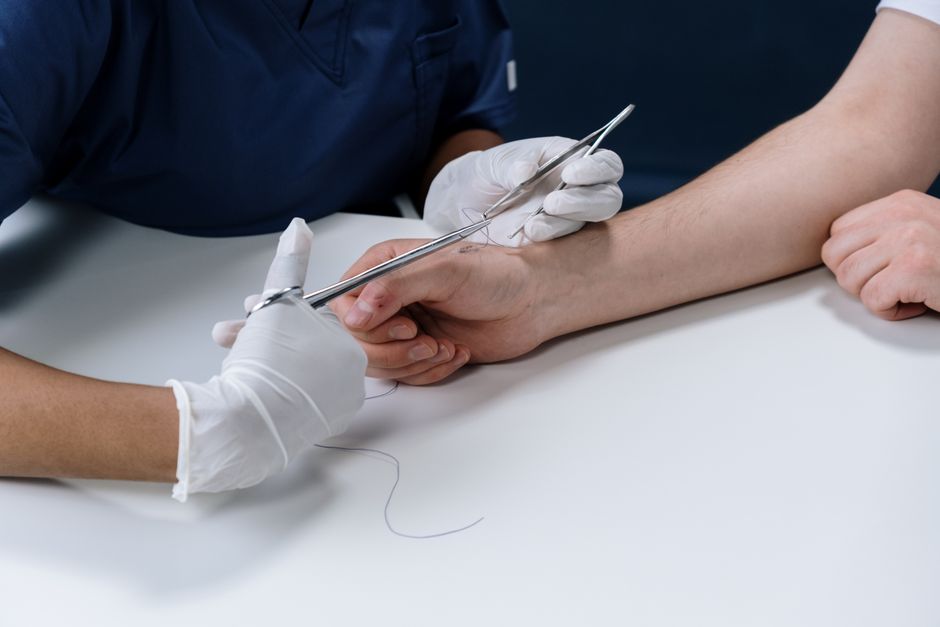
Spitting sutures are a common part of wound healing that most people are never warned about. When a stitch works its way to the surface of the skin, it can look alarming — a small thread poking through, sometimes with a little redness or drainage. In most cases this is the body doing exactly what it is supposed to do: pushing out a foreign material it cannot fully absorb. You usually do not need to pull the stitch out yourself. Keep the area clean, leave the visible end alone, and call your doctor if you see signs of infection, if the wound is opening, or if the thread is deeply embedded.
What Are Spitting Sutures?
A spitting suture is a piece of surgical thread that the body rejects and pushes toward the skin surface during healing. It is not a sign that your surgery failed. It is a normal reaction to a foreign object.
Surgeons close wounds with different kinds of sutures. Some dissolve on their own over weeks or months. Others must be removed. Even dissolvable sutures can cause this reaction if the body breaks them down unevenly or if a knot sits close to the surface. The immune system surrounds the thread, and over time the skin pushes it outward — much like a splinter working its way out.
This can happen days after surgery or many weeks later. It can also happen more than once at the same wound. Some people are more prone to it than others, though researchers have not pinned down a single reliable predictor.
The medical term for this is “spitting” or “spontaneous extrusion” of a suture. It is well documented in surgical literature, particularly with certain types of absorbable threads used in deeper layers of skin.
What Does a Spitting Suture Look Like?
Most people notice a small, dark or light thread poking through the scar line. The surrounding skin may be slightly pink or raised.
Common appearances include:
- A short piece of thread visible at the surface
- A tiny pimple or bump along the scar
- A small crust or scab with thread inside it
- Clear or slightly bloody drainage from one spot
The bump itself often looks like a pimple or an ingrown hair. That is a big reason people mistake it for an infection. The key difference is that a spitting suture usually stays small and localized, while an infection tends to spread, get hotter, and produce thicker pus.
If the area is spreading redness, feels hot, or the drainage turns thick and yellow-green, that points toward infection rather than a simple spitting suture. Those are different problems and need different responses.
How To Treat Spitting Sutures And When To Worry
The core treatment is simple: keep the area clean and let the body finish the job. Do not dig at it.
Here is what most clinicians advise:
- Wash gently with mild soap and water once or twice a day
- Pat dry — do not rub
- Keep the wound covered with a clean bandage if it is draining
- Leave the visible thread alone
- Do not pull, cut, or tug the stitch yourself
The temptation to grab tweezers is strong. Resist it. Pulling a stitch that is still anchored deeper in the tissue can reopen the wound or drag bacteria into it. If the thread is loose and clearly at the surface, a doctor or nurse can remove it safely in seconds. That is the right setting for removal.
If the wound is closing well and there is no sign of infection, a spitting suture often resolves on its own as the thread works fully free and falls out or is trimmed at a follow-up visit.
Some wounds benefit from a small amount of topical antibiotic ointment, but this is not always necessary and should be guided by your care team. Overusing antibiotic ointments can irritate skin and, in some cases, promote resistance.





When Should You Call Your Doctor?
Call your doctor if you see signs that go beyond a simple spitting suture. The following warrant a call:
- Spreading redness or warmth around the wound
- Thick yellow or green discharge
- Fever
- Increasing pain rather than improving pain
- The wound edges pulling apart
- A stitch that is deeply embedded and will not come out
- Bleeding that does not stop with gentle pressure
These signs can point to a wound infection, which is a different problem from a spitting suture and may need antibiotics or other treatment. Do not wait on a spreading infection.
If you are unsure whether what you are seeing is normal, a quick call to your surgeon’s office is reasonable. Nurses who handle post-surgical wound care see spitting sutures constantly and can usually tell you over the phone whether you need to come in.
How Long Does a Spitting Suture Take To Heal?
There is no single timeline. Some spitting sutures resolve within a few days. Others take several weeks, especially if the thread is a slow-dissolving type.
What matters more than the clock is the trend. A spitting suture that stays the same or slowly improves is usually fine. One that is getting worse — more redness, more drainage, more pain — is not.
Absorbable sutures can take anywhere from a few weeks to several months to fully break down, depending on the material and the depth of the stitch. That means a spitting suture can surface well after you thought the wound was healed. This surprises people, but it is normal.
If a stitch keeps surfacing in the same spot over and over, tell your doctor. It may mean a knot or a cluster of thread is sitting near the surface and needs to be removed.
Can You Prevent Spitting Sutures?
Not entirely. This is largely a matter of how your body responds to the suture material, and that is not something you control.
What you can do is support good wound healing:
- Keep the wound clean and dry
- Follow your surgeon’s wound care instructions
- Avoid heavy straining or activity that pulls on the wound during early healing
- Eat enough protein and stay hydrated
- Do not smoke — smoking impairs wound healing and blood flow
Surgeons choose suture materials and techniques based on the wound and the tissue. Some research suggests that certain closure techniques and thread types reduce the chance of spitting, but the evidence is not strong enough to say any single approach prevents it in every case. This is an area where clinical judgment matters more than a fixed rule.
Spitting Suture vs. Infection: How To Tell Them Apart
This is the question that worries most people, and it is worth being clear about the difference.
A spitting suture is a mechanical issue — a foreign body working its way out. An infection is a microbial problem — bacteria multiplying in the tissue. They can look similar at first, but they behave differently.
| Sign | Spitting suture | Infection |
|---|---|---|
| Redness | Small, localized | Spreading outward |
| Warmth | Mild or none | Noticeably warm |
| Drainage | Clear or slightly bloody | Thick, yellow or green |
| Pain | Mild, stable | Increasing |
| Fever | Absent | Possible |
| Trend | Stable or improving | Getting worse |
When in doubt, treat it as a possible infection and call your doctor. That is the safer default.
One point that is often missed: a spitting suture can sometimes cause a small amount of local inflammation that looks like the start of an infection. That is why watching the trend over a day or two matters more than judging a single snapshot.
What Not To Do
Some common habits make spitting sutures worse.
- Do not pull the thread with tweezers or fingers
- Do not cut a stitch that is still anchored
- Do not scrub the wound hard
- Do not soak in baths, pools, or hot tubs until cleared by your doctor
- Do not apply harsh antiseptics like hydrogen peroxide or alcohol to a healing wound
Hydrogen peroxide and rubbing alcohol can damage new tissue and slow healing. Plain soap and water is what most clinicians recommend for routine wound care.
Frequently Asked Questions
Should I pull out a spitting suture myself?
No. Pulling a stitch that is still anchored can reopen the wound or introduce bacteria. Let a doctor or nurse remove it if it needs to come out.
How long can a spitting suture last?
It varies widely. Some resolve in days, while others take several weeks or longer, especially with slow-dissolving suture material.
Can a spitting suture cause an infection?
It can create a small opening that lets bacteria in, which is why keeping the area clean matters. Watch for spreading redness, warmth, thick drainage, or fever.
When should I worry about a spitting suture?
Worry if the redness is spreading, the wound is opening, drainage turns thick and colored, or you develop a fever. Those signs point to infection and need medical care.
