
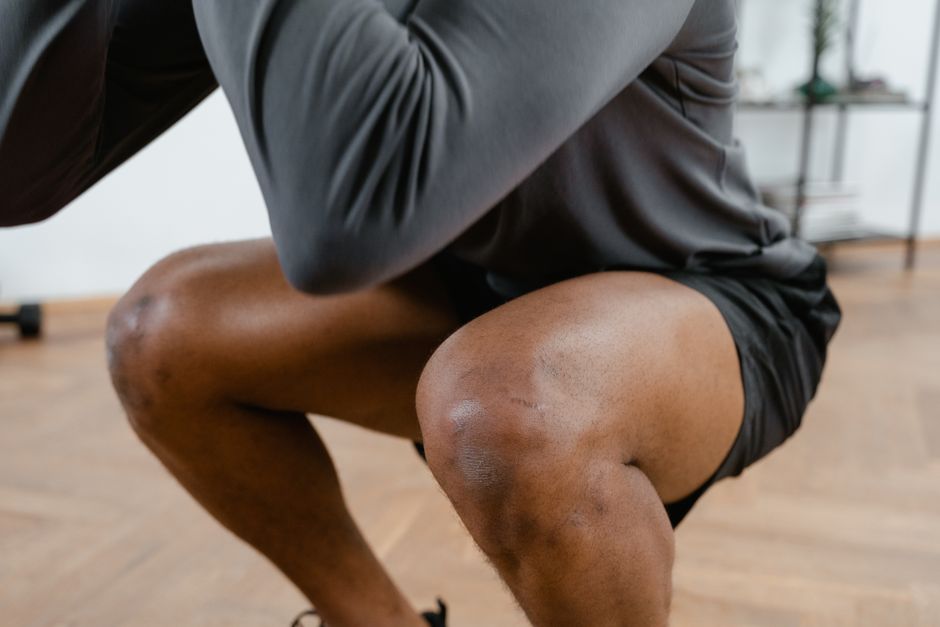
Knee muscle atrophy happens when the muscles around your knee joint shrink and weaken from disuse, nerve damage, or injury. The quadriceps — the large muscle group on the front of your thigh — is usually the first to lose mass because it does most of the work in straightening your knee. The good news is that in most cases, muscle lost to inactivity can be rebuilt with targeted strength training, though the timeline and degree of recovery depend heavily on the underlying cause.
What Causes Knee Muscle Atrophy And How To Reverse It?
Atrophy means your muscle fibers are getting smaller, not necessarily disappearing. Each muscle is made of thousands of fibers that respond to demand. When that demand drops — because of bed rest, a cast, a torn ligament, or chronic knee pain — the body breaks down muscle protein faster than it builds it. The fibers shrink. Strength falls. The knee can start to feel unstable or “loose.”
The causes generally fall into a few categories:
- Disuse: Bed rest, a leg cast, or weeks of limping after surgery. This is the most common and most reversible cause.
- Injury: ACL tears, meniscus damage, or fractures that limit how much you can move and load the leg.
- Surgery: Post-operative swelling and pain make it hard to contract the quadriceps fully. The muscle can lose noticeable mass within weeks.
- Nerve problems: Damage to the femoral nerve or conditions like radiculopathy can interrupt the signals that tell the muscle to work.
- Chronic conditions: Osteoarthritis, rheumatoid arthritis, and long-term joint inflammation can reduce activity over months or years.
- Neurological disease: Conditions such as stroke or multiple sclerosis can cause atrophy through reduced nerve signaling and movement.
Reversing it depends on which cause applies. For disuse atrophy, progressive resistance training is the primary approach. For nerve-related atrophy, recovery depends on whether the nerve can heal or be compensated for. For atrophy tied to chronic disease, managing the underlying condition while doing what exercise is tolerated matters most.
How Fast Does Knee Muscle Atrophy Happen?
Muscle loss from inactivity starts quickly. Research on immobilization shows measurable declines in muscle size and strength within the first one to two weeks of reduced use. The quadriceps is particularly vulnerable because it is a large, powerful muscle that depends on regular loading to maintain its mass.
After knee surgery, surgeons often note visible quadriceps shrinkage within the first few weeks. This is not a sign that something went wrong. It is the normal response of muscle to reduced demand. The same process happens to anyone who stops using a limb, whether from injury, illness, or a cast.
How much you lose depends on several factors:
- How long the muscle goes unused
- Your age — older adults tend to lose muscle faster with disuse
- Your baseline strength before the injury or inactivity
- Whether you can do any muscle activation during the period of reduced use
The key point: the sooner you can safely begin loading the muscle again, the less ground you have to make up. That said, “loading” does not mean pushing through sharp pain or ignoring surgical precautions. It means working with a physical therapist or physician to find safe ways to contract and challenge the muscle.
Can You Reverse Knee Muscle Atrophy?
Yes, in most cases of disuse atrophy. Skeletal muscle retains the ability to grow throughout life. When you consistently challenge a weakened muscle with resistance, the body responds by increasing protein synthesis, adding contractile proteins, and — with enough stimulus — increasing fiber size. This process is called hypertrophy.
The evidence for resistance training as the primary driver of muscle regrowth is strong and consistent across decades of research. Studies in older adults, post-surgical patients, and people recovering from immobilization all show that progressive strength training rebuilds muscle mass and improves function.
What is less certain is how fully you can recover after severe nerve damage or long-standing neurological conditions. If the nerve supply to the muscle is permanently disrupted, the muscle cannot be fully rebuilt through exercise alone. In those cases, the focus shifts to maximizing what function remains and using other muscles to compensate.
For the majority of people — those dealing with post-injury, post-surgical, or post-immobilization atrophy — the outlook is good. Recovery takes weeks to months, not days, and it requires consistent effort.


What Exercises Help Rebuild Knee Muscles?
The exercises that work are the ones that load the quadriceps and surrounding muscles through a controlled range of motion. The exact starting point depends on your injury, surgical restrictions, and pain level. A physical therapist can tailor this to your situation, but the general progression looks like this:
- Quad sets: Sit with your leg straight. Tighten your thigh muscle by pressing the back of your knee down toward the floor. Hold for several seconds. This is often the first exercise after surgery because it activates the muscle without moving the joint.
- Straight leg raises: Lie on your back with one knee bent and the other straight. Lift the straight leg several inches off the ground while keeping the knee locked. This builds the quadriceps without bending the knee.
- Short arc quads: Place a rolled towel under your knee. Straighten your leg by pressing the back of your knee into the towel. This works the quadriceps through a small, safe range.
- Wall sits: Slide your back down a wall until your knees are bent. Hold. This loads the quadriceps and glutes together.
- Step-ups: Step onto a low platform, leading with the affected leg. This mimics real-world movement and builds strength through a functional range.
- Leg press and knee extensions: Gym machines that allow you to control the load precisely. These are common in later-stage rehab.
Progression matters more than the specific exercise. Start with what you can do without pain, then gradually increase resistance, repetitions, or range of motion over time. If you are not challenging the muscle more over weeks, it will not grow.
One non-obvious point: electrical stimulation is sometimes used in early rehab when a patient cannot voluntarily contract the quadriceps after surgery. Some studies suggest it can help preserve or regain strength when used alongside exercise, but it is not a replacement for active training. It is a tool some clinicians use in specific situations, not a universal recommendation.
How Long Does It Take To Rebuild Knee Muscle?
Strength gains can begin within a few weeks of consistent training. Noticeable muscle growth typically takes longer — often several weeks to a few months of regular resistance work. Full recovery after significant atrophy can take six months or more, depending on the cause and how much was lost.
The timeline varies widely. A young person recovering from a minor injury may regain strength in a couple of months. An older adult recovering from major surgery or prolonged immobilization may need a year or more to approach their previous level. Some people never fully regain the muscle they lost, especially if nerve damage is involved.
What matters is the direction of progress. If you are getting stronger, doing more, and feeling more stable over time, you are on the right track.
What Slows Down Recovery?
Several things can get in the way of rebuilding knee muscle:
- Not eating enough protein: Muscle is built from protein. If your intake is low, your body has fewer building blocks for repair and growth. General guidance for adults suggests including protein at each meal, though specific needs vary by age, activity level, and health status.
- Doing too little: Rest is important after injury, but prolonged rest beyond what is medically necessary accelerates muscle loss. Follow your surgeon’s or therapist’s guidance on when to start moving.
- Doing too much too soon: Pushing through pain or ignoring post-surgical precautions can cause setbacks, increased swelling, and delayed healing.
- Poor sleep: Sleep is when much of the body’s tissue repair happens. Chronic sleep deprivation can impair recovery.
- Smoking: Smoking reduces blood flow and impairs healing. It is associated with poorer outcomes after orthopedic surgery.
- Unmanaged pain: If pain prevents you from doing any exercise, the muscle cannot rebuild. Talk to your doctor about pain management that allows you to participate in rehab.
Age is a factor, but it is not a barrier. Older adults can and do build muscle with resistance training. The response may be slower, but it is real.
When Should You See a Doctor?
See a doctor or physical therapist if you notice rapid muscle loss, especially if it is not explained by a known injury or period of inactivity. Atrophy that comes on without a clear reason, or that is accompanied by weakness, numbness, or tingling, needs medical evaluation. Those symptoms can point to nerve problems or other conditions that require specific treatment.
Also seek care if you are doing rehab exercises and getting worse instead of better, or if you have knee pain that is severe, worsening, or accompanied by swelling, redness, or warmth. Those signs can indicate infection, blood clots, or other complications that need prompt attention.
For most people with disuse or post-injury atrophy, the path forward is straightforward: work with a professional to design a progressive strength program, be consistent, eat enough protein, and give it time. Muscle that shrank from lack of use can grow back. It just needs a reason to.
Frequently Asked Questions
How long does it take for knee muscle atrophy to reverse?
Strength gains can begin within a few weeks, but noticeable muscle growth usually takes several weeks to months of consistent resistance training. Full recovery after significant atrophy can take six months or longer depending on the cause and severity.
Can you rebuild knee muscle without surgery?
Yes, most cases of disuse or injury-related atrophy can be improved with physical therapy and progressive strength training without surgery. Surgery is only needed when there is a structural problem, such as a torn ligament or meniscus, that is blocking your ability to move and strengthen the knee.
What happens if knee muscle atrophy is not treated?
Untreated atrophy can lead to ongoing weakness, joint instability, and a higher risk of falls or further injury. Over time, the muscle becomes harder to rebuild, so starting rehabilitation as soon as it is safe matters.
Is walking enough to rebuild knee muscle?
Walking helps maintain some muscle but is usually not enough to rebuild significant atrophy on its own. Resistance exercises that directly challenge the quadriceps and surrounding muscles are needed to restore strength and mass.
