
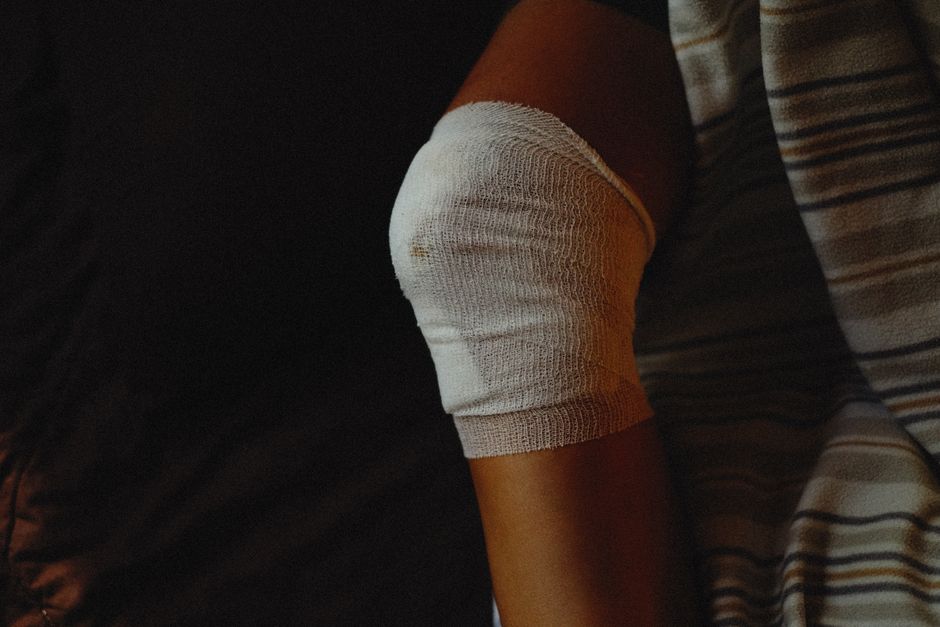
Knee swelling happens when fluid builds up in or around the joint. The fastest evidence-based way to reduce it is the RICE approach — rest, ice, compression, and elevation — started within the first 24 to 48 hours after an injury or flare-up. Ice and elevation do most of the early work. Compression and rest keep the fluid from building back up while the knee settles.
That answer works for a sprain, a twist, or a flare of an ongoing knee problem. It does not work for every cause. A swollen knee from an infection, a blood clot, or gout needs medical care, not ice and rest. Knowing which situation you are in matters more than any single technique.
What Is Actually Causing the Swelling?
Swelling is a symptom, not a condition. The fluid itself is the body’s response to something else — and what that something is determines whether home care helps or delays real treatment.
In a healthy knee, a small amount of synovial fluid lubricates the joint. When the joint is irritated or injured, the lining of the joint capsule produces extra fluid. Blood vessels in the area become more permeable, letting plasma proteins and immune cells leak into the joint space. That is the swelling you feel and see.
The most common triggers fall into a few groups:
- Acute injury — a sprain, a torn ligament, or a meniscus tear. Swelling usually appears within hours and can be significant.
- Overuse or repetitive strain — swelling builds more slowly, often after activity.
- Osteoarthritis — a flare can cause the joint to swell without a specific injury.
- Gout or pseudogout — crystal deposits trigger sudden, intense swelling, often with severe pain.
- Infection (septic arthritis) — a serious condition that requires urgent medical treatment.
- Blood clot in the leg — can cause swelling around the knee and calf.
Home remedies help with the first three. They do not help — and can waste critical time — with the last three.
How To Reduce Swelling In Your Knee Quickly
Cold and elevation are the two fastest tools you have. Both work on the same principle: reducing blood flow and fluid movement into the joint space.
Ice. Cold narrows blood vessels near the surface, which limits how much fluid leaks into the tissue. Apply an ice pack wrapped in a thin cloth for about 15 to 20 minutes at a time. Repeat every two to three hours during the first day or two. Never put ice directly on bare skin — it can cause a cold burn. A bag of frozen peas wrapped in a towel works just as well as a commercial pack.
Elevation. Raising the knee above the level of your heart lets gravity help drain fluid away from the joint. Lie down and prop the leg on pillows. Sitting with the foot on a stool is not the same thing — the knee needs to be above heart level to make a real difference.
Compression. An elastic bandage or sleeve applies gentle pressure that limits fluid buildup. It should feel snug but never tight. If your toes turn blue, tingle, or go numb, it is too tight — loosen it right away.
Rest. Avoid the activity that caused the swelling. That does not mean total bed rest. Gentle movement that does not bear weight — like slowly bending and straightening the knee within a comfortable range — can help maintain circulation. The key is to avoid loading the joint while it is acutely swollen.
These steps work best in the first 24 to 48 hours. After that window, the benefit of ice for an injury is less clear, though many people still find it soothing. For osteoarthritis flares, ice can help at any stage.
Do Anti-Inflammatory Medications Help?
Over-the-counter nonsteroidal anti-inflammatory drugs (NSAIDs) like ibuprofen and naproxen can reduce both pain and swelling. They work by blocking the enzymes that drive inflammation in the joint lining.
They are not right for everyone. NSAIDs can irritate the stomach, affect kidney function, and interact with blood thinners and other medications. If you have kidney disease, a history of ulcers, or heart disease, talk to a doctor or pharmacist before using them. Acetaminophen (Tylenol) helps with pain but does not reduce swelling — it is not an anti-inflammatory.
Topical NSAID gels are an option for some people and tend to have fewer stomach-related side effects than pills. They are absorbed through the skin and act more locally.
The evidence on NSAIDs for acute swelling is solid for pain relief. Their effect on how quickly swelling resolves is less dramatic than most people expect. They ease the symptom; they do not speed healing of the underlying injury.





When Should You See a Doctor Instead?
Some swollen knees need medical care right away. The signs below are not subtle, and waiting can cause real harm.
- The knee swelled within a couple of hours of an injury and is very large — this can signal bleeding inside the joint, sometimes from a torn ligament.
- You cannot bear weight on the leg at all, or the knee feels unstable.
- The joint is hot, red, and you have a fever or feel unwell — this can indicate infection.
- The swelling came on suddenly with severe pain, especially if you have a history of gout.
- The calf is swollen, warm, or tender, or you have risk factors for blood clots.
- The swelling has not improved after several days of home care, or it keeps returning.
Septic arthritis is uncommon but serious. It can destroy a joint within days if untreated. A doctor can draw fluid from the knee and test it to tell the difference between infection, gout, and ordinary inflammation. That test is the only reliable way to know.
What Speeds Recovery and What Slows It Down
What you do in the days after swelling starts affects how long it lasts.
Heat is the most common mistake. Applying a heating pad to a freshly swollen knee increases blood flow and can make swelling worse. Heat feels good on stiff, arthritic joints without acute swelling — but not on a knee that just swelled from injury or a flare.
Alcohol and heavy salty meals can also work against you. Both affect fluid balance in the body and can add to swelling. Staying hydrated and eating normally supports the body’s own fluid regulation.
Movement matters, but timing matters more. Too much too soon re-injures the tissue and restarts the swelling cycle. Too little for too long leads to stiffness and muscle weakness. A physical therapist can guide the transition from rest back to activity, especially after a significant injury.
If you have osteoarthritis, regular low-impact activity — walking, swimming, cycling — is one of the most consistent ways to reduce flare frequency over time. It does not reduce acute swelling in the moment, but it changes the pattern over months.
How Long Does Knee Swelling Usually Last?
For a mild sprain or overuse flare, swelling often improves within a few days to a week with consistent care. A more significant injury, like a ligament tear, can take several weeks or longer, and some swelling may persist until the tissue heals.
Osteoarthritis flares vary widely. Some settle in days; others take weeks. The pattern matters — if swelling keeps returning without a clear trigger, that is a reason to get the knee evaluated rather than treat it at home again.
Swelling that lasts more than a few weeks, or that comes with ongoing pain, stiffness, or loss of motion, deserves a proper look. Imaging and, sometimes, joint fluid analysis can identify what home care cannot fix.
Frequently Asked Questions
How do you reduce knee swelling fast at home?
Apply ice for 15 to 20 minutes every two to three hours, elevate the knee above heart level, and use a snug compression wrap. Start these steps as soon as possible after the swelling begins.
Should I use heat or ice on a swollen knee?
Ice is the right choice for a knee that just swelled from injury or a flare. Heat increases blood flow and can make acute swelling worse, though it may help stiff joints without active swelling.
When is a swollen knee an emergency?
A hot, red, feverish knee, sudden severe swelling with intense pain, or an inability to bear weight all warrant urgent medical care. These signs can point to infection or a serious injury.
Can I walk on a swollen knee?
Gentle walking is often fine if it does not increase pain or swelling. If bearing weight is painful or the knee feels unstable, avoid it and see a doctor.
