
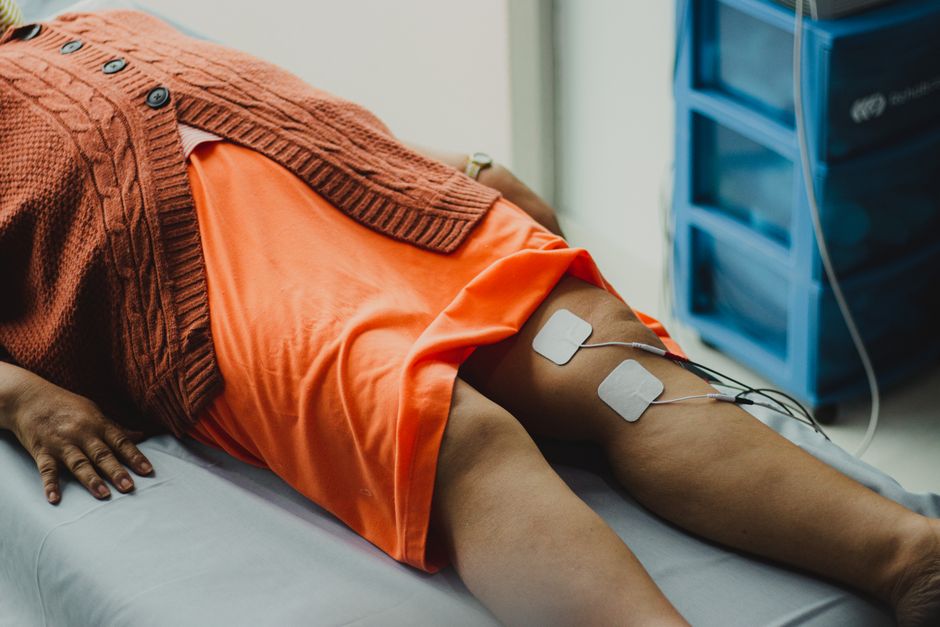
Knee pain is one of the most common complaints among cyclists, and it usually comes down to one of three things: how your bike fits you, how you pedal, or how much you’ve ramped up your riding. The good news is that most cycling knee pain is not caused by structural damage to the joint. It’s caused by repetitive strain on the soft tissues around the knee, and that means it often responds well to rest, fit adjustments, and smarter training. If pain is sharp, comes with swelling, or persists despite these changes, that’s a signal to see a clinician rather than push through it.
Why Does Cycling Cause Knee Pain?
Cycling is a low-impact activity, but it is not a no-impact activity for the knee. Each pedal stroke bends and straightens the knee under load, and a cyclist can repeat that motion thousands of times per hour. When the load is distributed evenly and the knee tracks properly, the joint tolerates this well. When something is off — saddle height, foot position, cadence, or training volume — the same repetition becomes a source of irritation.
The knee is a hinge joint that depends on the alignment of the hip above it and the ankle below it. Problems in either area can show up as knee pain. This is why a saddle that’s too low, a cleat that’s rotated, or a weak hip muscle can all produce symptoms at the knee even though the knee itself is not the root cause.
Most cycling knee pain falls into patterns based on where it hurts:
- Front of the knee (anterior): Often linked to a saddle that is too low or too far forward, which increases the bend angle at the knee and the force on the kneecap.
- Outside of the knee (lateral): Sometimes associated with cleat position, foot alignment, or tightness in the band of tissue running down the outer thigh.
- Back of the knee (posterior): Less common and more often tied to a saddle that is too high, which forces the leg to overextend at the bottom of the stroke.
- Under the kneecap: Frequently related to cadence that is too low, meaning the rider pushes a harder gear with more force per stroke.
These patterns are useful guides, not diagnoses. More than one factor is often involved, and a clinician can help sort out what is actually driving the pain.
How Do You Treat Knee Pain From Cycling?
The first step is to reduce the load on the irritated tissue. For most mild cases, that means cutting back on riding volume or intensity rather than stopping entirely, since complete rest can prolong recovery without addressing the cause.
General measures that are widely used and reasonable for mild overuse knee pain include:
- Reducing mileage or intensity for a period, then building back gradually
- Applying ice after rides if there is swelling or a hot, irritated feeling
- Using over-the-counter pain relievers as directed, though these treat symptoms and do not fix the underlying cause
- Avoiding hard, low-cadence efforts in big gears until symptoms settle
If pain does not improve with a few weeks of load management and fit changes, or if it is getting worse, that is when a medical evaluation makes sense. Persistent knee pain can have causes that need proper assessment, including cartilage, tendon, or ligament problems that will not resolve on their own.
What you should not do is ignore worsening pain and keep riding through it. Overuse injuries that are caught early tend to respond far better than ones that have been building for months.
How Does Bike Fit Affect Knee Pain?
Bike fit is the single most modifiable factor for most cyclists with knee pain, and saddle height is the most important measurement. A saddle that is too low increases how much the knee bends at the top of the pedal stroke, which raises the compressive force on the kneecap. A saddle that is too high forces the leg to reach and can irritate the back of the knee.
A common starting point for saddle height is to set it so the knee has a slight bend — roughly 25 to 35 degrees — when the pedal is at the bottom of the stroke with the ball of the foot on the pedal. This is a widely used guideline, not an exact rule, and individual anatomy varies. A fit specialist can fine-tune it.
Other fit factors that matter:
- Cleat position and rotation: Cleats set too far forward, angled oddly, or locked into a position that fights your natural foot angle can twist the knee with every stroke.
- Saddle fore-aft position: A saddle too far forward increases knee bend; too far back changes how the leg reaches.
- Stance width: The distance between your feet on the pedals should roughly match your natural stance. Too narrow can stress the outer knee.
- Crank length: Longer cranks increase knee bend at the top of the stroke, which matters for riders with a history of knee issues.
A professional bike fit is not cheap, but for someone riding regularly with recurring knee pain, it is often the highest-value change they can make. Many riders find that a small adjustment resolves symptoms that seemed stubborn.

Can Cadence and Gearing Prevent Knee Pain?
Yes. How hard you push matters as much as how far you ride. Pushing a big gear at a low cadence means more force per pedal stroke, and that force goes straight through the knee. Spinning a lighter gear at a higher cadence spreads the same work over more strokes with less force each time.
Many coaches and clinicians suggest that recreational riders aim for a cadence in the range of roughly 80 to 90 revolutions per minute on flat terrain, adjusting for hills and fitness. This is a general guideline rather than a fixed rule, and comfortable cadence varies between riders. The point is that grinding in a heavy gear is a common contributor to knee irritation, and shifting to an easier gear is a simple change worth trying.
Gearing also matters on hills. Standing to climb puts different forces through the knee than seated spinning. If you have knee pain, staying seated and using easier gears is generally gentler on the joint.
What Role Do Strength and Flexibility Play?
The knee does not work alone. The muscles around the hip and the quadriceps control how the leg moves through each pedal stroke, and weakness or imbalance in these areas can change how the knee tracks.
Hip strengthening in particular is often recommended for cyclists with knee pain, because the hip muscles control rotation and alignment of the entire leg. When the hip is weak, the knee can drift inward or outward under load. This is well established in the broader rehabilitation literature for knee pain, though how much it specifically helps cyclists is studied less directly.
Quadriceps strength matters too, since these muscles absorb and produce much of the force in pedaling. A balanced strength program — including the glutes, hips, and core — supports the knee without overloading it.
Flexibility is more debated. Some clinicians emphasize stretching tight hamstrings, calves, or hip flexors; others argue that strength and movement quality matter more than static stretching. The evidence here is mixed. What is clear is that sudden changes in training — a big jump in mileage, a new bike, a new saddle position — are common triggers for knee pain, and gradual progression is one of the most reliable ways to avoid it.
When Should You See a Doctor for Cycling Knee Pain?
See a clinician if the pain is sharp rather than a dull ache, if the knee swells, locks, or gives way, or if pain continues when you are off the bike. These signs can point to problems that need proper evaluation rather than self-management.
Also seek care if pain has not improved after a few weeks of rest, fit changes, and reduced training load. Persistent knee pain that does not respond to these measures deserves a professional look, because the cause may not be simple overuse.
Red flags that warrant prompt attention include:
- Sudden swelling after a ride or a fall
- The knee catching, locking, or feeling unstable
- Pain that wakes you at night or is present at rest
- Inability to bear weight normally
- Fever, redness, or warmth around the joint
These symptoms do not automatically mean something serious, but they are reasons to get evaluated rather than wait.
How Can You Prevent Knee Pain From Cycling?
Prevention comes down to three things: a bike that fits, a pedal stroke that does not overload the knee, and training that builds gradually.
Practical steps that reduce risk:
- Get a proper bike fit, especially if you ride regularly or have had knee issues before
- Keep your saddle height in a range where the knee has a slight bend at the bottom of the stroke
- Spin at a comfortable, moderate cadence rather than grinding in heavy gears
- Increase mileage and intensity gradually, not in big jumps
- Strengthen the hips, glutes, and quadriceps to support the knee
- Address cleat and foot position so the knee is not twisting with each stroke
- Pay attention to early warning signs and ease off before pain becomes persistent
The most common mistake is ignoring a small ache until it becomes a bigger problem. Knee pain that is caught early and traced to a fit or training issue is usually far easier to resolve than pain that has been building for months.
Frequently Asked Questions
Does cycling make knee pain worse?
Cycling can aggravate knee pain when the bike fit, cadence, or training load is off, but it does not have to. With a proper fit and gradual training, many people with knee pain can ride comfortably.
What is the best saddle height to prevent knee pain?
A common guideline is a slight knee bend of roughly 25 to 35 degrees when the pedal is at the bottom of the stroke. Individual anatomy varies, so a professional bike fit is the most reliable way to get it right.
Should I stop cycling if my knee hurts?
Not necessarily. Reducing volume and intensity while you address fit and training issues is often more useful than stopping completely, unless pain is sharp or the knee is swollen.
When should I see a doctor for knee pain from cycling?
See a clinician if pain is sharp, causes swelling, or does not improve after a few weeks of rest and fit changes. Pain at rest or a knee that locks or gives way also warrants prompt evaluation.
