
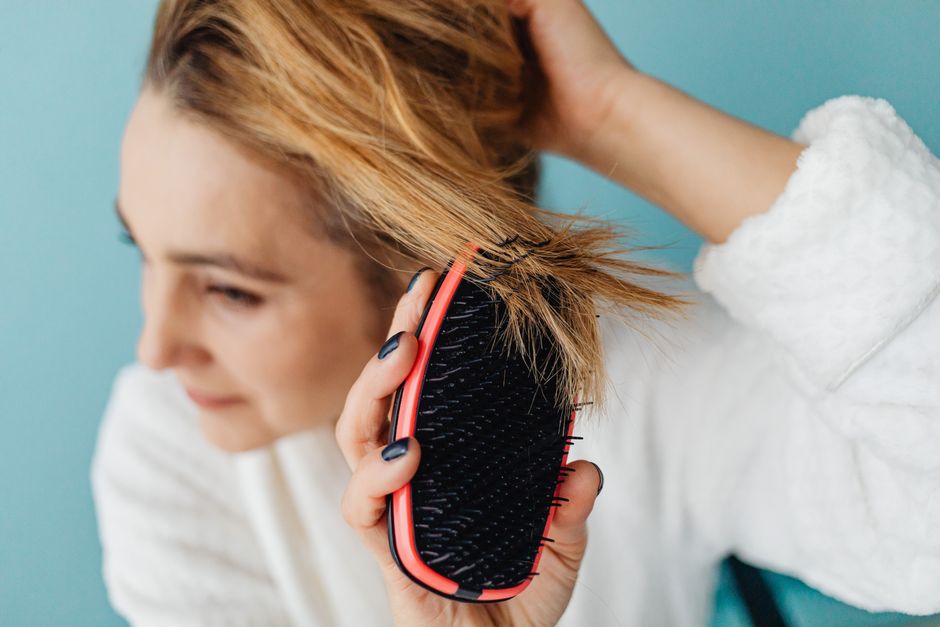
Hair breakage happens when the hair shaft loses more structural strength than it can replace. The most common causes are chemical damage from bleach, dye, and relaxers, heat damage from flat irons and blow dryers, mechanical damage from tight styling and rough brushing, and a natural decrease in the hair’s internal bonds as it grows longer and older. You cannot repair a broken hair strand, but you can stop most ongoing breakage by reducing chemical and heat exposure, handling hair gently when it is wet, and getting regular trims to remove split ends before they travel up the shaft.
What Is The Difference Between Hair Breakage And Hair Loss?
Breakage and hair loss look similar in the shower drain or on your pillow, but they start in completely different places. Breakage is damage to the hair shaft itself. Hair loss, medically called alopecia, starts at the follicle under the skin where the hair is made.
The distinction matters because the solutions are different. A broken strand snapped off partway down its length. A shed hair came out whole, with a small white bulb at the root. If you look closely at the hair you are losing, that bulb is the giveaway.
Breakage usually shows up as shorter pieces, uneven lengths, and a halo of frizz around the crown. Hair loss from the follicle tends to show up as thinning at the part, a wider part line, or patches of scalp with less coverage.
Some people have both at once. Years of chemical processing can damage shafts while an underlying condition like thyroid disease or iron deficiency affects the follicle. If you are losing hair at the root rather than snapping it off, breakage treatments will not help, and it is worth talking to a doctor.
What Causes Hair Breakage And How To Stop It?
The hair shaft is made mostly of a protein called keratin, held together by chemical bonds. Two of those bonds matter most for breakage: disulfide bonds, which give hair its strength and shape, and hydrogen bonds, which are weaker and reset with water.
Anything that breaks those bonds faster than the hair can tolerate causes damage. The damage is cumulative. Hair does not heal itself the way skin does, because the shaft is not living tissue. Once a bond is broken or the outer protective layer is worn away, that section of hair stays weaker for the rest of its life.
The main causes fall into four groups:
- Chemical damage. Bleach, permanent dye, and relaxers break disulfide bonds on purpose to change hair color or shape. This is the most aggressive form of damage and it is permanent.
- Heat damage. Flat irons, curling irons, and blow dryers pull moisture out of the shaft and can literally melt or bubble the outer layer at high settings. Repeated high heat causes cracks that lead to snapping.
- Mechanical damage. Rough brushing, tight ponytails, braids, and weaves pull on the shaft. Wet hair stretches and breaks more easily than dry hair.
- Environmental and nutritional factors. Sun exposure, chlorine, and very dry air weaken hair over time. Severe protein or iron deficiency can also affect hair strength, though this is less common than the physical causes above.
The fix is mostly subtraction, not addition. Reduce what is damaging the hair before you spend money on products claiming to repair it. No shampoo, oil, or mask can rebuild a broken disulfide bond. Products can smooth the surface and reduce friction, which genuinely helps, but they cannot undo structural damage.
Does Heat Styling Really Cause Breakage?
Yes, and the effect is dose-dependent. Occasional use of a warm blow dryer on damp hair is different from daily flat ironing at maximum heat on dry hair.
Heat damages hair in two ways. First, it strips moisture, leaving the shaft brittle and more likely to crack. Second, at high enough temperatures, it physically alters the keratin structure. Research using electron microscopy has shown that repeated high-heat styling produces visible bubbles and cracks in the hair’s outer layer, called the cuticle. Those defects become the starting points for splits and snaps.
The threshold matters. Most hair care guidance suggests keeping styling tools below roughly 350°F (about 175°C) and using them less often. Many flat irons reach 450°F. Repeated passes over the same section concentrate the damage.
Practical steps that reduce heat damage:
- Let hair air-dry partway before blow drying.
- Use the lowest heat setting that still does the job.
- Keep the tool moving. Do not hold it on one section.
- Always use a heat protectant, though understand it reduces damage rather than preventing it.
- Give hair breaks. Styling every day compounds the damage.
If your hair is already snapping, heat is usually the fastest thing to cut back. Many people notice less breakage within a few weeks of reducing heat, though hair that is already damaged will not recover.




Why Does Wet Hair Break More Easily?
Wet hair is more fragile than dry hair. When water enters the shaft, it breaks hydrogen bonds and allows the hair to stretch far more than it normally would. Hair can stretch significantly when wet before it snaps, but that same flexibility means it deforms easily under tension.
This is why the old advice to brush hair when wet is only partly right. Detangling wet hair with a wide-tooth comb and conditioner is gentler than ripping through dry tangles, but you still should not brush wet hair aggressively or pull on it.
Better habits for wet hair:
- Detangle gently with a wide-tooth comb, starting at the ends and working up.
- Never brush wet hair with a fine-tooth brush.
- Do not pull hair back tightly while it is wet.
- Pat dry with a soft towel or cotton shirt instead of rubbing.
The takeaway is simple. Wet hair is in its most vulnerable state. Treat it that way.
Can Diet Or Supplements Stop Hair Breakage?
Diet affects hair, but the relationship is often overstated. Hair is not a priority for the body. When you are severely deficient in protein, iron, zinc, or certain vitamins, the body diverts resources away from hair to more essential functions.
That said, most breakage in healthy adults is not caused by diet. It is caused by what you do to the hair. Taking a biotin supplement when you are not deficient is unlikely to help, and there is no strong evidence that biotin improves hair strength in people with normal levels.
Where nutrition does matter:
- Protein. Hair is mostly protein. Very low protein intake over time can weaken hair, but this usually requires significant and prolonged restriction.
- Iron. Iron deficiency is linked to hair shedding and, in some cases, weaker hair. This is more about loss from the follicle than breakage of the shaft.
- Vitamin D and zinc. Deficiencies have been associated with hair problems, but the evidence for supplementation in people with normal levels is weak.
If you suspect a deficiency, get tested rather than guessing. Supplements are not harmless, and some, including high-dose vitamin A, can actually contribute to hair loss.
What Actually Helps Damaged Hair?
The honest answer is that damaged hair cannot be repaired. What you can do is prevent further damage and manage the hair you have until it grows out and gets trimmed off.
Things that genuinely help:
- Regular trims. Split ends travel up the shaft. Trimming them off stops the split from getting worse.
- Gentle handling. Less brushing, looser styles, and no tight pulling.
- Conditioners and leave-in products. These smooth the cuticle and reduce friction, which lowers breakage. They do not repair the shaft.
- Bond-building treatments. Some products claim to rebuild disulfide bonds. The evidence is mixed and mostly short-term. Some users report improvement, but independent long-term studies are limited.
- Protective styling. Loose braids, buns, and low-tension styles reduce daily wear. Tight styles do the opposite.
If you have tried all of this and breakage continues, it may be worth seeing a dermatologist. Some scalp conditions and medical issues can mimic breakage and need a different approach.
How Long Does It Take To See Less Breakage?
If you stop the cause, you can often see less new breakage within a few weeks. Existing damage does not go away, though. That hair will stay weak until it is cut off.
Hair grows about half an inch per month on average. That means a full inch of new, undamaged hair takes about two months to appear at the root. If you are growing out damage, plan on months, not weeks, before the difference is obvious.
The most useful mindset is to focus on what you can control. You cannot restore a broken strand. You can stop breaking new ones.
Frequently Asked Questions
Can hair breakage be reversed?
No. Hair is not living tissue, so once a strand is structurally damaged or broken, it cannot heal itself. You can only prevent further damage and trim off the damaged sections as new hair grows in.
What vitamin deficiency causes hair breakage?
Severe deficiencies in protein, iron, zinc, or vitamin D have been linked to hair problems, but most breakage in otherwise healthy people is caused by chemical, heat, or mechanical damage rather than diet. Get tested before assuming a deficiency is the cause.
Does trimming hair stop breakage?
Trimming removes split ends before they travel further up the shaft, which reduces breakage at the ends. It does not prevent breakage caused by heat, chemicals, or rough handling higher up the strand.
How often should I trim to prevent breakage?
Most hair care guidance suggests trims every 8 to 12 weeks for people with damage-prone hair, though the right interval depends on your hair type and how much damage you are managing. More frequent trims help if split ends are a recurring problem.
