
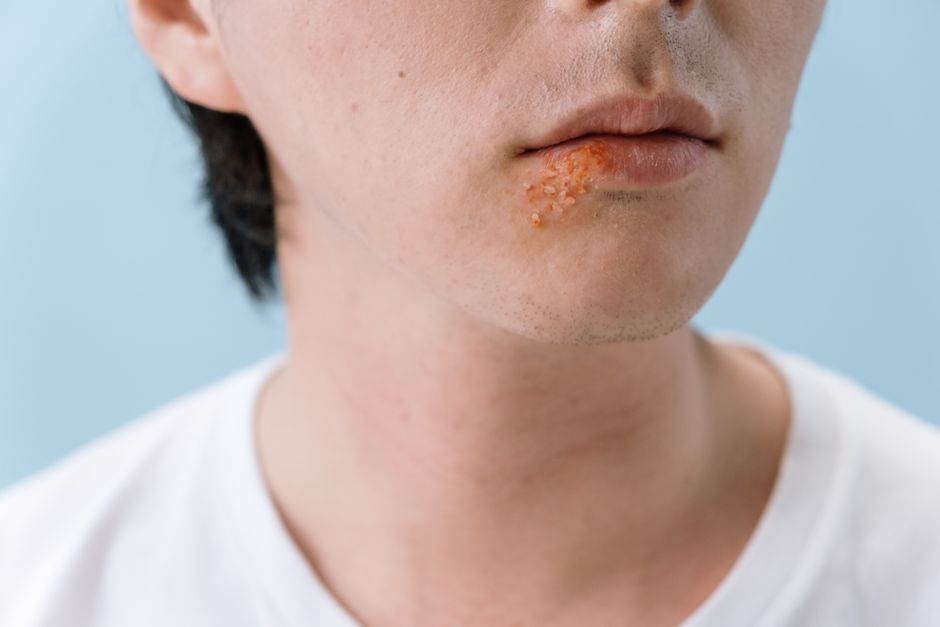
Cold sores are caused by the herpes simplex virus, most commonly type 1 (HSV-1). The virus spreads through direct skin contact, like kissing or sharing a drink, and once it enters the body it stays there for life. After the first infection, the virus travels to nerve cells near the face and lies dormant until something triggers it to reactivate and produce a visible sore.
What Causes Cold Sores On Lips?
The short answer is the herpes simplex virus. HSV-1 is responsible for the vast majority of cold sores around the mouth. HSV-2, which usually causes genital herpes, can also cause cold sores but is far less common in that location.
You can catch the virus through close personal contact. The virus enters through small breaks in the skin or through the moist tissue lining the mouth. Once infected, the virus never leaves your body. It hides in a cluster of nerve cells called a ganglion, usually near the cheekbone, and can reactivate at any time.
Not everyone who carries the virus gets cold sores. Some people carry HSV-1 and never have a single outbreak. Others get them several times a year. The difference often comes down to how easily the virus reactivates in that person’s body.
How the Virus Reactivates
The dormant virus does not cause symptoms. Something has to trigger it to wake up and start replicating. When it does, it travels down the nerve to the skin surface, where it causes the characteristic blister.
Common triggers include illness, stress, and fatigue. A cold or flu can suppress the immune system just enough to let the virus slip through. Sun exposure is another well-documented trigger. Ultraviolet light on the lips appears to directly stimulate the virus in some people.
Hormonal changes can also play a role. Some women report outbreaks around their menstrual period. Physical trauma to the lip area, such as dental work, lip injections, or even aggressive face washing, can trigger a sore in the same spot.
Fever is a classic trigger. In fact, the virus is sometimes called “fever blisters” because people noticed the connection long before they understood the cause.
What a Cold Sore Looks Like
The progression is fairly predictable. It starts with a tingling, itching, or burning sensation in one spot on or near the lip. This is called the prodrome phase and can last a day or two. This is the best time to start treatment.
Within 24 to 48 hours, small fluid-filled blisters appear. They may cluster together into one larger sore. The blisters eventually burst and weep clear fluid, which is highly contagious. A yellowish crust forms over the area, and the sore heals underneath it.
The entire process usually takes 7 to 10 days from first tingling to complete healing. The first outbreak a person ever has can last longer, sometimes up to two weeks, and may be accompanied by swollen lymph nodes, fever, and a general feeling of being unwell.
Recurrent outbreaks are almost always milder and shorter than the first one. The body has built up antibodies by then, so it fights the virus faster.




How Cold Sores Spread
The virus spreads through direct contact with the sore or with fluid from the blister. It can also spread through saliva, even when no sore is visible. This is called asymptomatic shedding, and it means a person can pass the virus without knowing they are contagious.
Kissing is the most common route of transmission. Sharing utensils, lip balm, towels, or razors can also spread the virus. The virus does not live long on dry surfaces, so transmission through objects is less common than through direct skin contact, but it is still possible.
You can also spread the virus to other parts of your own body. Touching a cold sore and then touching your eye can cause a serious eye infection called herpes keratitis. This is a medical emergency that can threaten vision. Washing your hands after touching a sore is essential.
The virus can also spread to the genitals through oral sex. This is a growing cause of genital herpes cases, particularly among young adults. Using a barrier during oral sex reduces this risk.
Treatment Options
Antiviral medications can shorten an outbreak if started early. These are available as prescription pills or creams. The most common ones are acyclovir, valacyclovir, and famciclovir. Taken at the first sign of tingling, they can reduce the duration of the outbreak by a day or two and sometimes prevent the sore from fully forming.
Over-the-counter creams containing docosanol are also available. This ingredient has been shown to shorten healing time when applied early. It works by preventing the virus from fusing with the cell membrane, which stops it from entering healthy cells.
For people with frequent outbreaks, a doctor may prescribe daily antiviral medication as suppression therapy. This reduces the number of outbreaks and lowers the risk of transmitting the virus to others. It does not eliminate the virus from the body.
Home remedies like ice, aloe vera, or tea tree oil have limited evidence behind them. Ice may provide pain relief but does not shorten the outbreak. Some people find lip balms with sunscreen helpful as prevention, since UV light is a known trigger.
When to See a Doctor
Most cold sores resolve on their own and do not require medical attention. But some situations warrant a call to your doctor.
See a doctor if the sore does not heal within two weeks. This could indicate a different condition, such as a bacterial infection or, in rare cases, a more serious skin issue. If you have a weakened immune system from chemotherapy, an organ transplant, or an immune disorder, you should seek medical care early because the virus can spread more aggressively.
Eye involvement is an emergency. If you feel pain, redness, or sensitivity to light in your eye during an outbreak, seek care immediately. Herpes keratitis can cause scarring of the cornea and permanent vision loss if not treated promptly.
Frequent outbreaks, defined as more than six per year, may benefit from suppressive therapy. Talk to your doctor about whether this is appropriate for you.
Prevention Strategies
You cannot completely prevent outbreaks if you carry the virus, but you can reduce their frequency. Knowing your personal triggers is the first step. If sunlight triggers your outbreaks, use a lip balm with SPF 30 or higher every day, not just in summer.
Managing stress and getting adequate sleep helps some people. The evidence linking stress to outbreaks is not as strong as the evidence for sunlight or illness, but many people report a clear connection. It is reasonable to address stress if you notice it precedes your outbreaks.
To avoid spreading the virus to others, do not kiss anyone while you have an active sore. Do not share lip balm, utensils, or towels during an outbreak. Wash your hands frequently, especially after touching your face.
If you have a partner who does not carry the virus, be honest about your status. Using antiviral medication daily reduces transmission risk significantly. Condoms and dental dams reduce transmission during oral sex, though they do not eliminate it entirely because the virus can shed from skin not covered by the barrier.
Frequently Asked Questions
Are cold sores the same as canker sores?
No. Cold sores are caused by the herpes simplex virus and appear on the outside of the lips. Canker sores are not viral and appear inside the mouth on the soft tissue.
Can you get a cold sore from stress alone?
Stress can trigger an outbreak if you already carry the virus, but stress alone cannot give you the virus. You must be exposed to HSV-1 through contact with an infected person.
How long is a cold sore contagious?
You are contagious from the first tingling sensation until the sore is completely healed and the crust has fallen off. This usually lasts 7 to 10 days.
Can cold sores be cured permanently?
No treatment currently eliminates the virus from the body. Antiviral medications can shorten outbreaks and reduce their frequency, but the virus remains dormant in your nerve cells for life.
