
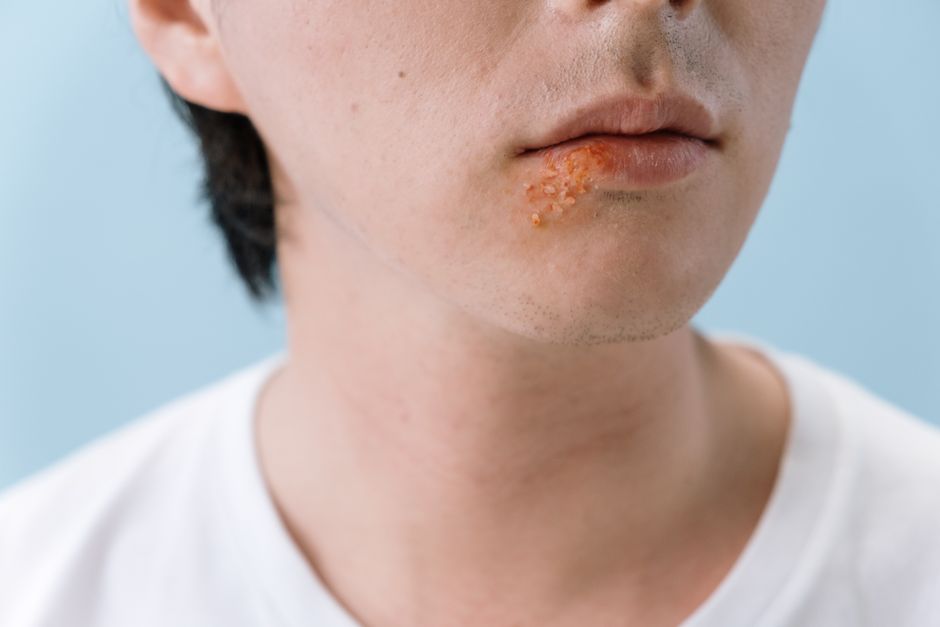
Cold sores are caused by a virus that never leaves your body. Once you are infected, it stays with you for life. But that does not mean you will have sores forever. The virus can go quiet for months or years, and many people rarely notice it at all.
What goes away is the outbreak. The virus itself does not. Understanding that difference explains why cold sores keep coming back for some people and almost never return for others.
What Causes Cold Sores?
Cold sores are caused by herpes simplex virus type 1, usually called HSV-1. This is the same virus family that causes genital herpes, though that is more often HSV-2.
HSV-1 spreads through direct contact with infected skin, saliva, or a sore. Most people pick it up in childhood. A kiss from a relative with an active sore, or sharing a cup or utensil, is a common route. The virus can also spread when no sore is visible, which is one reason it is so widespread.
Once the virus enters your skin or the lining of your mouth, it travels along nerve pathways to a cluster of nerve cells called a ganglion. For cold sores, that is usually the trigeminal ganglion near the base of the skull. There it settles in and stays.
Your immune system cannot clear it out. No treatment available today removes the virus from those nerve cells. This is why doctors describe HSV-1 as a lifelong infection.
Does The Cold Sore Virus Go Away On Its Own?
The virus does not go away. Your body does not eliminate it, and no medication currently cures it.
What your immune system can do is keep it suppressed. After the first infection, your body builds antibodies and immune cells that recognize HSV-1. These defenses usually stop the virus from causing constant symptoms. The virus retreats into the nerve cells and becomes inactive, a state called latency.
Latency is not the same as being cured. The virus is still there. It can reactivate when conditions allow. When it does, it travels back down the nerve to the skin, often in the same spot as before, and a new cold sore forms.
Some people reactivate often. Others almost never do. Researchers do not fully understand why the pattern differs so much from person to person, though immune function and genetics likely play a role.
How Often Do Cold Sores Come Back?
Recurrence varies widely. Some people get several outbreaks a year. Others get one every few years. Many people who carry HSV-1 never get a noticeable cold sore after the first infection.
Several things are known to trigger reactivation in people who are prone to it:
- Fever or illness, which is where the name “cold sore” comes from
- Physical or emotional stress
- Sun exposure and wind on the lips
- Fatigue and lack of sleep
- Hormonal changes, including menstruation
- Skin injury or surgery near the mouth
- A weakened immune system from illness or medication
These triggers do not cause cold sores on their own. They create conditions where a virus already living in your nerve cells can reactivate. Avoiding a trigger may reduce outbreaks for some people, but it does not remove the virus.
One detail worth knowing: most people who carry HSV-1 show no symptoms at all. Studies suggest a large share of adults worldwide carry the virus, and the majority have never had a cold sore they noticed. So “carrying the virus” and “getting cold sores” are not the same thing.





What Happens During a Cold Sore Outbreak?
An outbreak usually follows a predictable pattern. It often starts with a tingling, itching, or burning feeling around the lip. This is called a prodrome, and it happens before any visible sore appears.
Within a day or two, small fluid-filled blisters form. They can be painful and may cluster together. The blisters break open, ooze, and then crust over. Healing typically takes about one to two weeks for a first outbreak, and somewhat less for repeat outbreaks.
Cold sores most often appear on or near the lips, but they can also show up around the nose, chin, or cheeks. The first-ever infection can be more severe, sometimes causing fever, sore throat, and multiple sores inside the mouth. That is more common in young children.
During an active outbreak, the virus is contagious. Touching the sore and then touching your eyes, genitals, or another person can spread it. Handwashing matters. So does avoiding close contact with infants, who are at higher risk of serious infection.
Can Cold Sores Be Treated or Prevented?
There is no cure, but antiviral medications can shorten outbreaks and reduce how often they happen.
Antivirals such as acyclovir, valacyclovir, and famciclovir are prescription drugs that interfere with how the virus copies itself. They work best when started early, ideally during the tingling stage before a blister forms. Taken this way, they can reduce the length and severity of an outbreak.
For people with frequent outbreaks, a doctor may prescribe daily antiviral therapy. This is called suppressive treatment. It does not eliminate the virus, but it can lower the number of outbreaks. Whether it is appropriate depends on how often you get them and your overall health.
Some over-the-counter creams and lip balms are marketed for cold sores. Their ability to shorten an outbreak is limited, and the evidence for most is modest at best. A doctor or pharmacist can explain what is actually supported.
Prevention of spread is more straightforward than prevention of outbreaks:
- Avoid kissing or sharing utensils, towels, or lip products during an active sore
- Wash your hands often, especially after touching a sore
- Avoid touching your eyes after touching a sore
- Use sun protection on your lips if sunlight triggers your outbreaks
- Keep infants away from anyone with an active cold sore
When Should You See a Doctor?
Most cold sores are uncomfortable but not dangerous. Certain situations call for medical attention.
See a doctor if you have a weakened immune system, such as from chemotherapy, an organ transplant, or certain illnesses. In these cases, HSV-1 can cause more serious problems. Newborns and infants with a suspected herpes infection need urgent care.
Also seek care if a sore spreads widely, if you have frequent outbreaks that disrupt your life, or if sores appear near or in your eyes. Eye involvement is uncommon but can be serious and needs prompt evaluation.
If cold sores are frequent, a doctor can confirm the diagnosis and discuss whether antiviral treatment is right for you. Diagnosis is often made by appearance alone, though a swab test can confirm it in unclear cases.
Does The Cold Sore Virus Ever Leave the Body?
No. Once HSV-1 is in your body, it stays. The virus hides in nerve cells where the immune system cannot fully reach it, and it can reactivate throughout your life.
The good news is that “lifelong” does not mean “constant.” Many people go years between outbreaks, and some never have another one after the initial infection. The virus going quiet is common. The virus going away is not.
This is the honest bottom line: the outbreaks can be managed, reduced, and sometimes prevented. The infection itself cannot be cured with what is available today.
Frequently Asked Questions
Does the cold sore virus stay in your body forever?
Yes. HSV-1 settles into nerve cells and remains there for life, and no available treatment removes it. Your immune system can keep it inactive, but it does not clear it.
Can cold sores go away without treatment?
Yes, most outbreaks heal on their own in about one to two weeks. Antiviral medication can shorten this, especially when started early.
Are cold sores contagious when there is no sore?
Yes. HSV-1 can spread even when no blister is visible, which is one reason it is so common. Avoiding close contact during an active sore lowers but does not fully remove the risk.
Can you get cold sores if you have never had one before?
Yes. A first infection can happen at any age, though it most often occurs in childhood. Many first infections cause no noticeable symptoms.
