
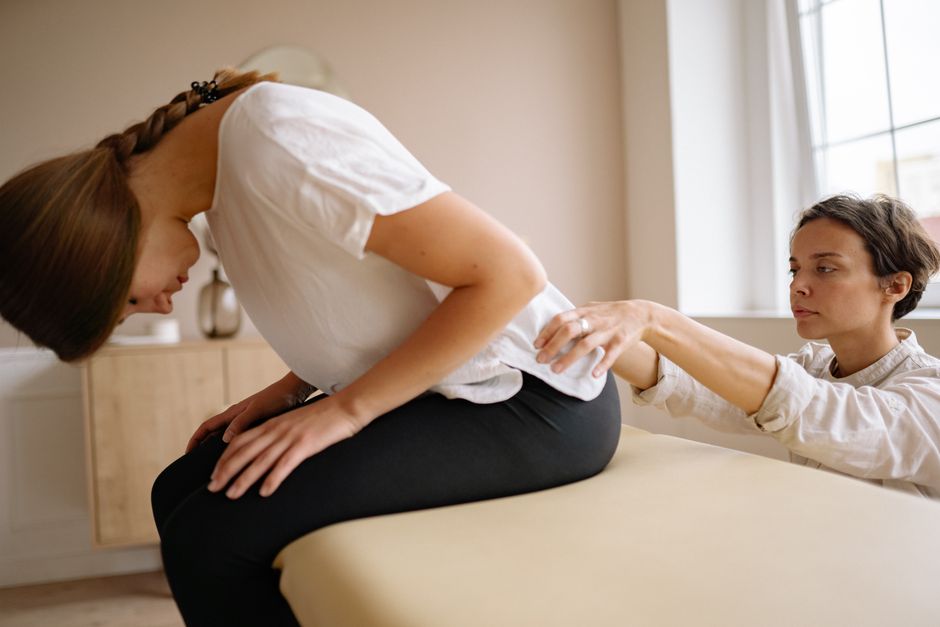
Most lower back pain is not caused by something you did wrong. It comes from the way muscles, joints, discs, and nerves in the lumbar spine interact — and in the large majority of cases, no single structure can be blamed with certainty. That is the real answer, and it is also why so many people are told their scan looks “normal” while their back still hurts.
The lumbar spine carries most of your body’s weight and handles the most movement of any part of your spine. That combination makes it vulnerable. But vulnerability is not the same as damage, and understanding the difference changes how you think about treatment.
What Causes Back Pain in the Lower Back?
Lower back pain happens when the structures in and around the lumbar spine become irritated, inflamed, or overloaded. Those structures include the muscles, ligaments, facet joints, intervertebral discs, and the nerve roots that exit the spine. Any of them can generate pain signals.
Here is the part most people do not hear. In the majority of cases, doctors cannot identify one specific structure as the source. This is called nonspecific low back pain, and it accounts for the bulk of cases seen in primary care. It is not a cop-out diagnosis. It is an honest one. The pain is real even when imaging does not show a clear cause.
When a specific cause can be identified, it usually falls into one of several categories:
- Muscular or ligamentous strain — the most common trigger, often after lifting, twisting, or an unfamiliar activity
- Facet joint irritation — the small joints at the back of the spine that guide movement
- Disc-related pain — a disc bulge or tear that irritates nearby tissue or a nerve root
- Nerve compression — such as a herniated disc pressing on a nerve, which can cause pain that travels down the leg
- Spinal stenosis — narrowing of the spinal canal, more common with age
- Structural conditions — fractures, infections, tumors, or inflammatory arthritis, which are far less common but serious
The tricky part is that many of these findings show up on imaging in people with no pain at all. Studies using MRI have found that disc bulges, disc degeneration, and facet joint changes are common in adults who have never had back pain. So a scan finding does not automatically explain your symptoms. It is a piece of the picture, not the whole story.
Why Does the Location of the Pain Matter?
Where your pain sits tells your doctor something about which structures are likely involved. Pain that stays in the lower back, centered or to one side, usually points to muscles, joints, or discs. Pain that travels below the knee suggests a nerve root is involved.
This distinction matters because nerve pain is treated differently from mechanical back pain. Nerve pain — often called radicular pain or sciatica — tends to be sharp, burning, or electric. It follows a path down the leg. Mechanical back pain tends to be achy, stiff, and worse with certain movements or positions.
Pain that is worse when you sit and better when you walk often points toward disc-related issues. Pain that is worse when you stand or arch backward and better when you sit or bend forward often points toward facet joints or stenosis. These are patterns, not rules. They guide thinking but do not confirm a diagnosis on their own.
What Are the Red Flags That Mean Something Else?
Most lower back pain is not dangerous. But some symptoms signal a condition that needs urgent medical attention. These are called red flags, and they are worth knowing.
- Loss of bladder or bowel control
- Numbness in the groin or inner thigh area
- Progressive weakness in both legs
- Pain that follows a fall, accident, or significant trauma
- Unexplained weight loss along with back pain
- Fever or chills with back pain
- A history of cancer
- Pain that is severe at night and does not change with position
These symptoms do not mean you have a serious disease. They mean a doctor needs to evaluate you promptly. Cauda equina syndrome, for example, is a rare but serious condition where nerves at the bottom of the spinal cord are compressed. It requires emergency treatment. The combination of saddle numbness and loss of bladder control is the classic warning sign.
If you have any of these symptoms, seek medical care the same day. Do not wait to see if it improves.
-
 What Causes Left Lower Back Pain in Females? The Real Answer
 -
Is Lower Back Pain an Early Sign of Pregnancy? The Real Answer
-
Can Lower Back Pain Be Caused by Kidney Stones? The Real Answer
-
Is Ice or Heat Better for Lower Back Pain? The Real Answer
-
Arctic Blast Reviews 2026: Does The Cooling Pain Drop Work?





How Do Discs and Nerves Cause Lower Back Pain?
Intervertebral discs sit between the bones of your spine. They act as shock absorbers and allow movement. Each disc has a soft inner core and a tougher outer ring. With age and repeated loading, the outer ring can develop small tears, and the inner material can push outward.
When a disc bulges or herniates, it can press against a nerve root. That pressure, along with the inflammation it triggers, produces pain that radiates into the buttock, thigh, or leg. This is what people commonly call sciatica, though sciatica is a symptom, not a diagnosis.
Not every disc bulge causes pain. Many do not. Whether a bulge causes symptoms depends on its size, its location, and how your body responds to it. Some herniated discs shrink over time on their own, and symptoms improve without surgery. This is one reason doctors often recommend conservative treatment first.
Disc degeneration — the gradual wear of disc tissue — is also common with age. It is found on imaging in a large share of adults over 40 who have no back pain. So degeneration alone does not explain pain. It is a normal part of aging for many people, not a disease that always needs treatment.
Can Muscle Weakness or Poor Posture Cause It?
Weak core muscles and poor posture are often blamed for lower back pain. The relationship is real but more complicated than most people assume.
Your core muscles — including the transversus abdominis, multifidus, and pelvic floor — help stabilize the spine. When they are weak or not firing properly, the spine may have less support during movement. Some research suggests that people with chronic low back pain show changes in how these muscles activate. But whether weak muscles cause the pain or the pain causes the muscle changes is not always clear.
Posture is similar. Sitting slumped for hours is not good for your back, but there is no single “correct” posture that prevents all pain. The evidence suggests that staying in one position for too long is more problematic than the position itself. Movement and position changes matter more than achieving a perfect posture.
What we do know: regular physical activity, including walking, swimming, and strength training, is one of the most consistent recommendations for preventing and managing lower back pain. That is not a cure, but it is a well-supported management strategy.
When Should You See a Doctor for Lower Back Pain?
See a doctor if your pain lasts more than a few weeks, if it is severe enough to interfere with daily activities, or if it is getting worse instead of better. Also see a doctor if you have any red flag symptoms.
For most people, the first few days of lower back pain can be managed at home. Staying active within reason, using heat or cold, and avoiding bed rest are standard advice. Prolonged bed rest can actually make back pain worse by weakening muscles and stiffening joints.
Over-the-counter pain relievers may help in the short term. Which one is appropriate depends on your health history, so check with a pharmacist or doctor if you are unsure. Some clinicians recommend topical NSAIDs for localized pain, though individual responses vary.
If your pain does not improve after a few weeks, or if it keeps coming back, a doctor can help rule out specific causes and guide next steps. Physical therapy, targeted exercises, and in some cases injections or other procedures may be considered. Surgery is reserved for specific situations, such as significant nerve compression with progressive weakness or pain that does not respond to other treatments.
What Does the Evidence Say About Supplements and Remedies?
Many supplements are marketed for back pain. The evidence for most of them is weak.
Some studies suggest that vitamin D may help people who are deficient, but the results are mixed and not strong enough to recommend it broadly for back pain. Glucosamine and chondroitin have been studied for joint pain, including spinal joints, with inconsistent results. Turmeric and omega-3 fatty acids have anti-inflammatory properties, but clinical trials for back pain specifically are limited.
No supplement has been shown to cure lower back pain or reverse disc degeneration. If you choose to try one, tell your doctor, because some can interact with medications or affect other conditions.
What does have better support is exercise, education about pain, and addressing factors like sleep, stress, and overall fitness. These are not quick fixes. They are management strategies that work over time.
Frequently Asked Questions
What is the most common cause of lower back pain?
The most common cause is nonspecific low back pain, meaning no single structure can be identified as the source. It often follows muscle strain, poor lifting mechanics, or prolonged inactivity.
Can lower back pain go away on its own?
Yes, most acute lower back pain improves within a few weeks without specific treatment. Staying active and avoiding bed rest supports recovery.
Does a herniated disc always cause pain?
No, many herniated discs cause no symptoms at all and are found incidentally on imaging. Whether a disc causes pain depends on its size, location, and the inflammation it triggers.
When should I worry about lower back pain?
You should seek urgent care if you have loss of bladder or bowel control, numbness in the groin area, progressive leg weakness, fever, or back pain after a serious fall. These are red flags for conditions that need prompt evaluation.
