
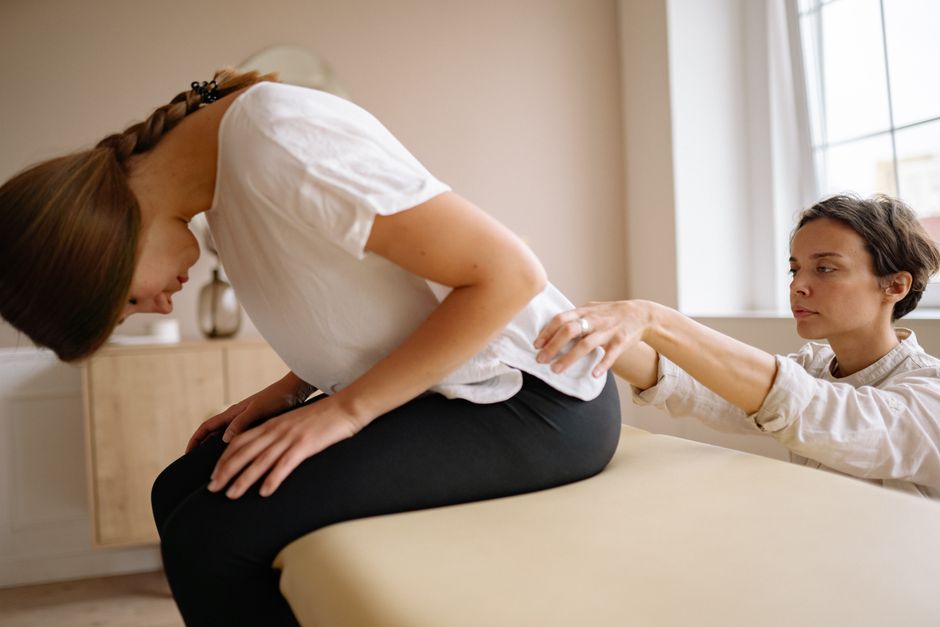
Yes, lower back pain can be caused by kidney stones. This is not the same as common muscle strain or disc problems. Kidney stone pain comes from the stone moving or blocking urine flow inside your kidney or ureter. It has specific signs that help tell it apart from other back pain causes.
How Do Kidney Stones Cause Lower Back Pain?
Kidney stones form from minerals and salts that crystalize inside your kidneys. When a stone stays still in the kidney, it often causes no pain. Pain starts when the stone moves.
The pain happens because the stone stretches the kidney capsule or blocks the ureter. The ureter is the narrow tube connecting your kidney to your bladder. When blocked, urine backs up and pressure builds. This pressure triggers pain signals. The pain is not from the stone scraping tissue. It is from the pressure and stretching.
This pain typically starts in the flank area. That is the side of your back just below your ribs. As the stone moves down the ureter, the pain can travel to your lower belly and groin. Some people feel it in their testicles or labia. This pattern of moving pain is a key clue.
Can Lower Back Pain Be Caused by Kidney Stones or Muscle Strain?
Muscle strain pain and kidney stone pain feel different. Muscle strain usually hurts in a specific spot. It gets worse when you move a certain way or press on the area. Rest and changing position often help.
Kidney stone pain is different. It comes in waves. It can be intense enough to make you unable to sit still. People often pace or rock back and forth. Lying still does not help. The pain level can go from mild to severe quickly. This is called renal colic.
Muscle pain rarely causes nausea or vomiting. Kidney stone pain often does. The intense pain triggers a nerve reflex that upsets your stomach. If your back pain comes with nausea, think about kidney stones.
What Other Symptoms Come With Kidney Stone Pain?
Pain alone is not enough to know. Other symptoms help confirm the cause. Blood in urine is common. It may be visible as pink, red, or brown urine. Often it is only found on a urine test.
Other signs include:
- Pain or burning when you urinate
- Urgent need to urinate more often
- Cloudy or foul-smelling urine
- Fever and chills — this is an emergency sign of infection
Fever with back pain means you need medical help right away. It can signal a kidney infection that spreads to your blood.





How Do Doctors Diagnose Kidney Stones as the Cause?
Doctors start with your story and a physical exam. They check for tenderness in your flank. They ask about the pain pattern, nausea, and urine changes.
A urine test checks for blood and signs of infection. Blood tests look at kidney function and check for high calcium or uric acid levels that form stones.
Imaging is the best way to confirm a stone. A CT scan without contrast dye is the most accurate test. It can find stones as small as 1 millimeter. Ultrasound is another option. It uses no radiation but may miss small stones. An X-ray called a KUB can see some stones but not all types.
About 1 in 10 people will have a kidney stone at some point. Men get them more often than women. The risk is highest between ages 30 and 50. After a first stone, the chance of another within 5 to 10 years is about 50 percent.
What Does Kidney Stone Pain Feel Like Compared to Back Pain?
Kidney stone pain is often described as one of the worst pains a person can feel. Some people compare it to childbirth or a knife being twisted. That sounds dramatic, but it is a common description.
Common back pain from muscles or discs is usually a dull ache or sharp spot. It may feel stiff or tight. You can often find a position that helps. Kidney stone pain does not let up with position changes. It comes in waves that peak and then ease but do not fully go away.
The location also differs. Muscle pain is often in the lower back center or one side. Kidney stone pain is almost always on one side. It wraps around from the flank to the front of the belly. If the pain is exactly in the middle of your lower back, it is less likely to be a stone.
When Should You See a Doctor for Lower Back Pain?
See a doctor if your back pain comes with nausea, fever, chills, or blood in urine. Also seek help if the pain is severe enough that you cannot sit still or find a comfortable position. If the pain wakes you from sleep, that is another warning sign.
Go to the emergency room if you have fever with back pain. That combination can mean a kidney infection that needs fast treatment. Also go if the pain is so bad you cannot function or if you cannot keep fluids down from vomiting.
Most small kidney stones pass on their own within a few days to weeks. Stones smaller than 5 millimeters pass about 80 percent of the time. Stones larger than 10 millimeters usually need medical help to remove.
Can You Prevent Kidney Stones That Cause Back Pain?
Prevention depends on what type of stone you form. The most common type is calcium oxalate. Drinking enough water is the single best prevention for all stone types. Aim for urine that is light yellow or clear. That usually means 2 to 3 liters of fluid per day.
Diet changes help some people. Reducing salt intake lowers calcium in urine. Eating moderate amounts of calcium-rich foods actually helps prevent stones. Low-calcium diets can make things worse. Limiting high-oxalate foods like spinach, beets, and almonds may help for calcium oxalate stones.
For uric acid stones, reducing animal protein and avoiding purine-rich foods like organ meats can help. Some people need medication to change urine chemistry. A doctor can test your stone if you pass one and give specific advice for your type.
Evidence for most dietary prevention is mixed. Drinking more water is the only strategy with strong consistent evidence. The rest may help some people but not others.
What Treatments Help Kidney Stone Pain?
Pain management is the first step. Over-the-counter ibuprofen or naproxen can help for mild stones. These drugs reduce inflammation in the ureter. For severe pain, doctors may prescribe stronger medications.
Medications called alpha-blockers can help small stones pass faster. They relax the ureter muscle so the stone moves more easily. Tamsulosin is the most common one. Some studies suggest it helps stones pass about 30 percent faster.
For stones that do not pass on their own, procedures can remove them. Shock wave lithotripsy uses sound waves to break stones into smaller pieces. Ureteroscopy uses a thin scope to grab or break the stone. These are outpatient procedures with short recovery times.
How Common Is It to Confuse Kidney Stone Pain With Back Pain?
It happens often. Many people go to urgent care or the ER thinking they pulled a muscle. The pain location overlaps. The flank area is also a common spot for muscle strain. Without other symptoms, it is easy to guess wrong.
One study found that about 10 percent of people with kidney stones were first diagnosed with a muscle problem. The difference is that muscle strain improves over days. Kidney stone pain either gets worse or stays severe until the stone passes. If your “muscle strain” does not get better with rest and ice, consider other causes.
Women may also confuse kidney stone pain with ovarian cyst pain or menstrual cramps. The pain can radiate to the lower belly in a similar way. The key clue is the wave pattern and the nausea that often comes with stones.
Frequently Asked Questions
Can kidney stone pain feel exactly like lower back muscle strain?
No, it usually feels different. Kidney stone pain comes in waves, causes nausea, and does not improve with rest or position changes. Muscle strain pain is more constant and gets worse with specific movements.
How long does kidney stone back pain last?
Pain lasts until the stone passes or is removed. Small stones may pass in a few days. Larger stones can cause pain for weeks. The pain comes in waves that last 20 to 60 minutes each.
Can you have kidney stones without blood in urine?
Yes. About 15 to 20 percent of people with kidney stones do not have visible or detectable blood in their urine. Lack of blood does not rule out stones.
What is the fastest way to tell if back pain is from a kidney stone?
The fastest clue is the pain pattern. If the pain comes in waves, moves from your flank to your groin, and comes with nausea, it is likely a stone. A CT scan is the most accurate way to confirm.
