
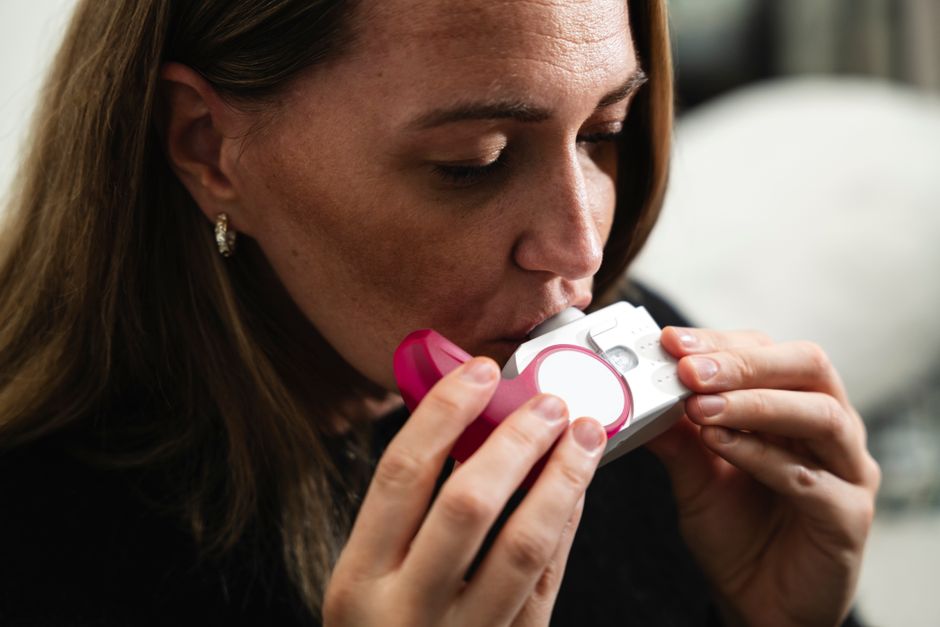
Asthma in babies happens when a combination of inherited risk and early-life exposures leaves a child’s airways unusually sensitive to common triggers. It is not caused by one single thing. Genetics, the developing immune system, viral infections, and environmental exposures all interact in ways researchers are still working to fully understand. Most babies who wheeze do not go on to have asthma, which makes early diagnosis genuinely difficult.
What Causes Asthma In Babies Risks And Triggers?
Asthma has no single cause. It develops when a baby’s immune system and airways respond abnormally to things that would not bother most children.
The airway changes in asthma involve chronic inflammation, excess mucus production, and tightening of the smooth muscle around the bronchial tubes. In babies, these changes are harder to identify because their airways are already narrow and their breathing patterns vary widely.
What researchers do know is that asthma is not contagious. It is not caused by a parent’s choices during pregnancy in any simple way. It is a condition that emerges from a mix of inherited tendencies and environmental exposures during a critical window of immune development.
One clarification worth making: wheezing in infancy is extremely common. Roughly half of all children wheeze at some point in their first few years. Only a fraction of those children develop persistent asthma. That distinction matters because it shapes how doctors think about risk.
How Do Genetics And Family History Affect Asthma Risk In Babies?
Family history is one of the strongest known risk factors for childhood asthma. If a parent has asthma, a baby’s risk rises. If both parents have it, the risk is higher still.
The genetics of asthma are not straightforward. Dozens of genes have been linked to asthma susceptibility, and each contributes only a small amount of risk. Some of these genes affect how the immune system recognizes and responds to allergens. Others influence how easily airways narrow.
Having a parent with asthma does not mean a baby will definitely develop it. It means the baby starts life with a higher baseline risk. Whether that risk becomes asthma depends heavily on what happens next — the infections they encounter, the environment they live in, and how their immune system matures.
Allergies and asthma often run together in families. A parent with eczema or hay fever also raises a baby’s likelihood of developing allergic asthma, though the relationship is not absolute.
Do Viral Infections In Early Life Cause Asthma?
Severe viral respiratory infections in infancy are strongly associated with later asthma. The connection is well documented but not fully explained.
The virus most consistently linked to asthma risk is respiratory syncytial virus, or RSV. Babies who experience severe RSV bronchiolitis in their first year appear more likely to develop asthma later. Whether RSV directly causes asthma or simply identifies babies who were already predisposed is a question researchers continue to debate.
Rhinovirus, the virus behind many common colds, has also been linked to asthma development when it causes severe illness in early childhood. Again, the direction of cause and effect is not entirely clear.
What is clear is that severe respiratory infections in infancy are a signal worth paying attention to. A baby who needed hospitalization for a respiratory infection may warrant closer monitoring as they grow.




What Environmental Triggers And Exposures Raise The Risk?
The environment a baby lives in can influence whether asthma develops and how severe it becomes. Some exposures increase risk. Others may be protective, though the evidence is not always consistent.
Known or suspected risk factors include:
- Exposure to secondhand smoke, both during pregnancy and after birth
- High levels of indoor allergens such as dust mites or mold
- Air pollution, including traffic-related pollutants
- Frequent or severe respiratory infections in the first year
- Low birth weight or prematurity
Secondhand smoke deserves particular attention. The evidence linking smoke exposure to wheezing and asthma in children is strong and consistent. Babies exposed to smoke in the home have higher rates of respiratory symptoms and more frequent asthma-related symptoms.
The role of the gut microbiome is an active area of research. Some studies suggest that babies raised in environments with diverse microbial exposure — such as homes with pets or farms — may have lower rates of asthma. This is the basis of what researchers call the hygiene hypothesis. The evidence is suggestive but not conclusive, and it does not mean parents should deliberately expose babies to dirt or animals to prevent asthma.
What Are The Signs Of Asthma In Babies?
Recognizing asthma in babies is difficult because infants cannot describe how they feel. Symptoms overlap with many other conditions.
Common signs that may point toward asthma include:
- Frequent wheezing, especially with colds or at night
- Persistent coughing that worsens at night or during play
- Fast or labored breathing
- Chest retractions — the skin pulling in around the ribs when breathing
- Difficulty feeding or poor weight gain due to breathing effort
None of these signs alone confirms asthma. A baby who wheezes during a cold may never wheeze again. A baby with chronic cough may have reflux, a structural airway issue, or another condition entirely.
Doctors typically look for patterns. Wheezing that recurs, symptoms that respond to asthma medication, or a strong family history of asthma or allergies all raise the likelihood. But diagnosing asthma in a baby under 12 months is genuinely difficult, and many doctors avoid making a formal diagnosis at that age.
Can Asthma In Babies Be Prevented?
There is no proven way to prevent asthma entirely. But some steps may lower risk or reduce symptom severity.
Avoiding secondhand smoke is one of the most well-supported measures. Babies should not be exposed to cigarette smoke at any point — during pregnancy or after birth.
Breastfeeding has been studied extensively for its potential protective effect against asthma. The evidence is mixed. Some studies suggest a modest reduction in wheezing during early childhood. Others find no lasting effect on asthma diagnosis. Breastfeeding has many established benefits for infant health regardless, but it should not be presented as a guaranteed way to prevent asthma.
Reducing indoor allergens and managing mold or dampness may help babies who are already sensitized. For babies without allergies, the benefit of allergen avoidance is less clear.
Some clinicians recommend early introduction of certain foods, like peanuts and eggs, to reduce the risk of food allergies. Whether this approach affects asthma risk specifically is not established.
When Should Parents Seek Medical Help?
Any baby who struggles to breathe needs immediate medical attention. Signs of serious breathing difficulty include rapid breathing, chest retractions, nostril flaring, grunting sounds, or lips and fingernails turning blue or gray.
For less urgent concerns — recurring wheezing, chronic cough, or symptoms that interfere with sleep or feeding — a pediatrician can help determine whether further evaluation is needed.
Parents should not attempt to diagnose asthma on their own. Many conditions can mimic asthma in babies, and some require different treatment. A doctor may recommend a trial of asthma medication to see if symptoms improve, which can help clarify the diagnosis.
Asthma cannot be cured, but it can be managed. For babies who do have it, early recognition and appropriate treatment can reduce symptoms and support normal growth and development.
Frequently Asked Questions
Can a baby outgrow asthma?
Many babies who wheeze in early childhood stop having symptoms as they grow, especially if their wheezing was triggered only by viral infections. Others continue to have asthma into adulthood, particularly if they have allergies or a strong family history.
Is asthma in babies caused by colds?
Severe viral infections like RSV in infancy are linked to higher asthma risk, but they do not directly cause asthma in every case. Colds can trigger symptoms in babies who already have asthma.
Does breastfeeding prevent asthma?
The evidence is mixed. Some studies suggest breastfeeding may reduce wheezing in early childhood, but it has not been shown to reliably prevent asthma. Breastfeeding has many other established benefits for infant health.
At what age can asthma be diagnosed in a baby?
Most doctors avoid diagnosing asthma before age 1 because infant wheezing has many possible causes. A formal diagnosis is more commonly made after age 2, when patterns become clearer and lung function can be assessed.
