
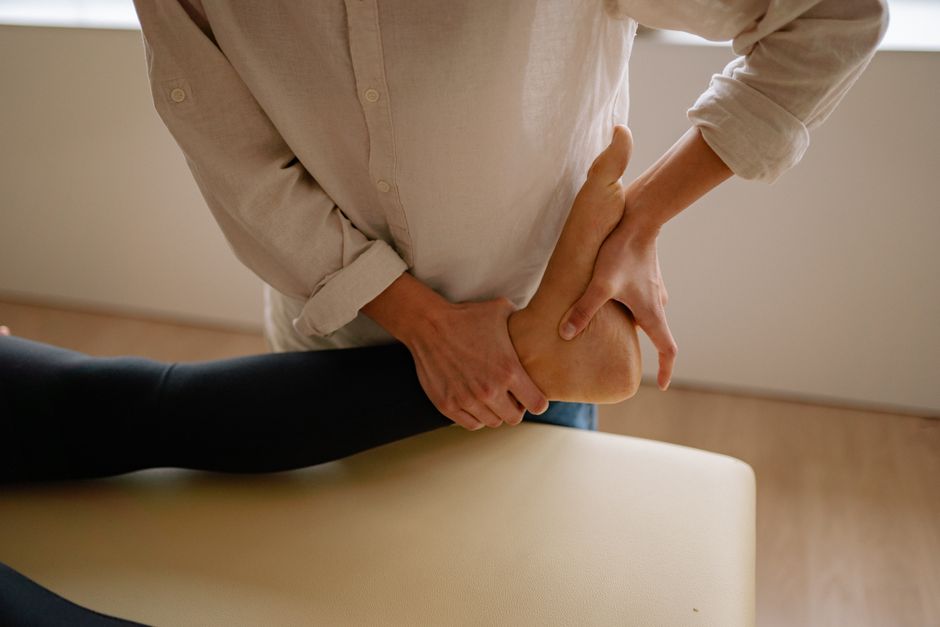
A sore heel can turn a simple walk across the room into a frustrating event. Most people assume it is just plantar fasciitis, but the reality is more complex. Heel pain has several distinct causes, and treating the wrong one can make things worse. The key difference comes down to location, timing, and what makes the pain better or worse. Plantar fasciitis causes pain under the heel, especially with the first steps in the morning. Achilles tendinitis causes pain at the back of the heel, often with swelling. Heel spurs are often blamed but rarely cause pain on their own. A stress fracture produces deep, constant pain that gets worse with activity. Knowing which one you have is the first step to actually fixing it.
What Is Plantar Fasciitis And How Do You Know You Have It?
Plantar fasciitis is the most common cause of heel pain. It affects about 1 in 10 people at some point in their lives. The plantar fascia is a thick band of tissue running from your heel bone to your toes. When it gets overstretched or overloaded, tiny tears develop where it attaches to the heel bone. This causes inflammation and pain.
The classic sign is pain with your first steps out of bed in the morning. It often feels like a sharp stab under the heel. After a few minutes of walking, the pain may ease. But it often returns after long periods of sitting or standing. The pain is almost always on the bottom of the heel, not the back. Research published in the Journal of Orthopaedic & Sports Physical Therapy found that a simple “windlass test” — pulling the big toe back to stretch the arch — can reproduce the pain in most cases. If that hurts, plantar fasciitis is likely.
Risk factors include tight calf muscles, high arches, flat feet, and sudden increases in walking or running. Obesity also increases the load on the fascia. The condition is not caused by heel spurs, despite what many people believe. Studies show that heel spurs are equally common in people with and without heel pain.
How Is Achilles Tendinitis Different From Plantar Fasciitis?
Achilles tendinitis causes pain at the back of the heel, not the bottom. The Achilles tendon connects your calf muscles to your heel bone. When it becomes irritated, you feel pain just above the back of the heel or right where it attaches. The pain is often described as a dull ache that worsens with activity.
Swelling is common with Achilles tendinitis. You may notice the tendon feels thicker or warmer to the touch. Morning stiffness is also common, but the pain pattern is different. With Achilles tendinitis, the pain is worst when you push off your foot to walk or run. Walking downhill or climbing stairs often makes it worse. The American Academy of Orthopaedic Surgeons notes that a tight calf is almost always part of the problem.
There are two types of Achilles tendinitis: insertional and non-insertional. Insertional affects the lower part of the tendon where it attaches to the heel bone. Non-insertional affects the middle of the tendon. Insertional tendinitis is harder to treat and often linked to bone spurs at the back of the heel. Non-insertional is more common in younger, active people and responds better to stretching.
What About Heel Spurs, Bursitis, And Stress Fractures?
Heel spurs get a lot of attention, but they are rarely the actual cause of pain. A heel spur is a bony growth on the underside of the heel bone. It forms where the plantar fascia attaches. Many people with heel spurs have zero pain. The spur itself is not sharp — it is a smooth outgrowth. The pain comes from the inflamed soft tissue around it, not the bone. If an X-ray shows a spur, it does not mean the spur is the problem.
Retrocalcaneal bursitis is inflammation of the fluid-filled sac between the Achilles tendon and the heel bone. It causes pain at the back of the heel, similar to Achilles tendinitis. But the pain is more on the sides of the tendon, not directly over it. Squeezing the back of the heel from both sides often reproduces the pain. This condition is common in runners who increase mileage too quickly.
A stress fracture of the heel bone, called a calcaneal stress fracture, is less common but more serious. The pain is deep, constant, and gets worse with any weight-bearing activity. Unlike plantar fasciitis, the pain does not improve after warming up. It gets worse. Swelling may be present on both sides of the heel. If you cannot walk without limping, a stress fracture is possible. The Journal of Bone and Joint Surgery reports that these fractures are often missed on initial X-rays and may require an MRI for diagnosis.



What Causes A Sore Heel And How To Tell The Difference Based On Symptoms?
The fastest way to tell the difference is to ask yourself three questions about your pain. First, where exactly is the pain? Under the heel points to plantar fasciitis. At the back of the heel points to Achilles tendinitis or bursitis. Deep inside the heel with swelling on both sides suggests a stress fracture. Second, when is the pain worst? Morning steps that improve after walking point to plantar fasciitis. Pain that gets worse the more you walk points to Achilles tendinitis or a stress fracture. Third, does pressing on the spot make it worse? If pressing the bottom of the heel reproduces the pain, it is likely plantar fasciitis. If pressing the back of the heel hurts, it is more likely Achilles tendinitis or bursitis.
Here is a quick comparison table to help you spot the differences:
| Condition | Pain Location | Pain Timing | Key Clue |
|---|---|---|---|
| Plantar Fasciitis | Bottom of heel | Worst with first morning steps | Improves after a few minutes of walking |
| Achilles Tendinitis | Back of heel | Worse with pushing off or climbing | Swelling and tenderness along the tendon |
| Retrocalcaneal Bursitis | Back of heel, sides | Pain with squeezing from both sides | Redness and warmth possible |
| Heel Spur | Bottom of heel | Often no pain at all | Spur visible on X-ray, but pain is from fascia |
| Stress Fracture | Deep inside heel | Worse with any weight-bearing | Swelling on both sides, limping |
If your pain is severe, came on suddenly after an injury, or you cannot bear weight, see a doctor. These symptoms may indicate a fracture or rupture, not a simple strain.
What Are The Most Common Mistakes People Make With Heel Pain?
The biggest mistake is assuming all heel pain is plantar fasciitis and treating it the same way. Stretching the arch and rolling on a frozen water bottle helps plantar fasciitis. But those same actions can worsen Achilles tendinitis or bursitis. Stretching an already irritated Achilles tendon can increase inflammation. Rolling a frozen bottle under the heel can compress an inflamed bursa and make it worse.
Another common mistake is ignoring the pain and continuing the same activity. Heel pain is often a signal that something is overloaded. Pushing through it can turn a mild case of tendinitis into a chronic problem that takes months to resolve. Rest is not the enemy. Short-term activity modification, like switching from running to swimming, can keep you moving without making the injury worse.
Relying on X-rays to diagnose the cause of pain is another pitfall. X-rays show bone, not soft tissue. They can detect fractures and spurs, but they cannot show inflammation in the plantar fascia or Achilles tendon. An ultrasound or MRI is often needed for a clear diagnosis. If your doctor orders only an X-ray and tells you the spur is the problem, ask about soft tissue imaging.
What Does The Research Say About Effective Treatments?
For plantar fasciitis, the strongest evidence supports calf stretching and specific arch exercises. A 2021 review in the British Journal of Sports Medicine found that eccentric calf stretches — lowering the heel off a step — significantly reduce pain over 12 weeks. Night splints that keep the foot flexed overnight also help by preventing the fascia from tightening. Custom orthotics are widely used, but research shows they are no more effective than good over-the-counter arch supports for most people.
For Achilles tendinitis, eccentric loading exercises are the gold standard. The Alfredson protocol, developed by Swedish researchers, involves lowering the heel off a step while keeping the knee straight and then bent. Studies show this reduces pain and improves function in about 80 percent of cases. Shockwave therapy has moderate evidence for chronic cases that do not respond to exercise. Cortisone injections are sometimes used, but the American Academy of Orthopaedic Surgeons warns they increase the risk of tendon rupture.
For stress fractures, the only treatment is complete rest from weight-bearing activity. This usually means using crutches for 6 to 8 weeks. Returning to activity too early can lead to a complete fracture that requires surgery. Calcium and vitamin D intake should be adequate, though there is no evidence that supplementation speeds healing in people with normal levels.
Common treatments with weak evidence include laser therapy, ultrasound, and most topical creams. These are widely advertised but clinical trials have not shown consistent benefits. As of 2026, there is no clinical evidence that any dietary supplement, including collagen or turmeric, directly heals heel pain. A balanced diet supports overall tissue repair, but no specific supplement has been proven to treat these conditions.
Frequently Asked Questions
Can heel pain go away on its own without treatment?
Mild cases of plantar fasciitis often improve within 6 to 12 months without specific treatment. Achilles tendinitis and stress fractures usually require active management to heal properly.
Is walking barefoot bad for sore heels?
Walking barefoot on hard surfaces can worsen plantar fasciitis by putting more strain on the arch. Supportive shoes with a slight heel are generally better for heel pain.
How long does it take for heel pain to heal with proper treatment?
Plantar fasciitis typically improves within 6 to 8 weeks of consistent stretching and activity modification. Achilles tendinitis may take 3 to 6 months of eccentric exercises to fully resolve.
Should I ice my sore heel every day?
Icing for 15 to 20 minutes several times a day can reduce inflammation and pain in the first few days. After that, stretching and strengthening exercises become more important than ice.
