
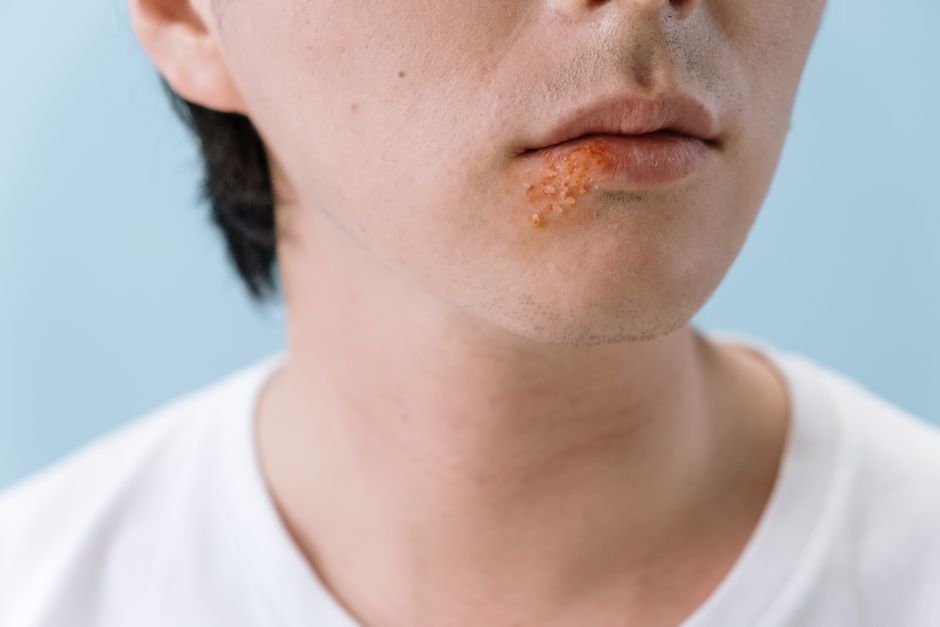
Cold sores are painful, and they usually show up on your lips or around your mouth. But you might wonder if that sore inside your cheek or on your gum is the same thing. The short answer is no. True cold sores, caused by the herpes simplex virus (HSV-1), almost never appear on the soft tissue inside your mouth. If you have a sore inside your mouth, it is almost certainly something else, like a canker sore or an ulcer. Knowing the difference matters because the causes and treatments are very different.
Can You Get A Cold Sore Inside Your Mouth?
Research shows that cold sores, also called fever blisters, are caused by the herpes simplex virus. They typically form on the hard, dry skin of your lips or the skin around your mouth. The virus prefers these areas. According to the American Academy of Dermatology, cold sores rarely develop on the gums or the roof of the mouth. When they do appear inside the mouth, it is usually on the keratinized tissue, like the hard palate or the gums, not on the soft, moist surfaces like your cheeks or tongue. If you have a sore on the inside of your cheek or under your tongue, it is most likely a canker sore, not a cold sore.
Some people report getting a cold sore on their gum line. Strong evidence for this is limited. Most oral health experts, including those at the Mayo Clinic, state that recurrent sores inside the mouth are usually aphthous ulcers, not herpes. The key distinction is location. Cold sores live on the outside. Canker sores live on the inside.
What Is the Difference Between a Cold Sore and a Canker Sore?
This is where most confusion happens. People use the terms interchangeably, but they are not the same thing. A cold sore is a viral infection. A canker sore is not. Canker sores are small, shallow ulcers that form on the soft tissue inside your mouth. They are not contagious. Cold sores are highly contagious and caused by a virus.
Here is a quick comparison to help you tell them apart:
| Feature | Cold Sore | Canker Sore |
|---|---|---|
| Location | On the lips, around the mouth, or on the hard palate | Inside the cheeks, on the tongue, or on the soft palate |
| Appearance | Blisters that ooze and crust over | Small, round, or oval white or yellow sores with a red border |
| Contagious | Yes, highly contagious | No, not contagious |
| Cause | Herpes simplex virus (HSV-1) | Unknown, possibly stress, injury, or certain foods |
| Treatment | Antiviral creams or pills | Pain relief, mouth rinses, or no treatment |
One non-obvious insight: many people think they have a cold sore inside their mouth when they actually have a canker sore. This confusion leads to using the wrong treatments. Antiviral creams do nothing for canker sores. And pain gels for canker sores do not stop a cold sore virus.
What Causes Sores Inside Your Mouth If Not Cold Sores?
The most common cause of sores inside your mouth is a canker sore. The exact cause is not fully understood. Some studies suggest they are linked to stress, minor injury from biting your cheek, or acidic foods like citrus. They may also run in families. The American Academy of Oral Medicine reports that canker sores affect about 20% of the population at some point.
Other causes include:
- Oral lichen planus – an inflammatory condition that causes white, lacy patches and sores.
- Oral thrush – a fungal infection that looks like white patches and can cause soreness.
- Vitamin deficiencies – low levels of B12, folate, or iron can trigger mouth ulcers.
- Autoimmune conditions – like Crohn’s disease or Behçet’s disease can cause mouth sores.
- Injury – accidental biting, braces, or rough teeth can cause a sore.
If you have a sore inside your mouth that does not heal within two weeks, you should see a dentist or doctor. That is a standard recommendation from the National Institute of Dental and Craniofacial Research. Most canker sores heal on their own in 7 to 10 days.





What Does Research on Oral Herpes Show?
Research on oral herpes is clear. The herpes simplex virus type 1 (HSV-1) is the main cause of cold sores. According to the World Health Organization, about 67% of people under 50 have HSV-1. Most people get it in childhood. Once you have the virus, it stays in your body for life. It lives in nerve cells and can reactivate when triggered by stress, illness, sun exposure, or a weakened immune system.
When the virus reactivates, it travels back to the skin surface. That is why cold sores appear in the same spot repeatedly. The virus does not typically travel to the soft tissue inside your mouth. Some studies suggest that primary infection, the first time you get HSV-1, can cause sores inside the mouth and on the gums. This is called herpetic gingivostomatitis. It is most common in children and can cause fever, swollen gums, and multiple sores. But after the first infection, recurrent outbreaks are almost always on the lips or around the mouth.
One study published in the Journal of Oral Pathology & Medicine found that recurrent intraoral herpes is rare. When it does happen, it is usually on the hard palate or the gums, areas with keratinized tissue. The soft, movable tissue of your cheeks and tongue is not a typical site for recurrent herpes. So if you have a recurring sore inside your cheek, it is almost certainly not a cold sore.
What Treatments Actually Work for Mouth Sores?
Treatment depends entirely on what kind of sore you have. For cold sores on the outside, antiviral medications work. Over-the-counter creams like docosanol (Abreva) can shorten healing time if applied early. Prescription antiviral pills like valacyclovir (Valtrex) or acyclovir are more effective. The CDC notes that these medications work best when taken at the first sign of a tingle or blister.
For canker sores inside the mouth, antivirals do nothing. Treatment focuses on pain relief and healing. Options include:
- Over-the-counter topical gels containing benzocaine or lidocaine for numbing.
- Mouth rinses with hydrogen peroxide or salt water.
- Prescription steroid ointments for severe or frequent sores.
- Avoiding spicy, acidic, or rough foods until the sore heals.
There is no cure for either condition. Cold sores are viral and can be managed but not eliminated. Canker sores are not viral and usually resolve on their own. If you get sores frequently, some studies suggest that taking vitamin B12 or lysine supplements may help reduce outbreaks, but the evidence is mixed. The National Institutes of Health states that lysine has not been proven to prevent cold sores in most people.
When Should You See a Doctor About a Mouth Sore?
Most mouth sores are harmless and go away on their own. But there are signs that you should not ignore. The American Dental Association recommends seeing a dentist or doctor if:
- You have a sore that lasts longer than two weeks.
- The sore is very large or unusually painful.
- You get sores frequently, more than a few times a year.
- You have trouble eating or drinking because of the pain.
- You have a fever or other symptoms like swollen lymph nodes.
In rare cases, a persistent mouth sore could be a sign of oral cancer. According to the American Cancer Society, about 54,000 people in the US are diagnosed with oral cavity or oropharyngeal cancer each year. Most are over 40. A sore that does not heal is the most common early sign. Do not panic, but do not ignore it either. If you have a sore inside your mouth that looks or feels different from your usual canker sores, get it checked.
Common Misconceptions About Cold Sores Inside the Mouth
There are a few myths worth clearing up. One is that stress directly causes cold sores. Stress is a trigger for reactivation, but it does not cause the initial infection. You have to have the virus first. Another myth is that you can get a cold sore from sharing a drink or a towel. This is partially true. The virus spreads through direct contact with a blister or the fluid from it. Sharing a cup when someone has an active sore can spread it. But the virus does not live long on dry surfaces.
A third misconception is that if you have a sore inside your mouth, you are contagious. If it is a canker sore, you are not. Canker sores are not infectious. Only cold sores are contagious. This is a critical distinction for parents. If your child has a sore inside their mouth, it is almost certainly a canker sore, and they can go to school. If they have a blister on their lip, keep them home until it crusts over.
Finally, some people believe that toothpaste can cure a cold sore. There is no clinical evidence for this. Putting toothpaste on a cold sore may dry it out, but it does not kill the virus. It can also irritate the skin. Stick to proven treatments.
Frequently Asked Questions
Can a cold sore appear on the roof of my mouth?
Yes, but it is rare. Cold sores can appear on the hard palate, which is the bony part of the roof of your mouth. This is keratinized tissue similar to your gums.
How do I know if a sore inside my mouth is a cold sore or a canker sore?
Look at the location. Cold sores are on the outside of the lips or on hard tissue like the gums. Canker sores are on the soft tissue inside the cheeks, lips, or tongue.
Are canker sores contagious?
No, canker sores are not contagious. They are not caused by a virus. You cannot spread them to another person through kissing or sharing food.
What is the fastest way to heal a canker sore?
The fastest way is to avoid irritating the sore and use an over-the-counter numbing gel. Most canker sores heal within 7 to 10 days without treatment.
