
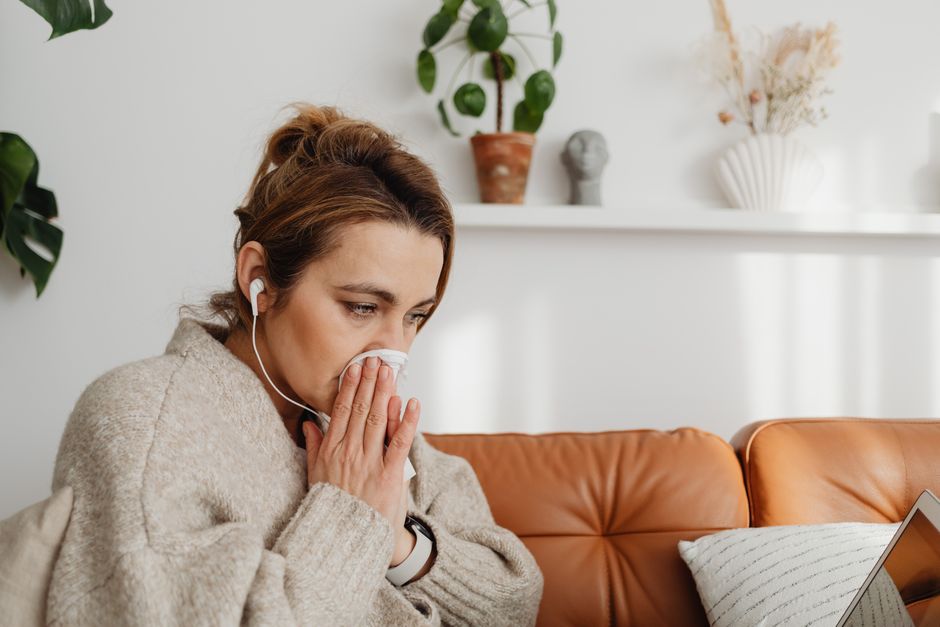
A sneeze is a sudden, forceful burst of air through your nose and mouth. It is a reflex, meaning your body does it automatically without you thinking about it. The entire process is triggered when something irritates the lining of your nasal passages, sending a signal to your brain to expel the irritant as quickly as possible.
What Exactly Happens in Your Body When You Sneeze?
The sneeze reflex is a coordinated sequence of events. It starts when a foreign particle, like dust, pollen, or a virus, touches the sensitive mucous membrane inside your nose. This membrane is packed with nerve endings that detect the irritation.
These nerves send a signal along the trigeminal nerve to a specific area of the brain called the sneeze center. This center processes the signal and sends commands back out. Your eyes close, your chest muscles contract, and your throat muscles tighten. Finally, your abdominal and chest muscles contract forcefully, pushing air out of your lungs in a rapid blast.
This blast of air can travel at high speed, carrying the irritant with it. The entire sequence, from irritation to expulsion, happens in a fraction of a second. It is a highly effective way for your body to clear your nasal passages.
What Are the Most Common Causes of Sneezing?
Most sneezes are triggered by one of three main categories: irritants, allergies, and infections. Understanding the cause helps you know how to manage it.
Irritants are physical particles that tickle or bother the nasal lining. Common examples include dust, smoke, strong odors like perfume or cleaning chemicals, and even cold air. These particles do not cause an allergic reaction; they simply irritate the nerves directly.
Allergies are an immune system response. When you have allergic rhinitis (often called hay fever), your body mistakes a harmless substance like pollen or pet dander for a dangerous invader. Your immune system releases histamine, a chemical that causes inflammation and irritation in the nose, leading to sneezing, itching, and a runny nose.
Infections like the common cold or flu can also cause sneezing. When a virus infects the nasal passages, it causes inflammation and excess mucus production. This physical irritation triggers the same sneeze reflex as dust or pollen. Sneezing is a primary way your body tries to physically expel the virus.
Why Do Some People Sneeze When They Look at the Sun?
This condition is called the photic sneeze reflex, and it is not a myth. It affects a significant portion of the population. For these people, suddenly looking at a bright light, like the sun or a bright headlight, triggers a sneeze.
Researchers believe this happens because the nerve signals from the eyes and the nose get crossed in the brain. The optic nerve, which senses light, is located very close to the trigeminal nerve, which senses nasal irritation. In some people, the signal from the optic nerve “spills over” and activates the trigeminal nerve, causing a sneeze.
This is a genetic trait. If one of your parents has it, you have a good chance of having it too. It is harmless and not a sign of any medical problem. There is no cure, and most people simply learn to turn their eyes away from bright light when they feel a sneeze coming on.





Is It True That Your Heart Stops When You Sneeze?
No, your heart does not stop when you sneeze. This is a common myth, but it is not accurate. What actually happens is that the physical pressure changes in your chest can briefly affect your heart’s rhythm.
When you take a deep breath before sneezing, the pressure in your chest rises. This pressure change can momentarily alter the electrical signals that regulate your heartbeat. It may cause a slight irregularity, but the heart keeps beating throughout. The sensation of your heart “skipping a beat” is the rhythm changing, not stopping.
This effect is temporary and harmless for healthy individuals. Your heart rate and rhythm return to normal immediately after the sneeze is over. The idea that the heart stops likely comes from this noticeable change in rhythm being misinterpreted.
Can You Sneeze in Your Sleep?
You cannot sneeze during the deepest stages of sleep. During REM (rapid eye movement) sleep, your body is in a state of temporary paralysis called atonia. This is a protective mechanism that prevents you from acting out your dreams. This paralysis also suppresses the sneeze reflex.
However, you can sneeze during lighter stages of sleep or as you are just dozing off. At these times, your body has not yet entered the full paralysis state. If an irritant is present, the reflex can still fire. You might also wake up because you need to sneeze, but the sneeze itself happens in that transitional moment between sleep and wakefulness.
How Do You Stop a Sneeze Safely?
Learning to stop a sneeze is about interrupting the reflex before it fully fires. One effective method is to breathe out forcefully through your nose when you feel a sneeze coming. This can disrupt the pressure build-up that is needed for the sneeze to occur.
Another common technique is to press your tongue firmly against the roof of your mouth. This physical pressure can interfere with the nerve signals being sent to the sneeze center. Some people also find that pinching the bridge of their nose helps, though the evidence for this is less clear.
It is important to note that you should never try to hold a sneeze in by pinching your nose and closing your mouth completely. This traps the high-pressure air inside your body. This can force air into your eustachian tubes or sinuses, which can cause pain, hearing issues, or even damage. Letting a sneeze out naturally is always the safest option.
When Should a Persistent Sneeze Be a Concern?
Sneezing itself is rarely a medical emergency. It is a normal reflex. However, a persistent sneeze that lasts for days or weeks can point to an underlying issue that needs attention.
If your sneezing is accompanied by other symptoms like a high fever, severe headache, facial pain, or thick yellow-green nasal discharge, it could indicate a sinus infection or a more serious respiratory illness. Allergic rhinitis that is not well managed can also lead to chronic sinus inflammation.
You should also pay attention to the pattern of your sneezing. If it only happens during certain seasons, it is likely allergies. If it happens year-round and is worse indoors, it might be a reaction to dust mites or pet dander. If your sneezing is interfering with your daily life or sleep, it is reasonable to discuss it with a doctor. They can help identify the specific trigger and recommend an appropriate treatment plan.
Frequently Asked Questions
Why does spicy food make me sneeze?
Spicy foods contain compounds like capsaicin that can irritate the nasal passages.
This irritation triggers the same protective sneeze reflex as any other irritant.
Is sneezing a sign of COVID-19?
Sneezing is not a primary symptom of COVID-19, but it can occur.
It is more commonly associated with the common cold or allergies, so consider other symptoms like fever or loss of taste before assuming it is COVID-19.
Why do I sneeze more in the morning?
Morning sneezing is often due to allergens that have settled in your bedding overnight, such as dust mites.
It can also be caused by changes in air temperature or humidity when you get out of bed.
Can sneezing hurt my back?
Yes, the forceful muscle contraction of a sneeze can strain back muscles.
This is more likely if you already have a back condition or sneeze with a twisting motion.
