
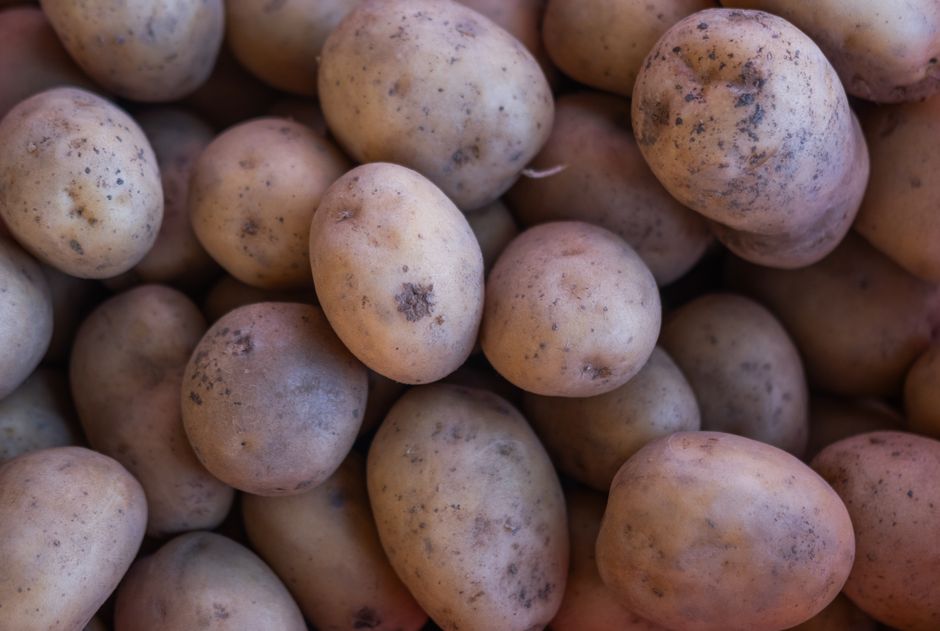
White potatoes are starchy root vegetables from the nightshade family, and they come in many types including russet, red, yellow, and fingerling. They are a major source of carbohydrates, vitamin C, potassium, and fiber when eaten with the skin. People use them for boiling, baking, frying, and mashing in countless dishes around the world.
What Are the Main Types of White Potatoes?
Russet potatoes are the most common type in the United States. They have a rough brown skin and white flesh. Their high starch content makes them ideal for baking and frying because they become fluffy on the inside and crisp on the outside.
Red potatoes have thin red skin and waxy flesh. They hold their shape well during cooking. This makes them a good choice for potato salads, soups, and roasting. Yellow potatoes, like Yukon Gold, have a buttery color and creamy texture. They work well for mashing and gratins.
Fingerling potatoes are small and oblong. They come in various colors including yellow, red, and purple. Their firm texture makes them excellent for roasting whole or adding to salads. White round potatoes are another common type with thin skin and medium starch content.
What Is the Nutritional Profile of White Potatoes?
A medium white potato with skin contains about 160 calories. It provides 37 grams of carbohydrates, 4 grams of fiber, and 4 grams of protein. Potatoes are naturally fat-free and cholesterol-free. The fiber content is higher when you eat the skin.
Potatoes are an excellent source of vitamin C. One medium potato provides about 30% of your daily needs. They also supply more potassium than a banana. Potassium is important for blood pressure regulation and muscle function. A medium potato contains about 900 milligrams of potassium.
Vitamin B6 is another key nutrient in potatoes. It supports brain development and helps your body make neurotransmitters. Potatoes also provide small amounts of iron, magnesium, and folate. The nutrient density drops significantly if you peel them and fry them in oil.
| Nutrient | Amount in Medium Potato (with skin) | % Daily Value |
|---|---|---|
| Calories | 161 | 8% |
| Carbohydrates | 37 g | 13% |
| Fiber | 4 g | 14% |
| Protein | 4 g | 8% |
| Vitamin C | 17 mg | 28% |
| Potassium | 897 mg | 26% |
| Vitamin B6 | 0.4 mg | 22% |
How Are White Potatoes Used in Cooking?
White potatoes are extremely versatile in the kitchen. You can boil them for mashed potatoes or potato salad. Baking them whole in the oven or microwave produces a fluffy interior perfect for topping with butter, sour cream, or chili. Roasting potato wedges with olive oil and herbs creates a crispy side dish.
Frying is a common use, but it changes the nutritional profile significantly. French fries and potato chips absorb large amounts of oil during cooking. This increases the calorie and fat content substantially. The American Heart Association notes that frequent consumption of fried potatoes is linked to higher heart disease risk.
Boiling or steaming potatoes preserves most of their nutrients. The key is to keep the skin on whenever possible. Cutting potatoes into smaller pieces before cooking reduces cooking time and helps retain more vitamin C. Letting boiled potatoes cool slightly before eating increases their resistant starch content, which may benefit gut health.





Are White Potatoes Healthy or Unhealthy?
The reputation of white potatoes has suffered in recent years. Many people consider them unhealthy because they are high in carbohydrates and often eaten as fries or chips. This view oversimplifies the evidence. Research published in the Journal of Nutrition found that boiled or baked potatoes do not raise blood sugar as much as many people assume.
The glycemic index of a potato depends heavily on how it is cooked and served. Boiled potatoes have a lower glycemic index than baked or fried ones. Eating potatoes with protein and fat, such as adding butter or eating them with meat, slows down digestion and blunts the blood sugar response. Cooling potatoes after cooking also lowers their glycemic impact.
Potatoes are not inherently bad for you. The problem is how they are prepared and what you eat with them. A baked potato with skin and a modest amount of toppings is a nutrient-dense food. A large order of french fries with ketchup is not. The difference comes down to cooking method and portion size. The Dietary Guidelines for Americans include potatoes as part of a healthy eating pattern when prepared without excess fat and sodium.
What Are Common Misconceptions About White Potatoes?
One widespread myth is that white potatoes have no nutritional value. This is false. As shown above, they provide significant amounts of vitamin C, potassium, and fiber. Another misconception is that all carbohydrates from potatoes are bad. The body needs carbohydrates for energy, and the fiber in potato skins supports digestive health.
Some people believe that sweet potatoes are always healthier than white potatoes. Sweet potatoes do have more vitamin A, but white potatoes have more potassium and vitamin C. Both are nutritious choices. The idea that white potatoes cause weight gain is also misleading. Research does not support the claim that moderate consumption of non-fried potatoes leads to obesity.
There is also confusion about potato skins being toxic. Potato skins do contain solanine, a natural compound that can be toxic in very high amounts. However, the levels in normal potatoes are far below dangerous thresholds. Green potatoes or potatoes with sprouts have higher solanine levels and should be avoided. Normal potato skins are safe and nutritious to eat.
What Should You Look for When Buying and Storing Potatoes?
Choose potatoes that are firm, smooth, and free from major blemishes. Avoid potatoes with green patches, sprouts, or soft spots. Green color indicates exposure to light and increased solanine levels. Store potatoes in a cool, dark, and well-ventilated place. A pantry or cellar works well. Do not refrigerate raw potatoes because the cold temperature converts starches to sugars, affecting taste and texture.
Keep potatoes away from onions. Onions release gases that cause potatoes to spoil faster. Do not wash potatoes before storage. Moisture promotes mold and rot. Wash them just before cooking. Check stored potatoes regularly and remove any that show signs of spoilage to prevent it from spreading.
If you see small sprouts on a potato, you can still eat it. Simply remove the sprouts and the surrounding area. If the potato is soft or shriveled, it is past its prime. For the best quality, use potatoes within a few weeks of purchase. New potatoes and fingerlings are more delicate and should be used within a week.
What Are the Best Cooking Methods for Preserving Nutrients?
Steaming and boiling are the best methods for retaining water-soluble vitamins like vitamin C and B vitamins. The key is to use minimal water and avoid overcooking. Cooking potatoes whole with the skin on preserves the most nutrients. Cutting them into larger pieces also helps reduce nutrient loss.
Baking and roasting are good options that require little added fat. You do not need to coat potatoes in oil to get a crispy result. A light spray of oil or a small amount tossed with herbs works well. Microwaving is another fast method that preserves nutrients well because cooking time is short.
Frying is the least healthy cooking method for potatoes. It adds significant calories and fat. It also creates acrylamide, a compound formed when starchy foods are cooked at high temperatures. The International Agency for Research on Cancer classifies acrylamide as a probable human carcinogen. Limiting fried potato consumption is a reasonable step for health.
Frequently Asked Questions
Are white potatoes good for weight loss?
Boiled or baked potatoes can be part of a weight loss diet because they are filling and relatively low in calories. The key is to avoid adding large amounts of butter, oil, or cheese.
Can you eat potato skin?
Yes, potato skin is safe to eat and contains most of the fiber and many nutrients. Wash the potato thoroughly before cooking to remove dirt and bacteria.
Do white potatoes have more carbs than rice?
A medium potato has about 37 grams of carbs, while a cup of cooked white rice has about 45 grams. Both are similar in carbohydrate content per serving.
How should you store cut potatoes?
Place cut potatoes in a bowl of cold water and refrigerate them to prevent browning. Use them within 24 hours for best quality and safety.
