
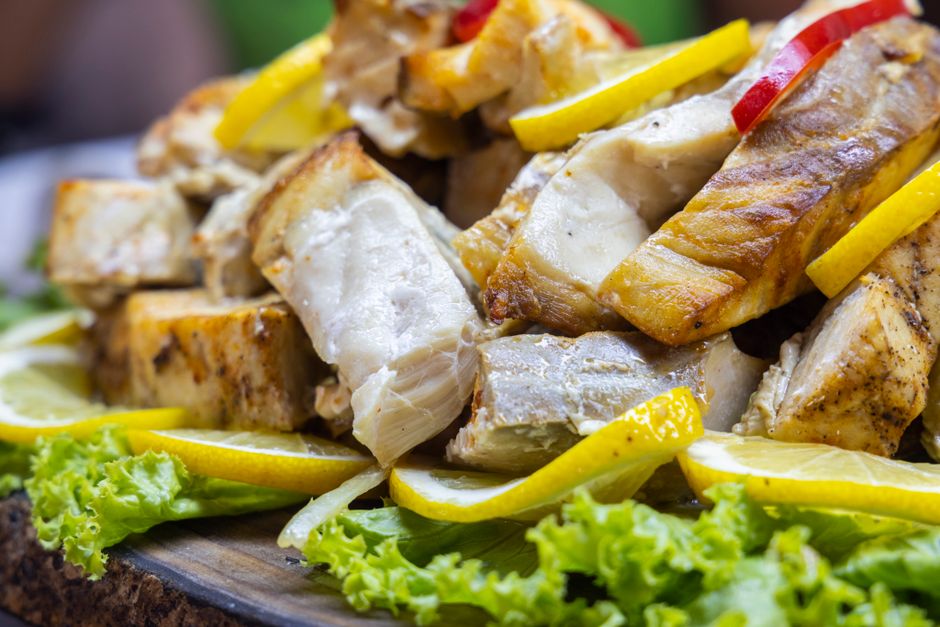
Mahi mahi is a healthy choice for most people. It is packed with protein, low in saturated fat, and provides key nutrients like selenium and vitamin B12. But it also carries some risks, mainly from mercury and how it is caught. This article looks at the real evidence so you can decide if it belongs on your plate.
What Are the Key Nutrients in Mahi Mahi?
Mahi mahi is a lean fish. A 3-ounce cooked serving has about 90 calories and 20 grams of protein. That is a lot of protein for very few calories. Your body uses protein to build muscle, repair tissue, and make enzymes.
It also provides selenium. Selenium is a mineral that helps your thyroid work and protects cells from damage. The same serving gives you about 40 percent of your daily selenium needs. Mahi mahi is also a strong source of vitamin B12, which your body needs for nerve function and making DNA. A single serving covers over 100 percent of your daily B12 requirement.
Mahi mahi contains niacin and vitamin B6 as well. Niacin supports your metabolism, and B6 helps your immune system. These nutrients make mahi mahi a solid option for anyone wanting to eat more nutrient-dense food.
One thing to note: mahi mahi is not a fatty fish like salmon. It has less omega-3 fatty acids. Omega-3s are linked to lower inflammation and better heart health. If you eat mahi mahi for omega-3s, you will get only a small amount. The USDA reports that a 3-ounce serving has about 0.1 grams of combined EPA and DHA. For comparison, salmon has about 1.5 grams. This is not a problem if you get omega-3s from other sources like walnuts, flaxseeds, or other fish.
Is Mahi Mahi High in Mercury?
Mercury in fish is a real concern. Mercury builds up in larger fish that live longer and eat other fish. Mahi mahi is a moderate-mercury fish. The FDA places it in the “Best Choices” category for mercury, which is the safest tier. But it is near the upper limit of that group.
The FDA and EPA recommend that people who are pregnant, breastfeeding, or planning to become pregnant eat 2 to 3 servings of fish per week from the “Best Choices” list. Mahi mahi is on that list. However, they also advise limiting fish from the “Good Choices” list, which has higher mercury levels.
For most adults, eating mahi mahi once or twice per week is fine. The mercury level in mahi mahi is lower than in swordfish, shark, or king mackerel. But it is higher than in sardines, salmon, or shrimp. If you eat fish often, vary your choices. Do not eat mahi mahi every day. The CDC has no specific limit for mahi mahi, but common sense says to rotate your fish intake.
Children can also eat mahi mahi. The FDA recommends smaller portions for kids. A child’s serving is about 1 to 2 ounces, depending on age. Stick to the same 2 to 3 servings per week guideline.
What Are the Health Benefits of Eating Mahi Mahi?
The main benefit of mahi mahi is high-quality protein without much fat. Protein keeps you full, helps with weight management, and supports muscle health as you age. For people over 40, losing muscle mass is a real risk. Eating enough protein is one of the best ways to slow that down.
Selenium in mahi mahi also matters. Research published in the journal Nutrients has linked adequate selenium intake to lower risk of certain cancers and better immune function. Mahi mahi provides a significant amount of this mineral in one serving.
Vitamin B12 is another big plus. Many adults, especially those over 50, have trouble absorbing B12 from food. Mahi mahi is a natural source that is easy to digest. Low B12 can cause fatigue, memory problems, and nerve damage. Eating fish like mahi mahi can help maintain healthy levels.
Mahi mahi is also versatile in cooking. It has a firm texture and mild flavor. This makes it easy to prepare without heavy sauces or frying. You can grill, bake, or pan-sear it. That means you control the added fats and salt. Compared to processed meats or fried fish, mahi mahi is a cleaner choice.


What Are the Risks of Eating Mahi Mahi?
Mercury is not the only risk. Mahi mahi can also cause histamine poisoning if it is not stored properly. This is called scombroid poisoning. It happens when fish is left at warm temperatures after being caught. Bacteria break down the fish and produce high levels of histamine.
Symptoms of histamine poisoning include flushing, headache, sweating, and a burning sensation in the mouth. It usually starts within minutes to a few hours after eating. Most cases are mild and go away on their own. But it can be serious in some people. The CDC estimates that there are about 100 to 200 cases of scombroid poisoning reported each year in the United States, though many more likely go unreported.
To reduce this risk, buy mahi mahi from a trusted source. Smell it before cooking. Fresh mahi mahi should smell like the ocean, not fishy or ammonia-like. Keep it refrigerated and cook it within two days. If you are buying frozen, check that the package is intact and not thawed.
Another risk is overfishing. Mahi mahi populations are generally healthy compared to many other fish species. The Monterey Bay Aquarium Seafood Watch rates most mahi mahi caught in the United States as a “Best Choice” for sustainability. But some imported mahi mahi, especially from longline fisheries, has higher bycatch of turtles and seabirds. If sustainability matters to you, look for mahi mahi caught by hook-and-line or troll methods.
How Does Mahi Mahi Compare to Other Fish?
A quick comparison helps put mahi mahi in context. Here is a table showing the nutrition of a 3-ounce cooked serving of mahi mahi compared to other common fish.
| Fish (3 oz cooked) | Calories | Protein (g) | Fat (g) | Omega-3 (g) | Mercury Level |
|---|---|---|---|---|---|
| Mahi mahi | 90 | 20 | 1 | 0.1 | Moderate |
| Salmon (Atlantic) | 175 | 22 | 10 | 1.5 | Low |
| Tuna (canned light) | 100 | 22 | 1 | 0.2 | Moderate |
| Cod | 90 | 20 | 1 | 0.1 | Low |
| Swordfish | 130 | 22 | 4 | 0.1 | High |
Mahi mahi is similar to cod in calories and fat. Both are lean white fish. Salmon has more fat and omega-3s but also more calories. If you want omega-3s, salmon is better. If you want a lean protein source, mahi mahi and cod are good choices.
Mercury wise, mahi mahi sits between low-mercury fish like cod and high-mercury fish like swordfish. It is a reasonable middle ground. You do not need to avoid it, but you should not eat it daily.
Is Mahi Mahi Healthy for Weight Loss?
Yes, mahi mahi can help with weight loss. It is low in calories and high in protein. Protein reduces appetite more than carbs or fat. A study in the American Journal of Clinical Nutrition found that increasing protein intake to 30 percent of total calories helped people eat fewer calories overall.
A 3-ounce serving of mahi mahi gives you 20 grams of protein for only 90 calories. That is a high protein-to-calorie ratio. Compare that to a chicken breast, which has about 140 calories and 26 grams of protein for the same size. Mahi mahi is slightly less protein per calorie but still very good.
The key is how you prepare it. Frying mahi mahi in butter or oil adds calories fast. Grilling or baking with minimal oil keeps it low-calorie. Pair it with vegetables and a whole grain for a balanced meal that keeps you full for hours.
Some people report that eating fish like mahi mahi helps them feel more satisfied than eating meat. This may be because fish is easier to digest. But there is no strong evidence that mahi mahi is better for weight loss than other lean proteins. It comes down to personal preference and how you cook it.
Common Misconceptions About Mahi Mahi
One common myth is that mahi mahi is always wild-caught. Mahi mahi is almost always wild, but not always. Some farmed mahi mahi exists, mostly from Asia. It is rare in the US market. If you want wild-caught, check the label. Most mahi mahi in US stores is wild-caught from the Pacific or Atlantic.
Another myth is that mahi mahi is high in cholesterol. A 3-ounce serving has about 60 milligrams of cholesterol. That is moderate. The American Heart Association no longer warns against dietary cholesterol for most people. Saturated fat matters more for blood cholesterol. Mahi mahi is very low in saturated fat, with less than 0.5 grams per serving.
Some people also think mahi mahi is a fatty fish because it has a rich taste. The rich taste comes from its firm texture, not fat. It is a lean fish, similar to cod or tilapia. The flavor is mild and slightly sweet, not oily.
Finally, there is a myth that mahi mahi must be eaten fresh and cannot be frozen. This is false. Mahi mahi freezes well. In fact, most mahi mahi sold in the US is frozen at sea to preserve quality. Thaw it in the refrigerator overnight and cook it within a day. Frozen mahi mahi is just as nutritious as fresh.
Frequently Asked Questions
Can you eat mahi mahi raw?
Yes, but only if it is sushi-grade and has been frozen to kill parasites. Most store-bought mahi mahi is not labeled for raw consumption.
How often can you eat mahi mahi?
For most adults, 2 to 3 servings per week is safe. Pregnant women should stick to the FDA’s guideline of 2 to 3 servings from the “Best Choices” list.
Does mahi mahi have a fishy taste?
No. Mahi mahi has a mild, slightly sweet flavor. It is one of the least fishy-tasting fish, which makes it popular for people who do not like strong seafood.
Is mahi mahi sustainable?
Most US-caught mahi mahi is rated a “Best Choice” for sustainability by Seafood Watch. Imported mahi mahi from longline fisheries may have higher bycatch.
