
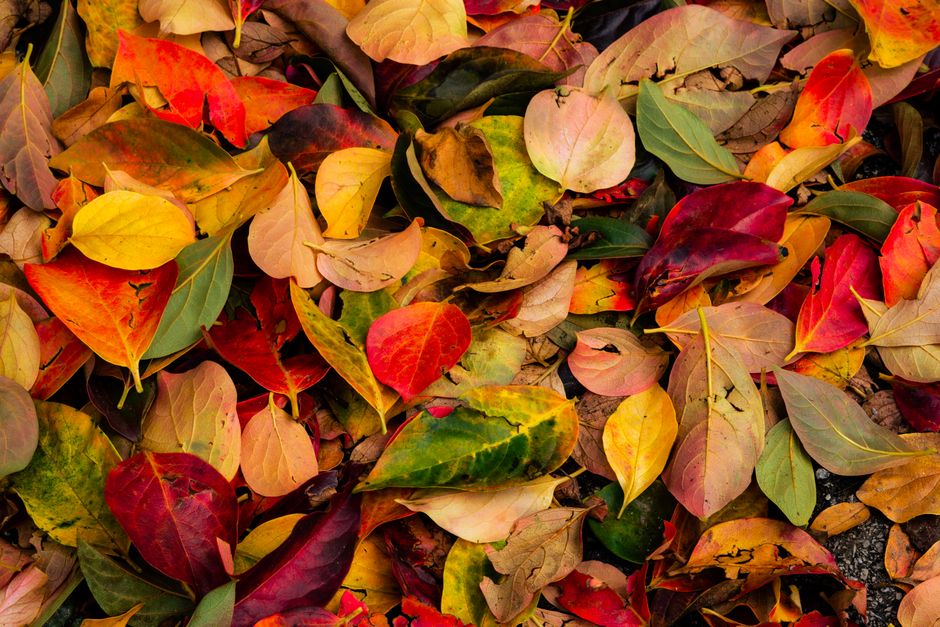
Every autumn, forests across the northern United States and much of the temperate world shift from green to gold, orange, red, and purple. These colors come from pigments already present in the leaves all summer. The green simply fades first, revealing what was hidden underneath.
The main players are chlorophyll (green), carotenoids (yellow and orange), and anthocyanins (red and purple). As days shorten and temperatures drop, trees stop making chlorophyll, and the other pigments become visible. That single process explains most of what you see in a fall landscape.
What Are The Colors Of Fall And How Do They Happen?
Fall color is a chemistry story that plays out inside each leaf. During the growing season, chlorophyll dominates. It absorbs red and blue light and reflects green, which is why summer leaves look green. Chlorophyll is also unstable. The tree constantly rebuilds it to keep photosynthesis running.
In autumn, the tree begins to shut down the leaf. A layer of cells forms at the base of the leaf stalk, slowly cutting off the flow of water and nutrients. With that supply cut, chlorophyll breaks down faster than the tree replaces it. As green fades, pigments that were there all along start to show.
Carotenoids are the yellow and orange pigments. They absorb blue and green light and reflect yellow, orange, and red. They are present in the leaf throughout the summer but are masked by the stronger green of chlorophyll. When chlorophyll disappears, carotenoids are what remain. This is why yellow and gold appear so reliably every year, even in years with poor red color.
Anthocyanins are different. They are red and purple pigments, and they are not simply left over from summer. In many trees, the leaf actually produces new anthocyanins in autumn, using sugars trapped in the leaf after the transport channels close. This is why red color depends heavily on weather conditions, while yellow does not.
Brown tones come from tannins, which are present in leaves and become more noticeable as the other pigments break down. Oaks and some other species often turn brown rather than producing bright reds or oranges.
Why Do Some Leaves Turn Red And Others Yellow?
Tree species determine which pigments dominate. Genetics set the basic palette, and weather adjusts the intensity.
Yellow and orange are the default fall colors for many trees because carotenoids are always present. Species like birch, hickory, ash, and aspen reliably turn yellow or gold. Their leaves do not produce much anthocyanin, so red is not in their range.
Red and purple require anthocyanin production, which is more variable. Maples, sweetgums, dogwoods, and some oaks are known for red fall color. But the same red maple can turn brilliant crimson one year and dull yellow-brown the next, depending on conditions.
Brown is common in oaks and beeches. Tannins accumulate as the other pigments fade, giving a muted brown or russet tone.
One detail worth knowing: the same species can look different in different regions. A red maple in New England and a red maple in the Deep South are genetically similar, but the shorter, cooler autumn in the South often produces less intense red.
What Weather Conditions Create The Best Fall Colors?
Warm, sunny days and cool, frost-free nights produce the most vivid reds. That combination is well established in plant physiology. Sunlight drives sugar production in the leaf, and cool nights slow the breakdown of those sugars. The trapped sugars feed anthocyanin production, which deepens red and purple tones.
Several factors reduce color quality:
- An early hard freeze can kill leaf tissue before anthocyanins develop, turning leaves brown or causing them to drop quickly.
- Heavy rain and strong wind can strip leaves before peak color.
- A warm, cloudy autumn tends to produce muted reds, though yellows still appear.
- Drought during the growing season can stress trees and lead to earlier, less colorful change.
This is why fall color varies so much year to year. Yellow and gold are relatively consistent because carotenoids are always present. Red is the wildcard.





Does Shorter Daylight Trigger The Change?
Yes. Day length is the main trigger. As nights lengthen past a certain point, trees begin the process of leaf senescence, which is the controlled breakdown of the leaf before it drops.
Temperature and weather shape the intensity and timing of color, but the shortening photoperiod is what starts the process. Even in a warm autumn, trees still change because the nights are getting longer. This is why fall color timing is fairly predictable by latitude and species, even when the exact shade varies.
Some trees are more sensitive to day length than others, which is why different species peak at different times. Blackgum and dogwood often turn early. Oaks and some maples turn later. A single forest can show color over several weeks because of this staggering.
Why Do Leaves Fall Off After They Change Color?
The color change and the leaf drop are part of the same process. As the tree shuts down the leaf, it forms what is called an abscission layer at the base of the leaf stalk. This is a zone of cells that gradually weakens the connection between leaf and branch.
Once the abscission layer is complete, the leaf is essentially sealed off from the tree. Water and nutrients no longer reach it. The leaf dries, and eventually wind or its own weight causes it to fall. The tree then seals the wound where the leaf was attached, which protects it through winter.
This is not a passive process. The tree actively dismantles the leaf and recovers some of its nutrients, particularly nitrogen, before letting it go. That recovery is part of why trees can survive winter without leaves and regrow a full canopy in spring.
Do All Trees Change Color The Same Way?
No. Evergreens like pines, spruces, and firs keep their needles year-round. Their needles are coated in a waxy layer and are built to survive cold, so they do not go through the same seasonal shutdown.
Deciduous trees, which shed their leaves, vary widely in color. Some produce mostly yellow. Others produce red, orange, purple, or brown. A few species, like some maples, can show a mix of colors on a single tree because different leaves shut down at slightly different times.
There is also a group sometimes called marcescent trees, including many oaks and beeches. Their dead leaves stay attached through much of winter and drop in spring. The reason is not fully settled, but it may relate to the timing of the abscission layer forming.
What Colors Can You Expect In Different Regions?
The northeastern United States and eastern Canada are known for red maples, sugar maples, and birches, which produce a mix of red, orange, and yellow. The Midwest and Great Lakes region shows similar colors, with more yellow from aspen and hickory. The Appalachian and southern mountains often peak later and can show strong reds from sourwood, blackgum, and red maple.
The western United States has less dramatic fall color overall because fewer deciduous species dominate. Quaking aspen produces bright yellow stands in the Rockies and the Sierra Nevada. In the Pacific Northwest, bigleaf maple and vine maple turn yellow and orange, with some red.
Europe and East Asia have their own palettes. Japan is known for red maple and ginkgo, which turns a clear yellow. Europe’s beech and oak forests tend toward gold and brown.
Frequently Asked Questions
Why do leaves change color in the fall?
Leaves change color because the tree stops producing chlorophyll as days shorten, revealing yellow and orange pigments already in the leaf and allowing new red pigments to form. The green fades first, and the other colors become visible.
What makes leaves turn red instead of yellow?
Red comes from anthocyanins, which many trees produce in autumn using sugars trapped in the leaf. Warm sunny days and cool nights favor red color, while yellow comes from carotenoids that are present all along.
Why do some years have better fall colors than others?
Warm, sunny days and cool nights produce the most vivid reds, while early freezes, heavy rain, or drought reduce color quality. Yellow is fairly consistent year to year because carotenoids are always present.
Do leaves change color because of temperature or daylight?
Shortening daylight is the main trigger that starts the process. Temperature and weather shape how intense the colors are, but they do not start the change.
