
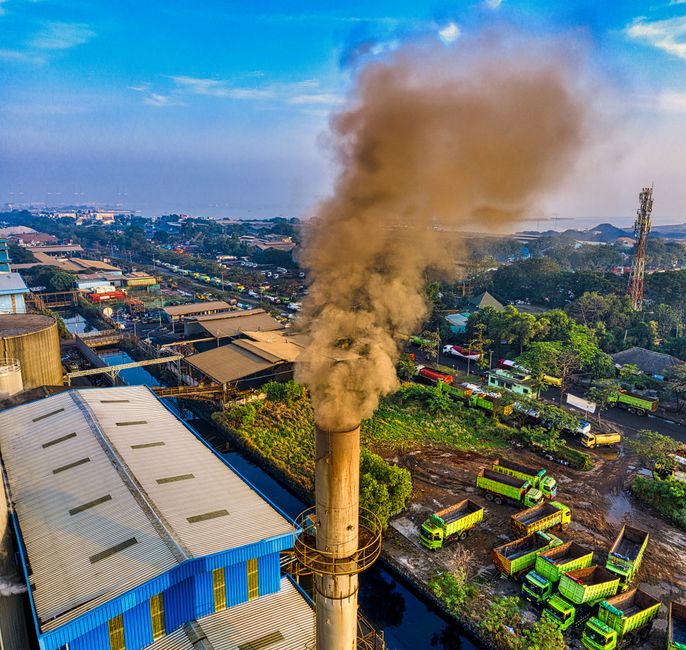
Scrubbers are devices that clean industrial exhaust gases before they are released into the air. They work by passing dirty gas through a liquid or dry material that traps pollutants like sulfur dioxide, hydrochloric acid, and fine particles. This process removes harmful substances from factory smokestacks, power plant chimneys, and chemical facility vents. The result is cleaner air that meets environmental standards and protects public health.
How Do Scrubbers Actually Remove Pollutants?
Scrubbers rely on physical and chemical processes to capture pollution. In a wet scrubber, exhaust gas enters a chamber where it meets a fine spray of liquid, usually water mixed with a neutralizing chemical. The liquid droplets collide with pollutant particles and absorb gases. The clean gas exits the top while the dirty liquid collects at the bottom for treatment.
Dry scrubbers work differently. They inject a dry alkaline material like lime or sodium bicarbonate into the gas stream. The alkaline powder reacts with acidic gases and forms a solid salt. That salt gets captured by a fabric filter or electrostatic precipitator before the gas exits the stack.
The choice between wet and dry depends on the pollutant type and concentration. Wet scrubbers handle high temperatures and sticky particles well. Dry scrubbers use less water and produce less waste liquid. Both types achieve removal rates above 90 percent for many pollutants when properly maintained.
What Pollutants Do Scrubbers Remove From Industrial Air?
Scrubbers target specific pollutants that cause acid rain, respiratory illness, and environmental damage. The most common targets are sulfur dioxide and hydrogen chloride. The Environmental Protection Agency reports that coal-fired power plants using scrubbers can remove 95 to 99 percent of sulfur dioxide from their exhaust.
Scrubbers also capture fine particulate matter. These tiny particles are smaller than 2.5 micrometers and can lodge deep in lung tissue. Wet scrubbers collect these particles through impaction and diffusion as gas moves through the liquid spray.
Other pollutants scrubbers handle include:
- Hydrogen fluoride from aluminum smelting and fertilizer production
- Mercury vapor from coal combustion and waste incineration
- Ammonia from chemical manufacturing and animal waste processing
- Volatile organic compounds from paint and solvent operations
- Dioxins and furans from medical waste incinerators
No single scrubber removes everything. Each system is designed for the specific pollutant profile of the facility. A power plant burning high-sulfur coal needs a different scrubber setup than a chemical plant producing hydrochloric acid fumes.
Where Are Scrubbers Required by Law?
Federal clean air regulations drive most scrubber installations in the United States. The Clean Air Act requires major industrial sources to use the best available control technology for hazardous air pollutants. Scrubbers are often the technology that meets that standard for acid gases and metal fumes.
The EPA’s Mercury and Air Toxics Standards specifically require coal-fired power plants to install scrubbers or equivalent controls. These standards took effect in 2015 and have led to widespread scrubber adoption in the electric power sector. According to the Energy Information Administration, more than 70 percent of coal-fired generating capacity now uses wet scrubbers or dry sorbent injection.
State regulations can go further than federal rules. California’s South Coast Air Quality Management District requires scrubbers on certain refinery and chemical operations. Texas has its own emissions standards that push scrubber use in the petrochemical corridor along the Gulf Coast.
| Industry | Common Pollutant | Typical Scrubber Type |
|---|---|---|
| Coal power plants | Sulfur dioxide, mercury | Wet limestone scrubber |
| Waste incinerators | Hydrogen chloride, dioxins | Dry lime injection |
| Chemical manufacturing | Hydrogen fluoride, ammonia | Packed bed wet scrubber |
| Metal smelting | Sulfur dioxide, metal fumes | Venturi wet scrubber |
| Cement kilns | Particulate matter, acid gases | Dry scrubber with baghouse |





What Are Scrubbers Used For Air Pollution Control in Power Plants?
Power plants are the largest single market for scrubbers worldwide. Coal-fired plants must remove sulfur dioxide to meet emission limits. The most common approach is a wet limestone scrubber, also called a flue gas desulfurization system. Crushed limestone mixed with water reacts with sulfur dioxide to form calcium sulfite, which gets oxidized into gypsum. That gypsum can be sold for wallboard manufacturing.
Natural gas plants rarely need scrubbers because natural gas burns much cleaner than coal. However, some gas plants with carbon capture systems use scrubbers to remove impurities before the carbon dioxide gets compressed for storage or use.
Biomass power plants also use scrubbers. Burning wood, agricultural waste, or landfill gas produces hydrochloric acid and particulate matter. A wet scrubber keeps these emissions within permit limits while allowing the plant to qualify as renewable energy.
Research published in the Journal of the Air and Waste Management Association found that modern scrubbers in power plants reduce sulfur dioxide emissions by 98 percent or more when operated correctly. The same study noted that scrubber performance drops significantly without regular maintenance and chemical feed adjustments.
What Happens to the Waste Scrubbers Produce?
Scrubbers do not destroy pollution. They transfer it from the gas phase into a liquid or solid waste stream. Wet scrubbers produce a slurry containing the captured pollutants plus the neutralizing chemical. This slurry must be processed before disposal or reuse.
For coal plant scrubbers, the slurry goes to a settling pond or a mechanical dewatering system. The solid material, called scrubber sludge, contains calcium sulfite or calcium sulfate. Some plants convert this into synthetic gypsum for the construction industry. The American Coal Ash Association reports that about 60 percent of scrubber sludge from power plants gets recycled into wallboard and cement.
Dry scrubbers produce a fine powder that contains reaction salts and captured pollutants. This powder goes to a landfill designed for industrial waste. Some facilities blend the powder with fly ash for use in concrete production, though this is less common than wet scrubber recycling.
Water treatment is a major consideration for wet scrubbers. The liquid blowdown contains dissolved metals and salts that must be removed before discharge. Treatment systems include chemical precipitation, filtration, and reverse osmosis. Without proper treatment, scrubber wastewater can contaminate local waterways with selenium, mercury, and arsenic.
What Are the Limitations of Scrubber Technology?
Scrubbers are expensive to install and operate. A wet scrubber system for a large coal plant can cost 100 to 300 million dollars. Operating costs add millions per year for chemicals, electricity, and maintenance. These costs get passed to ratepayers or reduce plant profitability.
Scrubbers also consume large amounts of water. A typical wet scrubber on a 500-megawatt coal plant uses 500 to 800 gallons of water per minute. This water evaporates or becomes contaminated, creating a net water loss for the facility. Plants in water-scarce regions face challenges with scrubber operation.
There is no clinical evidence that scrubbers create health risks for nearby communities when properly operated. However, poorly maintained scrubbers can release untreated pollutants. The EPA has fined several facilities for scrubber malfunctions that led to excess emissions. Regular inspections and real-time monitoring prevent most problems.
Some people report concerns about the visual impact of scrubber plumes. Wet scrubbers produce a visible steam plume from the stack, especially in cold weather. This plume is primarily water vapor with trace amounts of treated gas. It looks dramatic but is not a sign of pollution release.
Frequently Asked Questions
Do scrubbers remove carbon dioxide from power plant exhaust?
Standard scrubbers do not remove carbon dioxide. They target acid gases and particulate matter. Separate carbon capture systems are required for CO2 removal.
How long does a scrubber system last before replacement?
A well-maintained scrubber lasts 20 to 30 years. Internal components like spray nozzles and packing material need replacement every 5 to 10 years.
Can scrubbers be added to existing factories?
Yes, scrubbers can be retrofitted to existing facilities. Many older power plants added scrubbers after new emission rules took effect in the 2010s.
Do scrubbers make noise that bothers neighbors?
Scrubbers produce mechanical noise from pumps and fans. Most facilities install sound barriers and locate scrubbers away from property lines to minimize noise impact.
