
Stretching your posterior tibialis safely starts with understanding what this muscle does and where it sits. The posterior tibialis runs down the back of your lower leg, wraps under your ankle bone, and attaches to the arch of your foot. It is the main muscle that supports your arch and helps you push off when you walk. Stretching it safely means moving slowly, avoiding sharp pain, and pairing stretches with strengthening exercises. Most people can stretch this muscle at home without special equipment, but you should stop if you feel a sudden or sharp pain.
Why Stretching the Posterior Tibialis Matters
The posterior tibialis is a workhorse muscle. It supports your arch every time you stand, walk, or run. When this muscle gets tight or overworked, it can contribute to shin splints, arch pain, and posterior tibial tendon dysfunction — a condition where the tendon becomes inflamed or even tears.
Stretching alone will not fix a damaged tendon. If you have persistent pain along the inside of your ankle or arch, see a doctor or physical therapist first. They can tell you whether stretching is appropriate or whether you need rest, ice, or other treatment. Tendon injuries often need loading and strengthening, not just stretching.
How To Stretch Your Posterior Tibialis Safely
The safest way to stretch this muscle is with controlled, gentle movements that target the calf and the inner foot. You should never bounce or force a stretch. Hold each stretch for 20 to 30 seconds and repeat two to three times per side. Stop if you feel sharp pain, numbness, or tingling.
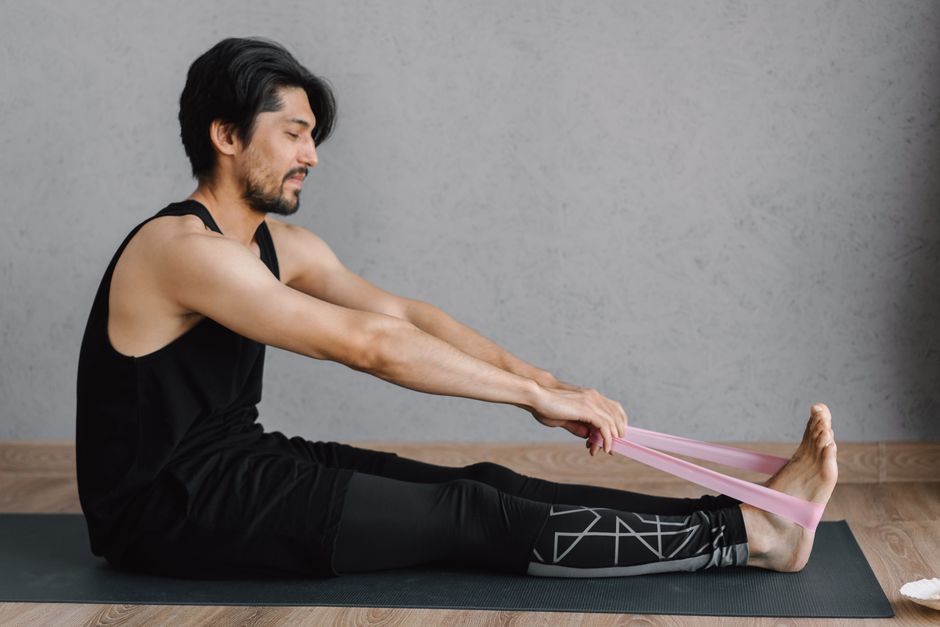
A basic towel stretch works well. Sit on the floor with your legs straight in front of you. Loop a towel around the ball of your foot and gently pull the towel toward you. You should feel a stretch in your calf and along the back of your leg. Keep your knee straight but not locked. This targets the gastrocnemius, which connects to the same tendon complex as the posterior tibialis.
For a deeper stretch, bend your knee slightly while pulling the towel. This shifts the focus to the soleus muscle, which sits underneath the gastrocnemius. Both muscles influence how the posterior tibialis functions.
Standing Calf Stretch With a Bent Knee
Stand facing a wall with your hands on the wall at shoulder height. Step your affected foot back about one to two feet. Keep both heels flat on the floor. Bend your front knee and keep your back knee slightly bent. Shift your weight forward until you feel a stretch in your lower calf and Achilles area.
The bent back knee is important. It isolates the soleus muscle, which has a direct relationship with the posterior tibialis tendon. Hold for 20 to 30 seconds. Do not let your heel lift off the floor. Repeat two to three times.
This stretch is generally safe for most people. If you have a history of Achilles tendon rupture or severe ankle instability, check with a clinician before doing it.





Intrinsic Foot Stretches for Arch Support
The posterior tibialis attaches to bones in your midfoot that form your arch. Stretching the small muscles of the foot can help balance tension across the arch. One gentle exercise is the toe spread. Sit barefoot with your foot flat on the floor. Spread your toes apart as wide as you can without lifting your heel. Hold for five seconds, then relax. Repeat 10 times.
Another useful move is the towel curl. Place a small towel flat on the floor. Sit in a chair and put your foot on the towel. Use your toes to scrunch the towel toward you. This strengthens the small muscles of the foot, which supports the arch from below. Strengthening is often more important than stretching for the posterior tibialis because this muscle needs to hold your arch during activity.
Eccentric Strengthening: The Evidence-Based Approach
Research consistently shows that eccentric strengthening is more effective than stretching alone for tendon problems. Eccentric exercise means lengthening the muscle while it is under load. For the posterior tibialis, this often involves slow, controlled lowering of your foot or ankle.
A simple version uses a resistance band. Sit with your leg straight. Loop a band around the ball of your foot and hold the ends in your hands. Point your toes away from you against the band resistance, then slowly let your foot come back to neutral over three to five seconds. This works the muscle as it lengthens.
Some research suggests that heavy slow resistance training — using weights with slow repetitions — helps tendon conditions. However, no single protocol works for everyone. A physical therapist can design a program specific to your injury and fitness level. Do not guess at weights or repetitions when you have an active tendon problem.
When Stretching Is Not the Answer
Stretching is not appropriate for every foot or ankle issue. If you have posterior tibial tendon dysfunction in a later stage, stretching the muscle can actually increase strain on an already damaged tendon. In that case, rest, immobilization, or surgery may be needed depending on severity.
Signs that you should not stretch include sharp pain during the stretch, pain that lasts more than a few hours afterward, swelling along the inside of the ankle, or difficulty bearing weight. These symptoms warrant a medical evaluation, not more stretching.
No clinical guidelines currently exist for stretching this specific muscle as a standalone treatment. Many clinicians recommend stretching as part of a broader rehabilitation program, but the evidence base is strongest for strengthening and gradual return to activity.
Common Mistakes to Avoid
- Bouncing or jerking during a stretch — this can cause microtears in the muscle or tendon.
- Stretching through sharp or shooting pain — mild discomfort is normal, but sharp pain is not.
- Ignoring the arch — stretching only the calf while neglecting the foot muscles leaves the system unbalanced.
- Stretching a swollen or acutely injured area — rest and ice come first, not stretching.
- Using stretching as your only treatment — most tendon issues require strengthening, not just flexibility work.
Some people believe that if a stretch feels good, it is helping. That is not always true. A stretch can feel pleasant while still placing excessive strain on an inflamed tendon. Pay attention to how your foot and ankle feel over the next 24 hours, not just during the stretch itself.
How Long Before You See Improvement
If stretching and strengthening are appropriate for your situation, improvement usually takes time. Tendons heal slowly because they have a limited blood supply. You might notice reduced stiffness within one to two weeks, but full recovery from tendon irritation often takes six to twelve weeks or longer.
Consistency matters more than intensity. Five minutes of daily gentle stretching and strengthening beats one intense session per week. If you have not seen any improvement after three to four weeks of consistent stretching, or if pain worsens, seek professional guidance.
Frequently Asked Questions
Can stretching make posterior tibialis pain worse?
Yes, stretching can worsen pain if the tendon is acutely inflamed or torn. If you have sharp pain, swelling, or difficulty bearing weight, stop stretching and see a clinician.
How often should I stretch my posterior tibialis?
Daily stretching is generally safe for most people if done gently and without pain. Stretch once or twice per day, holding each position for 20 to 30 seconds.
Do I need special equipment to stretch this muscle?
No, a towel and a wall are enough for basic stretches. A resistance band adds variety for strengthening but is not required to start.
Is the posterior tibialis the same as the Achilles tendon?
No, they are separate structures. The posterior tibialis tendon attaches to the arch bones, while the Achilles attaches to the heel bone. They work together but are distinct.
