
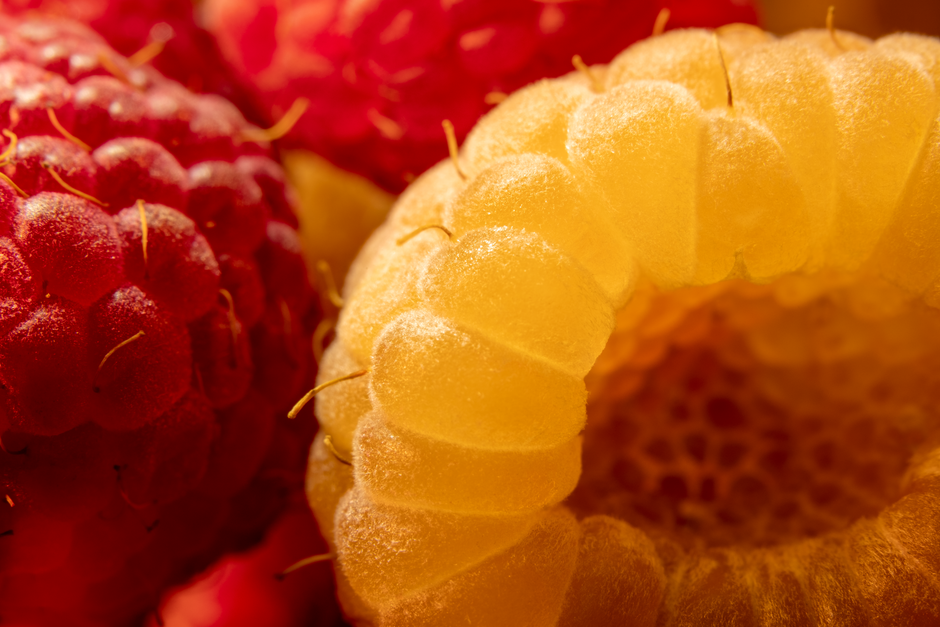
Golden raspberries are a naturally occurring color variant of the standard red raspberry, not a genetically modified fruit. They share the same scientific species, Rubus idaeus, but carry a recessive gene that blocks red pigment production, leaving the berries a soft yellow or apricot color. Growing them is nearly identical to growing red raspberries: plant them in full sun, provide well-drained soil, and expect fruit in their second year.
What Are Golden Raspberries Exactly?
Golden raspberries are the same plant as red raspberries, only with a different color. The lack of red pigment is a natural mutation, and the berries remain sweet, tender, and aromatic. Some varieties taste milder than red ones, while others are notably sweeter with a honey-like finish.
They are not a separate species. They are not a hybrid with blackberries or any other fruit. If you plant a golden raspberry cane, it will produce golden berries. If you plant a red cane, it produces red berries. The genetics are stable, though the exact shade can range from pale yellow to deep apricot depending on the variety and sun exposure.
Nutritionally, golden raspberries are similar to red ones. They contain vitamin C, manganese, and dietary fiber. The main difference is the absence of anthocyanins, the pigments that give red and black berries their color. Some research suggests anthocyanins act as antioxidants, but golden raspberries still provide other beneficial plant compounds. Eating them instead of red raspberries is not a nutritional loss in any meaningful way.
Best Golden Raspberry Varieties to Grow
Several named varieties perform well in home gardens. Fall Gold is the most widely available and reliable. It is an everbearing type, meaning it produces fruit in summer and again in fall. The berries are large, sweet, and pale yellow.
Golden Queen is another popular choice, known for its firm berries and good disease resistance. Honey Queen produces small but intensely sweet fruit. Anne is a newer variety with very large berries and a rich, tropical flavor.
All of these are hardy in USDA zones 4 through 8. If you live in a colder or hotter region, check with a local nursery before buying. Local varieties often perform better than mail-order plants bred for different climates.
How to Plant Golden Raspberries
Golden raspberries need a spot with at least six hours of direct sunlight each day. They tolerate partial shade, but fruit production drops noticeably. The soil should drain well. Standing water rots the roots quickly.
Test your soil pH before planting. Raspberries prefer slightly acidic soil, ideally between 5.5 and 6.5. If your soil is too alkaline, the plants will struggle to take up nutrients and may show yellowing leaves. Adding compost or peat moss helps adjust pH and improves drainage.
Plant bare-root canes in early spring, as soon as the ground can be worked. Container-grown plants can go in any time during the growing season. Space plants 18 to 24 inches apart in rows spaced 6 to 8 feet apart. Dig a hole deep enough to spread the roots without bending them. The crown, where the stem meets the roots, should sit just below the soil surface.
Water thoroughly after planting. Keep the soil consistently moist for the first few weeks while the roots establish. After that, raspberries need about one inch of water per week, more during hot, dry spells.




How to Care for Golden Raspberry Canes
Mulch around the base of the plants with straw, wood chips, or shredded leaves. A 2 to 3 inch layer suppresses weeds, retains moisture, and keeps the soil cool. Avoid piling mulch directly against the stems, as this invites rot.
Fertilize lightly in early spring with a balanced fertilizer. Raspberries are not heavy feeders. Too much nitrogen produces lush leaves at the expense of fruit. A single application of compost or a 10-10-10 fertilizer at a rate of about 2 pounds per 100 square feet is usually enough.
Golden raspberries send up new canes from the roots each year. These are called primocanes in their first year and floricanes in their second year. Only floricanes produce fruit. After fruiting, the floricanes die back. Cut them down to ground level to make room for new growth.
Everbearing varieties like Fall Gold produce fruit on the tips of primocanes in fall, then again on the lower portion of the same cane the following summer. If you want a single fall crop, cut all canes to the ground in late winter. If you want two crops, prune only the fruited tips after the fall harvest.
Do Golden Raspberries Need a Trellis?
Yes, most golden raspberry varieties benefit from support. The canes can grow 5 to 6 feet tall and become top-heavy with fruit. A simple trellis system with two or three horizontal wires keeps the plants upright and makes harvesting easier.
Install posts at each end of the row, then stretch wire between them at 2, 4, and 5 feet above the ground. Tie the canes loosely to the wires as they grow. This also improves air circulation, which reduces the risk of fungal diseases.
Without a trellis, the canes flop over and the berries touch the soil. Fruit that contacts damp ground is more likely to rot or develop mold. The trellis is not optional if you want clean, healthy fruit.
Common Pests and Diseases
Golden raspberries face the same pests as red raspberries. Aphids, spider mites, and raspberry beetles are the most common insects. Japanese beetles can also be a problem in some regions. Inspect the undersides of leaves regularly and remove pests by hand when numbers are low.
Fungal diseases are the bigger threat. Botrytis, or gray mold, thrives in cool, wet conditions. It appears as a fuzzy gray coating on the berries. Good air circulation, proper spacing, and avoiding overhead watering all reduce the risk.
Raspberry cane blight causes dark lesions on the stems and can kill the entire cane. Prune out infected canes immediately and dispose of them in the trash, not the compost pile. Do not plant new raspberries in the same spot where cane blight occurred, as the fungus can survive in the soil.
Viral diseases are spread by aphids and cannot be cured. Symptoms include yellowing leaves, stunted growth, and crumbly fruit. If you suspect a virus, dig up the entire plant and remove it. Buying certified disease-free plants from a reputable nursery is the best prevention.
When and How to Harvest Golden Raspberries
Golden raspberries are ready to pick when they come off the stem with a gentle tug. The berry should be fully colored, plump, and slightly soft. Unripe berries are firm and pale. They will not ripen further after picking, so wait until they are fully mature.
Harvest in the morning when the berries are cool and firm. Gently roll the berry between your thumb and fingers. It should release easily. Do not pull hard, as this damages the plant and crushes the fruit.
Golden raspberries are more fragile than red ones. Their lighter color makes bruises less visible, but they are still delicate. Place them in a shallow container, no more than two layers deep, to prevent crushing. Refrigerate immediately and eat within two to three days for the best flavor.
The berries freeze well. Spread them on a baking sheet in a single layer and freeze until solid, then transfer to a freezer bag. Frozen golden raspberries keep for up to six months.
What Are Golden Raspberries And How To Grow Them in Containers
If you lack garden space, golden raspberries grow well in large containers. Choose a pot at least 18 inches wide and deep, with drainage holes. Use a potting mix designed for containers, not garden soil, which compacts and drains poorly.
Container-grown raspberries need more frequent watering than ground-planted ones. Check the soil daily during hot weather. The restricted root space means they also need more regular feeding. Apply a liquid fertilizer every two to three weeks during the growing season.
Move containers to a sheltered spot in winter. Roots in pots are more exposed to freezing temperatures than roots in the ground. In very cold regions, wrap the pot in burlap or move it into an unheated garage.
Do Golden Raspberries Spread and Take Over?
Yes, golden raspberries spread aggressively through underground roots. A single plant can send up new canes several feet away within one season. This is useful if you want a thick hedge, but it is a problem in a small garden.
Install a root barrier at planting time to contain the spread. Bury a sheet of heavy plastic or metal edging at least 12 inches deep around the planting area. Alternatively, grow them in containers, which naturally prevents spreading.
If you already have an established patch that has spread too far, dig up the unwanted canes and roots. This is most effective in early spring before new growth starts. You will need to repeat this each year, as some roots always remain.
Frequently Asked Questions
Are golden raspberries genetically modified?
No, golden raspberries are a natural color mutation of the red raspberry, not a genetically modified organism. The trait has existed for centuries and is passed down through normal plant breeding.
Do golden raspberries taste different from red raspberries?
Many people find golden raspberries sweeter and milder than red ones, with a honey-like flavor. The taste varies by variety, and some golden types are very similar to red raspberries in flavor.
How long does it take for golden raspberries to produce fruit?
Most golden raspberry plants produce a small crop in their first year if planted early, but the full harvest comes in the second year. Everbearing varieties may produce a light fall crop in year one.
Can golden raspberries grow in partial shade?
They can survive in partial shade, but fruit production drops significantly. For a full harvest, plant them where they receive at least six hours of direct sunlight daily.
