
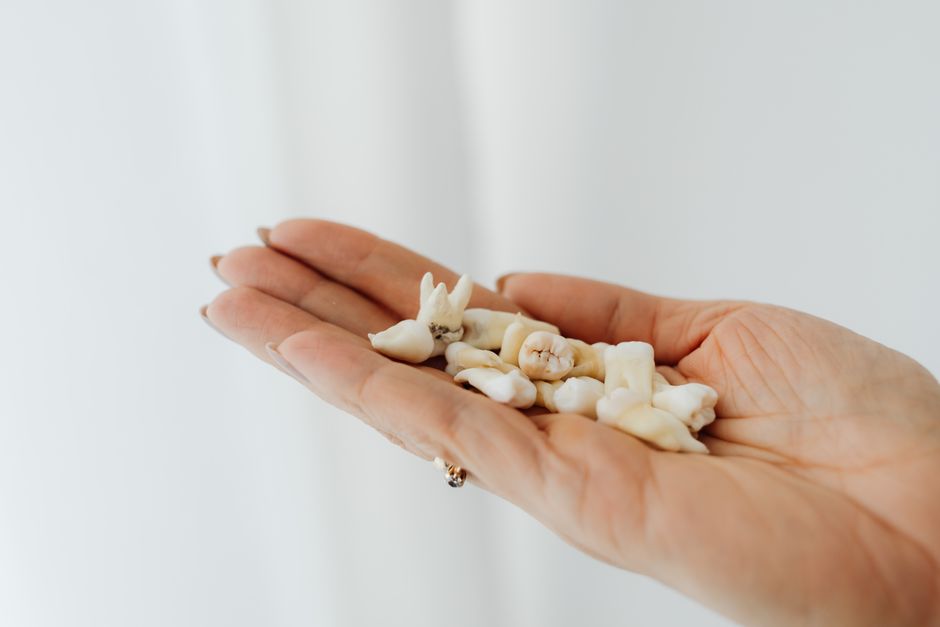
No, your wisdom teeth cannot grow back after they are removed. Once a tooth and its root are taken out, the body does not build a new one in its place. That part is settled anatomy, and no amount of vitamin supplements or jaw exercises changes it.
But there is a real reason people think their wisdom teeth returned. In many cases, the tooth was never fully removed to begin with. A dentist may have taken out part of a tooth, or a small piece of root may have been left behind on purpose. Years later, that leftover fragment can work its way to the surface and look exactly like a new tooth pushing through. So the tooth is not new. It was there the whole time.
There is also a separate situation where a person genuinely has more than four wisdom teeth. This is uncommon but documented, and it can make it seem like a tooth came back when really an extra one was always present and went unnoticed.
Why Do People Think Their Wisdom Teeth Grew Back?
The most common reason is a retained root fragment or a piece of a tooth that was left in the gum during an earlier extraction.
Wisdom teeth often have curved, twisted roots. When a dentist removes one, especially if it was broken or impacted, a small piece can be missed or deliberately left to avoid damaging a nearby nerve. That fragment usually stays quiet. Over months or years, the body can slowly push it toward the surface, a process sometimes called eruption of a retained fragment. When it appears, it looks like a small tooth emerging from the gum.
Other explanations include:
- A wisdom tooth that was never removed because it had not yet come in at the time of an earlier extraction.
- An extra (supernumerary) wisdom tooth that was not visible on the original exam.
- A different tooth, such as a second molar, shifting or breaking down and being mistaken for a wisdom tooth.
The key point is that none of these involve a new tooth forming. Something that was already there is becoming visible or noticeable.
Can a Wisdom Tooth Come In After Age 25?
Yes, wisdom teeth can still emerge in adulthood, and this is one of the most common sources of confusion.
Wisdom teeth, also called third molars, usually begin pushing through between the late teens and the mid-twenties. But the timing varies a lot from person to person. Some people have wisdom teeth that stay buried in the jawbone for decades and never break through the gum at all. Others have one that finally surfaces in their thirties or later.
If you had some wisdom teeth removed as a teenager and another one was left in place, that remaining tooth can come in years later. It is not growing back. It is simply arriving late.
Dentists track wisdom teeth with X-rays, which is why they can usually tell you how many you have and where they sit. A panoramic X-ray shows the full jaw and reveals teeth that have not yet erupted. This is the reliable way to know what is actually in your mouth, rather than guessing from what you can feel.
What Are Supernumerary Wisdom Teeth?
Some people are born with more than the usual four wisdom teeth. These extra teeth are called supernumerary teeth.
Having extra wisdom teeth is uncommon. When it happens, the additional tooth may sit quietly in the jaw for years and then appear, or it may be found only on an X-ray. If a person has four wisdom teeth removed and later notices another one emerging, an extra tooth that was missed or not yet visible is a more likely explanation than regrowth.
Supernumerary teeth can cause problems. They may crowd other teeth, interfere with the bite, or be hard to clean. A dentist can identify them with imaging and decide whether they need to be removed. This is a situation where an exam and X-ray give a clear answer, and guessing from symptoms alone does not.
What If Something Is Poking Through Your Gum?
A hard bump or sharp point emerging from the gum where a wisdom tooth was removed is usually a retained root fragment or a piece of bone, not a new tooth.
Small fragments of bone sometimes work loose after an extraction as the socket heals. These are called bone sequestra. They can feel sharp and may poke through the gum. Most work their way out on their own. Some need to be removed by a dentist.
Signs that you should have it checked include:
- Pain, swelling, or redness around the area.
- Discharge or a bad taste.
- A fragment that stays for weeks without coming out.
- Difficulty opening your mouth or swallowing.
These symptoms can also point to an infection or another dental problem, so a dentist needs to look. Do not try to dig out a fragment yourself. That can push it deeper or introduce infection.
Can a Wisdom Tooth Partially Grow Back After Surgery?
No. If the entire tooth and root were removed, nothing regrows. What can happen is that the removal was incomplete.
There is a real distinction between a full extraction and a partial one. Sometimes a dentist removes the crown of a wisdom tooth but leaves the roots in place because taking them out would risk injuring the inferior alveolar nerve, which runs through the lower jaw. This is a deliberate choice. The retained roots usually stay put without causing trouble, but they can occasionally surface later.
This is why the honest answer to “did my tooth grow back” is almost always “no, it was not fully gone.” The tooth you are seeing now was present, in some form, the entire time.
Does Everyone Need Their Wisdom Teeth Out?
No. Not everyone needs wisdom teeth removed, and current thinking has moved away from removing all of them as a routine matter.
A wisdom tooth that is healthy, fully erupted, positioned correctly, and can be cleaned properly may not need to come out. The decision depends on the individual tooth and the person. Dentists weigh factors like crowding, the risk of decay or gum disease, whether the tooth is impacted, and whether it is causing symptoms.
Impacted wisdom teeth, which stay trapped in the gum or bone, are more likely to cause problems. They can lead to infection, damage to nearby teeth, or cysts. But even impacted teeth do not always cause trouble, and some dentists monitor them rather than remove them right away.
The evidence on when removal is truly necessary is not as clear-cut as many people assume. Guidance has shifted over time, and there is genuine debate about how aggressively to treat wisdom teeth that are not causing symptoms. This is a decision to make with a dentist who can see your X-rays and examine your mouth, not from a general rule.
How Can You Tell What Is Really Happening?
An X-ray is the only reliable way to know whether you have a leftover fragment, an unerupted tooth, or an extra one.
What you feel in your mouth can be misleading. A sharp piece of bone, a retained root, and a partially erupted tooth can all feel similar. Imaging shows the difference clearly. If you are concerned that a wisdom tooth has come back, the practical step is a dental exam with X-rays.
Some general points that hold true:
- Removed teeth do not regrow. This is not in dispute.
- What looks like regrowth is almost always something that was already there.
- Retained root fragments and supernumerary teeth are the usual explanations.
- An X-ray settles the question.
The idea that teeth can grow back is understandable, because the human mouth does replace teeth once, in childhood, when baby teeth fall out and adult teeth arrive. But that replacement happens only once. Adult teeth, including wisdom teeth, are the final set. Once one is gone, it is gone.
Frequently Asked Questions
Can wisdom teeth grow back after being removed?
No, a wisdom tooth cannot grow back once it has been fully removed. What people sometimes see is a tooth or root fragment that was left behind and later surfaced, not a new tooth.
Why does it feel like my wisdom tooth came back?
A retained root fragment, a piece of bone working loose, or a wisdom tooth that was never removed can all feel like a tooth returning. An X-ray shows which one it is.
Can you have more than four wisdom teeth?
Yes, some people have extra wisdom teeth, called supernumerary teeth. This is uncommon, and the extra tooth is usually found on a dental X-ray.
Should I see a dentist if something is poking through my gum?
Yes, especially if there is pain, swelling, or discharge. A dentist can identify whether it is a bone fragment, a retained root, or another tooth and decide if it needs removal.
