
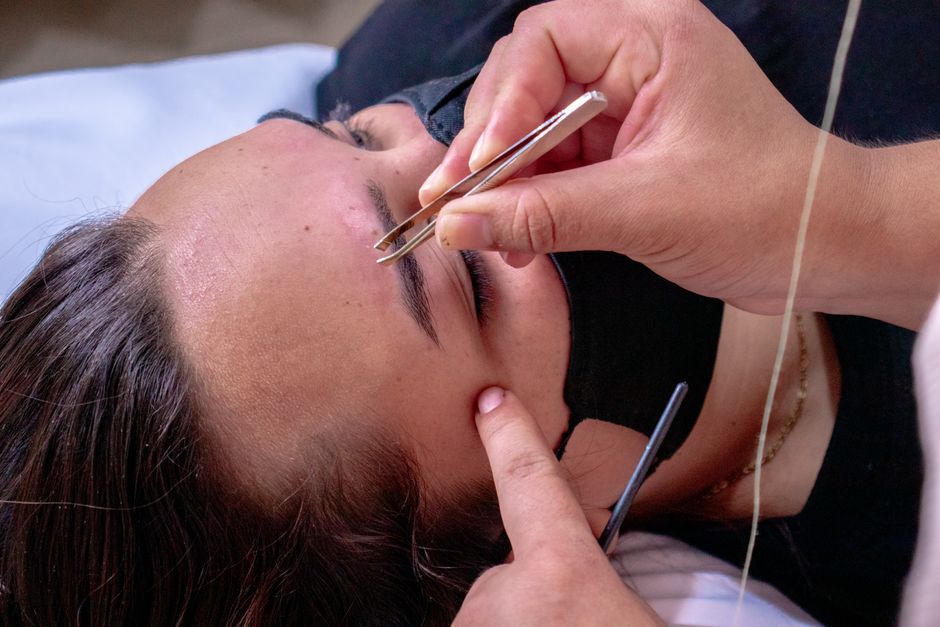
If you plucked or waxed your brows and now regret it, the short answer is that most eyebrow hair grows back in about four to eight weeks, though the full return to your original density can take several months. That timeline applies to hair that was removed from a healthy follicle. If the follicle itself was damaged — by over-plucking, scarring, or a medical condition — regrowth may be slower, patchy, or in some cases permanent.
The eyebrow is one of the slowest-growing hair sites on the body, which is why a bad wax job feels like it lasts forever. Understanding how the hair cycle works, and what can interrupt it, helps you set realistic expectations instead of waiting anxiously in front of the mirror.
How Long Does It Take Your Eyebrows To Grow Back After Plucking or Waxing?
For most people, visible regrowth starts within two to four weeks, and a plucked or waxed brow looks roughly normal again in six to eight weeks. Full thickness and density can take three to four months to return.
Eyebrow hair grows in a repeating cycle with three phases:
- Anagen (growth phase): The follicle actively produces hair. For eyebrows, this phase lasts roughly two to three months.
- Catagen (transition phase): Growth stops and the follicle begins to shrink. This lasts a few weeks.
- Telogen (resting phase): The hair sits dormant before shedding. This can last several months.
The key point is that plucking or waxing removes the hair shaft, not the follicle. The follicle stays in the skin and will typically start producing a new shaft once it re-enters the growth phase. Because eyebrow hairs are not all in the same phase at once, they do not all grow back together. That is why regrowth looks uneven for the first few weeks.
Eyebrow hair also grows more slowly than scalp hair. Scalp hair can grow about half an inch per month. Eyebrow hair grows at a much slower rate and has a shorter growth phase, which is why brows naturally stay short. This slow pace is the main reason regrowth feels like it takes forever.
Why Do Some Eyebrows Not Grow Back?
When eyebrow hair does not return, the cause is usually damage to the follicle rather than the hair shaft. Repeated trauma can scar the follicle and stop it from producing new hair.
The most common reasons brows fail to regrow include:
- Years of over-plucking: Constant pulling can gradually damage the follicle. Some people who plucked heavily in the 1990s and 2000s have permanently thinner brows. This is one of the few widely recognized cases where cosmetic hair removal can cause lasting loss.
- Scarring or injury: Burns, cuts, or skin conditions that scar the brow area can destroy follicles.
- Medical conditions: Thyroid disorders, alopecia areata, and other conditions can cause eyebrow hair loss. In these cases, the loss is a symptom, not the result of plucking.
- Nutritional deficiencies: Severe iron or zinc deficiency has been linked to hair loss, though the evidence for eyebrow-specific effects is limited.
- Medications and treatments: Chemotherapy and some other drugs commonly cause temporary hair loss across the body, including brows.
One clarification worth knowing: the idea that shaving makes hair grow back thicker is a myth. Shaving cuts hair at the surface and does not change the follicle or the growth rate. The blunt tip can feel coarser at first, but the hair itself is not thicker.
What Affects How Fast Your Eyebrows Grow Back?
Regrowth speed varies from person to person. Age is one of the biggest factors. Hair growth tends to slow with age, so a 50-year-old may see slower regrowth than a 25-year-old.
Other factors that can influence the timeline:
- Overall health: Poor nutrition, chronic stress, and certain illnesses can slow hair growth.
- Hormones: Thyroid function and other hormonal factors affect the hair cycle.
- Genetics: Some people simply have slower-growing or finer brow hair.
- How the hair was removed: Tweezing and waxing remove hair from the root. Threading and sugaring do the same. Trimming or shaving only removes the surface, so regrowth appears faster because the follicle was never disturbed.
There is no reliable way to calculate an exact regrowth date for any one person. The range of four to eight weeks for visible regrowth and three to four months for full density is a general guide, not a guarantee.





Can You Speed Up Eyebrow Growth?
There is no proven way to force eyebrow hair to grow faster. The evidence for most “growth serums” and home remedies is limited or absent.
A few points worth separating from marketing claims:
- Biotin supplements: These are widely marketed for hair growth. For people who are not biotin-deficient, there is no strong evidence that biotin speeds up eyebrow regrowth. Biotin deficiency is rare in people eating a normal diet.
- Castor oil and similar oils: These are popular home remedies. No large human trials have confirmed that they increase eyebrow growth. They may moisturize the skin, which is a different thing.
- Prescription treatments: Some prescription products are used for eyelash growth and are sometimes applied off-label to brows. This is a decision for a clinician, not a self-treatment. These products can have side effects, including skin irritation and changes in eye color.
- Brow serums sold online: Many make claims that no study has confirmed. Treat bold promises with caution.
The honest position is that the best thing you can do for regrowth is to stop removing the hair and give the follicles time. Most will recover on their own if they were not permanently damaged.
When Should You See a Doctor About Eyebrow Hair Loss?
If your brows are thinning or falling out without plucking or waxing, that is worth a medical evaluation. Sudden or unexplained eyebrow loss can be a sign of an underlying condition.
See a clinician if you notice:
- Eyebrow hair loss that happens on its own, without any hair removal
- Loss on both sides that is patchy or spreading
- Other symptoms such as fatigue, weight changes, or hair loss on the scalp
- Brow loss that does not improve over several months
Conditions such as thyroid disorders and alopecia areata can cause eyebrow thinning, and these are treated differently from cosmetic over-plucking. A doctor can help identify the cause. This is not a situation to self-diagnose from photos online, because several different conditions can look similar.
Practical Tips While You Wait
While your brows recover, a few habits can help you avoid making things worse:
- Put down the tweezers. Every pluck restarts the clock for that follicle.
- Resist filling in gaps by plucking nearby hairs to “even things out.” This often makes the shape worse.
- Use a brow pencil or powder to fill in sparse areas while you wait.
- Be patient with uneven regrowth. Brows rarely return in a neat, even pattern.
- If you must remove hair, consider trimming instead of plucking, since trimming does not disturb the follicle.
If you have been over-plucking for years, it is fair to wonder whether your brows will ever come back fully. For many people they do, at least partially. For others, some follicles are permanently damaged. There is no test that predicts which will happen, so the practical approach is to stop the trauma and give it several months.
Frequently Asked Questions
How long does it take for eyebrows to grow back after plucking?
Visible regrowth usually starts in two to four weeks, and brows look roughly normal again in six to eight weeks. Full density can take three to four months.
Can eyebrow hair grow back permanently after years of plucking?
Sometimes it does not. Years of repeated plucking can scar the follicle and cause permanent thinning in some people, though many still see partial regrowth.
Does shaving your eyebrows make them grow back faster or thicker?
No. Shaving only removes hair at the surface and does not change the follicle, so it does not speed up growth or make hair thicker.
What causes eyebrow hair loss that is not from plucking?
Thyroid disorders, alopecia areata, nutritional deficiencies, and some medications can cause eyebrow loss. Unexplained brow thinning should be checked by a doctor.
