
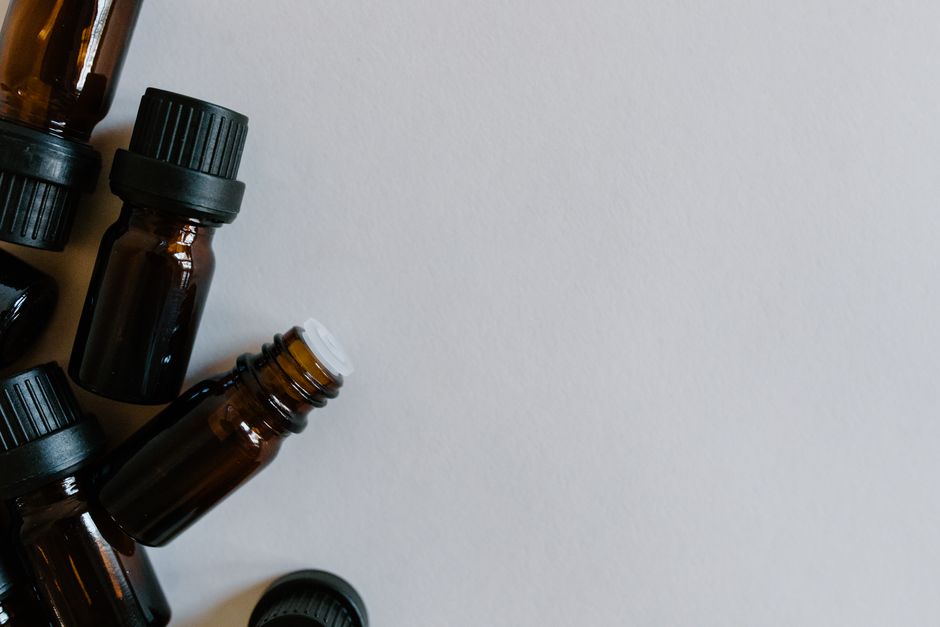
Essential oils are concentrated plant extracts that capture the aromatic compounds responsible for a plant’s characteristic scent. They work because these compounds — called volatile organic compounds — can interact with smell receptors in your nose and, in some cases, with biological pathways in the body. How much they actually do beyond smelling pleasant is where the science gets more complicated than most product labels suggest.
What Are Essential Oils And How Do They Work?
An essential oil is the concentrated liquid obtained by extracting volatile compounds from plant material. The most common method is steam distillation. Plant material is heated with steam, the volatile compounds vaporize, and the steam carries them into a condenser where they turn back into liquid. The oil separates from the water and is collected. Citrus oils are often extracted by cold pressing the peel instead, because heat can damage their fragile aromatic compounds.
It takes a large amount of plant material to produce a small amount of oil. This is why essential oils are potent and why they are typically diluted before use. A single drop of peppermint oil contains the volatile compounds from many peppermint leaves.
The term “essential” does not mean essential for health. It comes from the idea that the oil captures the plant’s “essence” — its characteristic fragrance. This is a historical naming convention, not a nutritional or medical claim.
These oils are not true oils in the chemical sense. They do not contain the fatty acids found in olive oil or coconut oil. They are volatile, meaning they evaporate at room temperature. That volatility is exactly what allows you to smell them from across a room.
How Do Essential Oils Interact With The Body?
The best-understood pathway is smell. When you inhale an essential oil, volatile compounds travel to the olfactory epithelium at the top of your nasal cavity. There, they bind to olfactory receptor neurons. These neurons send signals directly to the olfactory bulb in the brain, which connects to the limbic system — a network involved in emotion and memory.
This direct anatomical connection helps explain why certain scents can trigger strong emotional responses or vivid memories. It does not mean that inhaling an oil can treat a disease. The limbic connection is real and well documented. What that connection produces in terms of measurable health outcomes is a separate question.
When applied to the skin, some volatile compounds can pass through the outer layer and enter the bloodstream. The amount depends on the compound, the concentration, the skin condition, and the application site. Skin absorption of essential oils is generally low compared to medications designed for transdermal delivery. Some compounds are absorbed better than others, and damaged or thin skin absorbs more than intact, thick skin.
Ingesting essential oils is a different situation entirely. The digestive tract can absorb compounds more readily than skin. Some essential oils are toxic when swallowed, even in small amounts. Others can interact with medications. Ingestion should only happen under the guidance of a qualified healthcare provider who knows your full medical picture.
What Does The Evidence Actually Show?
This is where honesty matters more than enthusiasm. The evidence for essential oils varies widely depending on what you are asking.
For aromatherapy and mood, some studies suggest that certain scents — lavender in particular — may reduce self-reported anxiety or improve sleep quality in some settings. The research is mixed. Many studies are small, use different methods, and rely on subjective measures. A pleasant smell making you feel calmer is a real experience. Whether that constitutes clinical anxiety treatment is a different question, and the answer is generally no.
For antimicrobial activity, laboratory studies consistently show that many essential oils kill or inhibit bacteria, fungi, and viruses on contact in a petri dish. This is well established. What happens in a petri dish does not automatically translate to what happens on human skin or inside the body. Lab conditions use concentrated oils directly on organisms. Real-world use involves dilution, absorption, and the body’s own defenses. No essential oil has replaced antibiotics for treating infections.
For specific medical conditions, the evidence is limited for most claims. Some research has explored peppermint oil for irritable bowel syndrome symptoms, with results that some studies describe as modestly positive. Tea tree oil has shown some activity against acne-causing bacteria in topical studies, though it can irritate skin. These are narrow findings, not broad endorsements.
For serious conditions — cancer, infections, chronic diseases — no clinical evidence currently confirms that essential oils can treat or cure these. Marketing that suggests otherwise is not supported by research.




How Should Essential Oils Be Used Safely?
Safety depends on the oil, the method, the concentration, and the person. Some general principles apply.
- Dilute before skin contact. Most essential oils should be mixed with a carrier oil like jojoba, almond, or fractionated coconut oil before applying to skin. Undiluted application can cause irritation, burns, or allergic reactions.
- Test on a small area first. Apply a diluted drop to your forearm and wait 24 hours to check for a reaction.
- Keep away from eyes and mucous membranes. These areas are sensitive and easily irritated.
- Do not ingest unless directed by a qualified healthcare provider. Some oils are toxic when swallowed. Children are at particular risk.
- Store properly. Heat, light, and air degrade essential oils over time. Keep bottles closed and in a cool, dark place.
- Check for interactions. Some oils may interact with medications or affect blood clotting. If you take prescription drugs, ask your pharmacist or doctor before regular use.
Certain groups should be especially cautious. Pregnant and breastfeeding women, infants, young children, people with asthma or other respiratory conditions, and people with compromised immune systems may face higher risks. No clinical guidelines currently exist for safe essential oil use in infants and very young children, which means the safest approach is to avoid them in these populations unless a pediatrician specifically recommends otherwise.
Pets are also at risk. Cats in particular lack certain liver enzymes needed to metabolize many volatile compounds, making some oils toxic to them even at low exposure. Diffusing oils around pets is not automatically safe.
Are Essential Oils Regulated For Quality And Purity?
In the United States, essential oils are regulated as cosmetics or dietary supplements, not as drugs. That means they do not go through the same safety and effectiveness review that medications do before reaching the market.
There is no single official grading system for essential oil quality. Terms like “therapeutic grade,” “clinical grade,” or “medical grade” are marketing terms, not regulated standards. No independent body certifies these labels. A bottle labeled “therapeutic grade” has no legal definition behind that claim.
What you can look for is more concrete. A gas chromatography-mass spectrometry report, often called a GC-MS report, shows the chemical composition of a batch. Some companies publish these. It does not guarantee the oil will work for any particular purpose, but it does confirm what is in the bottle. Purity matters because adulterated oils may contain synthetic compounds or contaminants.
Organic certification, when present, verifies growing and processing standards for the plant material. It does not verify that the oil is effective for any health condition.
What Essential Oils Cannot Do
Essential oils cannot cure cancer. They cannot replace antibiotics for bacterial infections. They cannot treat diabetes, heart disease, or any chronic medical condition. They cannot substitute for emergency medical care.
The gap between what essential oils can do and what they are marketed to do is wide. A scent that helps you relax before bed is a legitimate use. A scent marketed as a treatment for insomnia, anxiety disorder, or depression is making a claim that current evidence does not support.
This does not make essential oils useless. It makes them what they are — concentrated plant aromatics with some documented biological activity, a pleasant sensory experience, and a long list of overstated claims attached to them.
If you enjoy the scent of lavender or peppermint, use them. If you are hoping they will replace a medication or treat a diagnosed condition, the evidence is not there. Talk to your doctor about what actually works for your situation.
Frequently Asked Questions
Can essential oils actually reduce anxiety?
Some studies suggest certain scents like lavender may help people feel calmer, but the research is mixed and often relies on self-reported measures. Essential oils are not a proven treatment for anxiety disorders and should not replace professional care.
Is it safe to put essential oils directly on your skin?
Most essential oils should be diluted with a carrier oil before skin contact because undiluted application can cause irritation or allergic reactions. Some oils are more irritating than others, and sensitive skin reacts more strongly.
Can you drink essential oils in water?
Swallowing essential oils is not safe unless a qualified healthcare provider specifically directs it, because some oils are toxic when ingested. Adding them to drinking water does not make them safe to consume.
Do essential oils expire?
Yes, essential oils degrade over time, especially when exposed to heat, light, or air. Citrus oils tend to oxidize faster than resins or woods, and oxidized oils may cause more skin irritation.
