
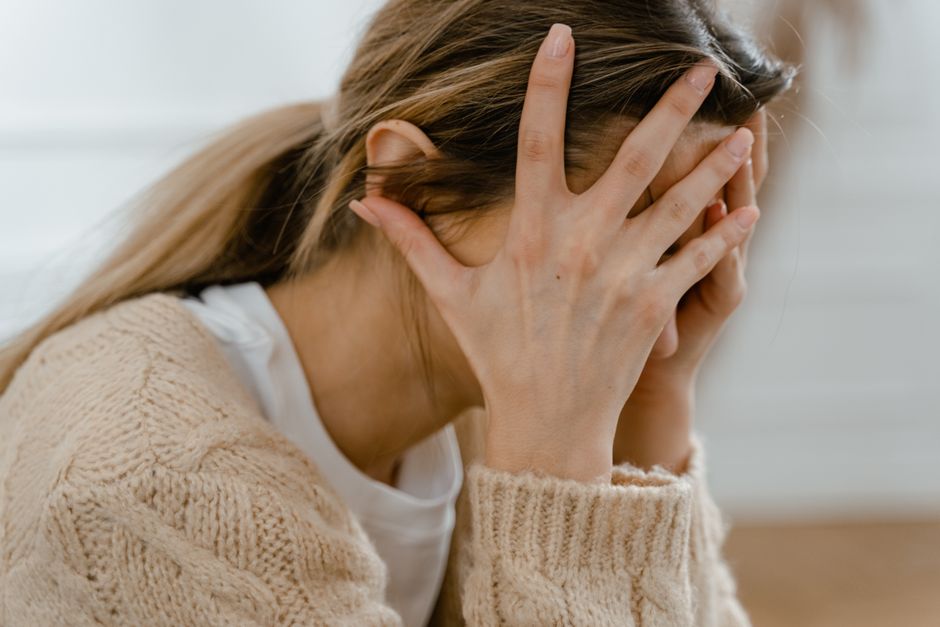
An anxiety attack feels like a sudden wave of intense fear or dread that hits without warning, often with a racing heart, shortness of breath, and a sense that something terrible is about to happen. The physical sensations can be so strong that many people mistake them for a heart attack. What to do when it happens starts with grounding yourself in the present moment, focusing on slow breathing, and reminding yourself that this feeling will pass—it is not dangerous, even though it feels that way. Immediate steps include finding a quiet spot, breathing in for four counts, holding for four, and breathing out for four, while repeating a simple phrase like “I am safe right now.”
What Exactly Does an Anxiety Attack Feel Like in the Body?
The physical experience of an anxiety attack is often the most alarming part. Your heart might pound so hard you can feel it in your throat or ears. Your chest may feel tight or heavy, making you think you cannot get enough air. Some people describe a choking sensation, as if their throat is closing up.
Sweating, trembling, and dizziness are common. You might feel hot or cold flashes, or a tingling sensation in your hands or face. Nausea or a feeling of butterflies in your stomach can also happen. Research published in the journal Depression and Anxiety found that over 90% of people who experience panic attacks report at least four of these physical symptoms during an episode.
What makes this so confusing is that the body is reacting as if there is a real physical threat—like a tiger in the room—when there is none. The fight-or-flight system has been triggered by something your brain perceives as dangerous, even if your conscious mind knows you are safe.
What Does an Anxiety Attack Feel Like Mentally and Emotionally?
The mental experience can be just as intense as the physical one. A common feeling is a sense of unreality—like you are watching yourself from outside your body, or the world around you seems strange and dreamlike. This is called depersonalization or derealization, and it is your brain’s way of protecting you from overwhelm.
Many people report a terrifying thought that they are losing control, going crazy, or about to die. This is not true, but it feels completely real in the moment. The fear itself feeds the attack, creating a loop where the more afraid you become, the worse the symptoms get.
Some people experience a strong urge to escape or run away from wherever they are. Others feel frozen, unable to move or speak. The emotional tone is usually one of pure dread—a deep, wordless sense that something catastrophic is about to happen, even if you cannot name what it is.
How Is an Anxiety Attack Different from a Panic Attack?
The terms are often used interchangeably, but mental health professionals make a distinction. A panic attack has a specific clinical definition in the DSM-5—the manual doctors use to diagnose mental health conditions. It requires at least four of a specific list of symptoms, and it peaks within about 10 minutes.
An anxiety attack is not a formal diagnosis. It is a term people use to describe a less intense but longer-lasting period of anxiety. You might feel anxious for hours or days, with a lower-grade sense of worry and physical tension, rather than the sudden spike of a panic attack.
Here is a simple comparison:
| Feature | Panic Attack | Anxiety Attack |
|---|---|---|
| Onset | Sudden, often out of nowhere | Builds gradually over time |
| Peak intensity | Within 10 minutes | Can last hours or days |
| Physical symptoms | Intense—racing heart, chest pain, shaking | Milder—muscle tension, fatigue, restlessness |
| Fear of dying | Common | Rare |
| Clinical diagnosis | Yes, defined in DSM-5 | No, not a formal term |
For practical purposes, what matters is not the label but the experience. If you are having intense physical symptoms and a strong fear response, the same grounding techniques work for both.

What Causes an Anxiety Attack to Happen?
The exact cause varies from person to person. For some, it is a response to a specific trigger—like public speaking, a crowded store, or a stressful phone call. For others, attacks seem to come out of nowhere, with no obvious cause at all.
Research from the National Institute of Mental Health shows that anxiety disorders are the most common mental health condition in the United States, affecting about 19% of adults each year. Genetics play a role—if a close family member has anxiety, your risk is higher. Brain chemistry and life experiences, especially trauma or chronic stress, also contribute.
One non-obvious factor is hyperventilation. When you are anxious, you might start breathing faster without realizing it. This changes the balance of oxygen and carbon dioxide in your blood, which can cause dizziness, tingling, and a sense of breathlessness—symptoms that mimic and worsen anxiety. It is a physical loop that keeps the attack going.
Another factor is avoidance. If you avoid situations that make you anxious, your brain never learns that those situations are actually safe. The fear stays strong, and the next time you face a similar situation, the anxiety is even worse.
What to Do During an Anxiety Attack: Immediate Steps That Work
When an attack hits, your brain is screaming “danger.” Your job is to send it a different signal. The most effective technique with the strongest research support is slow, controlled breathing. The 4-4-4 method works: breathe in through your nose for four seconds, hold for four seconds, breathe out through your mouth for four seconds. Do this for at least two minutes.
Grounding techniques help bring you back to the present. One common method is the 5-4-3-2-1 technique:
- Name 5 things you can see around you
- Name 4 things you can touch
- Name 3 things you can hear
- Name 2 things you can smell
- Name 1 thing you can taste
Cold water can also help. Splash cold water on your face or hold an ice cube in your hand. The shock of cold activates the dive reflex, which slows your heart rate and calms your nervous system. This is not just folk wisdom—studies have shown that cold exposure can reduce panic symptoms.
What you should not do is fight the attack. Trying to suppress or control the symptoms often makes them worse. Instead, accept that it is happening. Say to yourself, “This is uncomfortable, but it is not dangerous. It will pass.” This simple shift from resistance to acceptance can shorten the episode.
What to Do After an Anxiety Attack to Prevent Future Ones
Once the attack subsides, your body needs time to recover. Do not jump back into a stressful situation immediately. Give yourself 20 to 30 minutes of calm activity—drink water, go for a short walk, or sit quietly. Your nervous system has just been through a full activation cycle and needs to reset.
Long-term prevention involves addressing the underlying patterns. Regular exercise is one of the most effective treatments for anxiety. The Anxiety and Depression Association of America reports that even 10 minutes of physical activity can reduce anxiety symptoms. Exercise burns off stress hormones and releases endorphins, which improve mood.
Sleep is equally important. Chronic sleep deprivation lowers your threshold for anxiety attacks. Aim for seven to nine hours per night, and keep a consistent sleep schedule. Caffeine and alcohol can trigger attacks in some people—pay attention to how these affect you and consider reducing them if you notice a pattern.
Therapy, especially cognitive-behavioral therapy (CBT), has strong evidence for reducing the frequency and intensity of anxiety attacks. CBT teaches you to identify and challenge the thoughts that trigger the fear response. A therapist can also help you practice exposure exercises, where you gradually face feared situations in a controlled way.
Medication is an option for some people. Selective serotonin reuptake inhibitors (SSRIs) are the most commonly prescribed class of drugs for anxiety. They are not a cure, but they can reduce the intensity of symptoms enough that therapy and lifestyle changes become more effective. Talk to a doctor or psychiatrist about whether medication is right for you.
What to Avoid When You Are Having an Anxiety Attack
Some things that seem helpful can actually make an attack worse. One common mistake is checking your body for signs of danger. If you keep taking your pulse or checking if your chest still hurts, you are feeding the anxiety loop. Every time you check and find a symptom, your brain gets more convinced something is wrong.
Another mistake is leaving the situation every time. If you escape, your brain learns that the only way to feel safe is to run away. Over time, this shrinks your world. If you can, stay where you are for at least a few minutes after the peak passes. This teaches your brain that you can survive the feeling without escaping.
Do not try to “think your way out” of the attack by analyzing what caused it. Your logical brain is not fully online during an attack. Trying to figure out why it happened in the middle of it is like trying to fix a car engine while it is on fire. Wait until you are calm, then reflect.
Finally, avoid harsh self-criticism. Telling yourself “I am weak” or “I should not be feeling this” adds shame on top of fear. Anxiety attacks are a biological response, not a character flaw. Being kind to yourself during and after an attack actually helps prevent the next one.
When to See a Doctor About Anxiety Attacks
If you have had one anxiety attack, you might not need treatment. Many people have a single episode in their lifetime and never have another. But if attacks are happening regularly—more than once a month—or if they are causing you to avoid important activities like work, school, or social events, it is time to get help.
Start with your primary care doctor. They can rule out medical conditions that mimic anxiety, such as thyroid problems, heart arrhythmias, or vitamin deficiencies. A simple blood test can check for these. Once medical causes are ruled out, your doctor can refer you to a mental health professional.
Seek emergency care if you have chest pain that does not go away, especially if it spreads to your arm or jaw, or if you have trouble breathing that does not improve with slow breathing. While anxiety attacks can cause chest tightness, a heart attack is also possible, and it is better to be safe.
The CDC reports that only about 37% of people with anxiety disorders receive treatment. This means most people suffer alone. Effective treatments exist, and they work for the majority of people. You do not have to live in fear of the next attack.
Frequently Asked Questions
Can an anxiety attack last for hours?
Yes, while the peak of a panic attack usually lasts 10 to 20 minutes, anxiety attacks can persist for hours with a lower level of symptoms. The feeling of being on edge, muscle tension, and rapid heartbeat can continue long after the initial wave passes.
Is it possible to have an anxiety attack while sleeping?
Yes, this is called a nocturnal panic attack, and it happens when you wake up in a state of intense fear without an obvious trigger. The symptoms are the same as daytime attacks, and they can be especially frightening because you feel disoriented.
What is the fastest way to stop an anxiety attack?
The fastest method is slow, controlled breathing using the 4-4-4 pattern combined with cold water on your face. This combination activates the parasympathetic nervous system, which counteracts the fight-or-flight response within minutes.
Can anxiety attacks happen without a trigger?
Yes, many anxiety attacks appear to come out of nowhere with no obvious cause. This is especially true for panic disorder, where the brain’s fear circuitry becomes hypersensitive and can activate spontaneously.
