
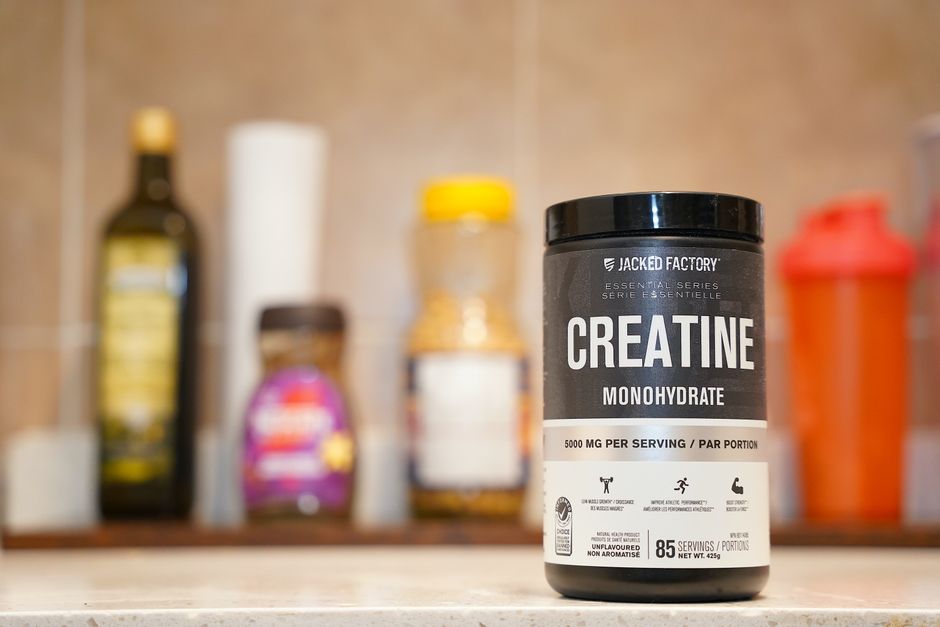
Creatine is one of the most studied sports supplements in existence, and the question of timing has become a popular topic. The short answer: there is no strong evidence that taking creatine before bed offers any advantage over taking it at another time of day. What matters most is that you take it consistently and that your muscles stay saturated with it. If bedtime happens to be when you remember, that works fine for most people.
That said, timing is not entirely irrelevant to everyone. A small body of research has looked at whether creatine affects sleep quality, and the results are worth understanding before you make it part of your nightly routine.
How Does Creatine Actually Work in the Body?
Creatine is a compound your body makes and stores, mostly in skeletal muscle. It plays a direct role in short bursts of high-intensity effort — sprinting, lifting, jumping — by helping regenerate a molecule called ATP, which is the basic energy currency your cells use.
When you take creatine as a supplement, you are not getting an immediate jolt of energy. You are slowly filling up a storage tank inside your muscles. Once that tank is full, extra creatine gets excreted. This is the key point for the timing question: the benefit comes from saturation, not from when you swallow the pill or scoop.
Most people reach meaningful muscle saturation after several weeks of consistent daily intake. Loading protocols, which use higher amounts for a shorter period, can reach saturation faster. Either way, the goal is a steady supply, not a perfectly timed dose.
Does Creatine Timing Matter at All?
The evidence on timing is limited, and what exists does not point to bedtime as special. Some studies have compared taking creatine before versus after workouts, and results have been mixed. No consistent advantage for any single time of day has been established.
What researchers do agree on is adherence. A supplement you actually remember to take every day will outperform one you take at a theoretically ideal time but skip half the week. If bedtime is your reliable anchor, that consistency is genuinely valuable.
There is one nuance worth knowing. Creatine pulls water into muscle cells, and some people notice mild gastrointestinal discomfort when they take it on an empty stomach. Taking it with food or a beverage can reduce that. This is a comfort issue, not a timing strategy.
Can Creatine Before Bed Affect Your Sleep?
This is the question that makes bedtime timing worth a closer look. Sleep research on creatine is still early, and the findings are not uniform.
Some small studies have suggested that creatine supplementation might have a mild positive effect on sleep in certain populations, particularly under conditions of sleep deprivation or stress. Other research has raised the opposite concern — that in some people it could interfere with sleep quality or make it harder to fall asleep.
The honest position: the evidence is mixed and the studies are small. There is no established mechanism by which creatine should act as a stimulant. It is not caffeine. It does not directly block adenosine, the molecule that builds up to make you drowsy. So the idea that creatine is “energizing” in a way that keeps you awake is not well supported by physiology.
Still, individual responses vary. If you start taking creatine before bed and notice your sleep getting worse, that is worth paying attention to — not because the science says it should happen, but because your own experience is real data.





What About the Water Retention Question?
Creatine does increase water content inside muscle cells. This is a well-documented effect and part of how it works. For most people this shows up as a small amount of added body weight, often a pound or two, and it is intracellular — inside the muscle — not the kind of bloating associated with fluid retention elsewhere.
Some people confuse this with the idea that creatine makes you “hold water” in a puffy, uncomfortable way. That is not an accurate description of the typical effect. That said, a minority of users report feeling bloated or experiencing stomach upset, which is usually related to dose or how it is taken rather than the water shift itself.
None of this is specific to taking creatine at night. If water retention is going to happen, it happens regardless of timing.
Is There Any Reason to Avoid Taking It at Night?
For most healthy adults, there is no clear reason to avoid nighttime creatine. The supplement does not interfere with sleep through any established pathway, and it does not need to be taken at a particular hour to work.
There are a few situations where timing deserves more thought:
- If you already struggle with sleep. Adding any new supplement is a variable. If your sleep is fragile, changing one thing at a time makes it easier to tell what is helping or hurting.
- If you take creatine with a large meal right before bed. A heavy meal close to bedtime can disrupt sleep on its own, independent of the creatine.
- If you have a kidney condition. Creatine supplementation should be discussed with a doctor in anyone with known kidney disease. This is not about timing — it is about whether to take it at all.
People with pre-existing kidney conditions, pregnant or breastfeeding women, and children should not start creatine without medical guidance. For those groups, no established clinical guidelines support routine supplementation.
When Should You Actually Take Creatine?
Pick a time you will not forget. That is the practical answer. Morning, pre-workout, post-workout, with dinner, before bed — all of these are reasonable if they keep you consistent.
If you want to align with the small amount of timing research that exists, some evidence suggests taking it around your workout may be marginally preferable. But the effect, if real, is small. It is not worth losing sleep over — literally or figuratively.
Dosing is where accuracy matters more than timing. Established sports nutrition guidance generally points to a daily maintenance intake in the range of 3 to 5 grams for most adults. Loading protocols use higher amounts for a short period, but they are optional and not required to get results. These figures come from widely cited sports nutrition position stands, not from any single study.
One more point that gets lost in the timing debate: creatine works best alongside resistance training and adequate protein intake. A perfectly timed scoop will not do much on its own.
Does It Matter If You Take It With Food or Water?
Creatine dissolves reasonably well in water and is absorbed fine either way. Taking it with a meal, especially one containing carbohydrates, may slightly improve uptake in some contexts, but the difference is not large enough to build a routine around.
The bigger practical issue is stomach comfort. If plain creatine in water bothers your stomach, taking it with food often solves the problem. This applies at any time of day.
Hydration matters too. Because creatine shifts water into muscle cells, drinking enough fluids throughout the day is sensible. This is general advice, not a bedtime-specific rule.
The Bottom Line on Bedtime
There is no convincing evidence that taking creatine before bed is better or worse than any other time. The supplement works through saturation, and saturation depends on consistency, not clock timing.
A small number of studies have looked at creatine and sleep, with mixed results. No clear mechanism explains why it would keep you awake. If you personally notice a change in your sleep after starting it at night, adjust the timing and see what happens.
What matters most is that you take it daily, at a dose supported by sports nutrition guidance, and pair it with training and adequate nutrition. Everything else is detail.
Frequently Asked Questions
Should you take creatine before bed?
You can, but there is no evidence that bedtime is better than any other time. Consistency matters far more than the hour you choose.
Does creatine keep you awake?
Creatine is not a stimulant and has no established mechanism for disrupting sleep. Some small studies show mixed results, and a minority of people report sleep changes, so pay attention to your own response.
What is the best time of day to take creatine?
Any time you will remember to take it daily works well. Some evidence suggests taking it around your workout may be marginally preferable, but the effect is small.
How much creatine should you take per day?
Widely cited sports nutrition guidance points to about 3 to 5 grams per day for most adults. Loading protocols use higher amounts for a short period but are not required.
