
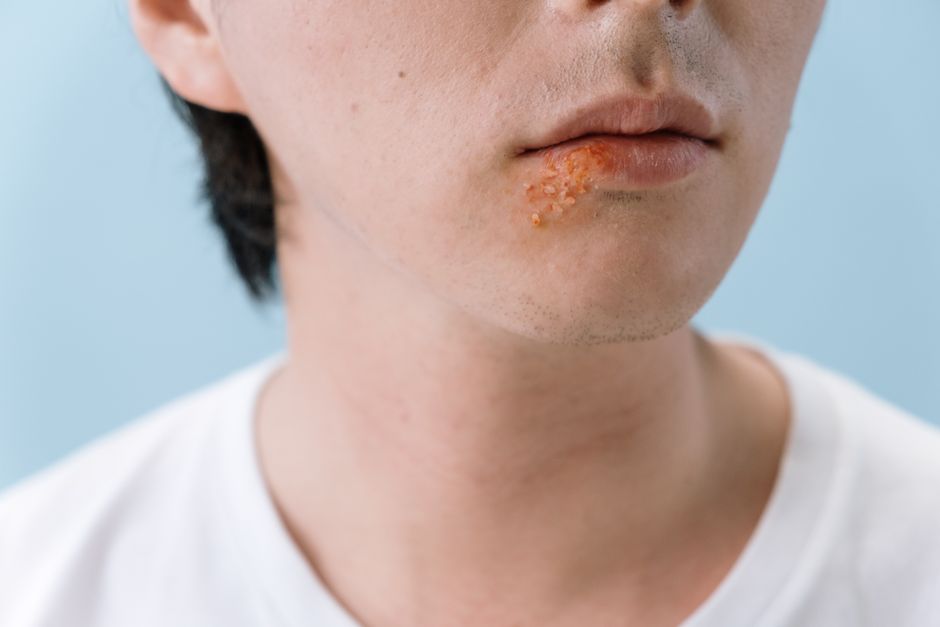
Popping a cold sore is a bad idea. You should never pop, squeeze, or pick at a cold sore. Doing so can spread the virus, slow down healing, and increase your risk of a bacterial infection that could leave a scar. While the fluid inside a cold sore is what carries the virus, the damage from popping can make the sore worse and last longer.
What Is a Cold Sore, Exactly?
A cold sore is a small, fluid-filled blister. It usually appears on or around the lips. It is caused by the herpes simplex virus, most often type 1 (HSV-1).
Once you have the virus, it stays in your body for life. It lies dormant in nerve cells near your face. Certain triggers can wake it up, like stress, illness, sun exposure, or hormonal changes. When it wakes up, it travels back to your skin and creates a blister.
The blister is filled with clear fluid that contains millions of active virus particles. This fluid is highly contagious. If it touches another person’s skin, it can spread the infection to them. It can also spread to other parts of your own body, such as your eyes or genitals.
What Happens When You Pop a Cold Sore?
Popping a cold sore breaks the skin barrier. This creates an open wound where bacteria can enter. Your mouth and hands carry many types of bacteria. Introducing them into the open sore can cause a secondary bacterial infection. This infection can make the area red, swollen, and painful. It can also lead to scarring.
Popping also spreads the virus. The fluid that leaks out is packed with HSV-1. If you touch the fluid and then touch your eye, you can develop herpetic keratitis, an eye infection that can threaten your vision. If you touch your genitals, you can transfer the virus there.
Finally, popping does not speed up healing. The blister is part of your body’s immune response. It keeps the virus contained. Breaking it open interrupts that process and forces your skin to repair a larger wound. The result is a longer healing time and a higher chance of a visible scar.
How Long Do Cold Sores Last?
A cold sore typically heals on its own in 7 to 10 days. The timeline depends on whether it is your first outbreak or a recurrent one. First outbreaks can last longer, sometimes up to two weeks.
The healing process follows a predictable pattern. First, you feel a tingling or burning sensation. This is called the prodrome phase. It happens a day or two before the blister appears. Then the blister forms, fills with fluid, and eventually bursts on its own. A crust forms, and the sore heals from the outside in.
When you pop a cold sore, you are essentially forcing the burst phase early. The crust will still form, but the underlying wound is now larger and deeper. This can extend the total healing time by several days.





What Is the Safest Way to Treat a Cold Sore?
The best approach is to let it run its course. Keep the area clean and dry. Wash your hands frequently, especially after touching your face.
Over-the-counter creams can help. Docosanol, sold under the brand name Abreva, is approved by the FDA to shorten healing time. It works best when applied at the first sign of tingling. Some research suggests it can reduce healing time by about half a day to a day.
Prescription antiviral medications are more effective. Drugs like acyclovir, valacyclovir, and famciclovir can shorten an outbreak significantly. They work best when started within 48 hours of the first symptom. These are prescription only, so you would need to see a doctor.
For pain, a cold compress can provide relief. Applying a clean, cool, damp cloth to the sore for 10 to 15 minutes several times a day can reduce swelling and discomfort. Over-the-counter pain relievers like ibuprofen or acetaminophen can also help if the sore is painful.
Are There Home Remedies That Work?
Many home remedies are popular, but the evidence for most of them is weak. Some people use tea tree oil, lemon balm, or aloe vera. Some research suggests lemon balm extract may have antiviral properties, but large human trials have not confirmed a clear benefit.
Lysine is a common supplement people take for cold sores. Some studies indicate that high doses of lysine may reduce the frequency of outbreaks, but the evidence is mixed. No clinical guidelines currently recommend lysine as a standard treatment.
You should avoid applying harsh substances like rubbing alcohol, hydrogen peroxide, or toothpaste. These can irritate the skin further and delay healing. They do not kill the virus beneath the surface and can cause chemical burns on delicate lip tissue.
How Can You Prevent Outbreaks?
Prevention focuses on avoiding triggers. If sun exposure triggers your outbreaks, use lip balm with SPF 30 or higher. If stress is a trigger, stress management techniques like exercise or meditation may help, though the evidence for this is indirect.
Do not share personal items during an outbreak. This includes lip balm, utensils, cups, towels, and razors. The virus can survive on surfaces for a short time, though it does not survive long outside the body.
Avoid kissing anyone while you have an active sore. The virus is most contagious when the blister is present and until the sore is fully healed. Some research suggests the virus can be shed even when no sore is visible, a process called asymptomatic shedding. This means transmission is possible even between outbreaks, though the risk is much lower.
When Should You See a Doctor?
Most cold sores do not require medical attention. However, you should see a doctor if the sore does not heal within two weeks. You should also seek care if you have frequent outbreaks, severe pain, or signs of a bacterial infection.
Signs of a bacterial infection include increasing redness, swelling, warmth, or pus that is yellow or green. A fever or swollen lymph nodes can also indicate a secondary infection.
See a doctor immediately if the cold sore spreads to your eyes. Eye involvement is an emergency. Symptoms include eye pain, redness, sensitivity to light, or blurred vision. Untreated herpetic eye infections can cause corneal scarring and vision loss.
People with weakened immune systems should also seek medical advice. This includes people undergoing chemotherapy, organ transplant recipients, and people with advanced HIV. For them, cold sores can be more severe and may require antiviral treatment.
Does Popping a Cold Sore Make It Spread Faster?
Yes. Popping increases the amount of virus that reaches the surrounding skin. The fluid spreads easily to other areas of your face. You can also transfer it to your hands, which then carry it to anything you touch.
This is why dermatologists and infectious disease specialists strongly advise against popping. The risk of self-reinfection is real. You can create multiple new sores in different locations by touching the fluid and then touching other parts of your face.
The virus does not spread through the bloodstream. It spreads through direct contact with the fluid or the sore itself. Breaking the blister increases the surface area of that contact.
Frequently Asked Questions
Can you pop a cold sore with a needle?
No. Popping a cold sore with a needle creates the same problems as using your fingers. It opens a wound, risks infection, and spreads the virus.
How long is a cold sore contagious?
A cold sore is contagious from the first tingling sensation until it is fully healed and the scab has fallen off. This is usually 7 to 10 days total.
What happens if you accidentally pop a cold sore?
Clean the area gently with soap and water, then apply an over-the-counter antiviral cream. Wash your hands thoroughly and avoid touching your eyes or other people until the sore heals.
Does toothpaste dry out a cold sore?
Toothpaste can dry the blister, but it also irritates healthy skin around it. It does not kill the virus and can delay healing. It is not a recommended treatment.
