
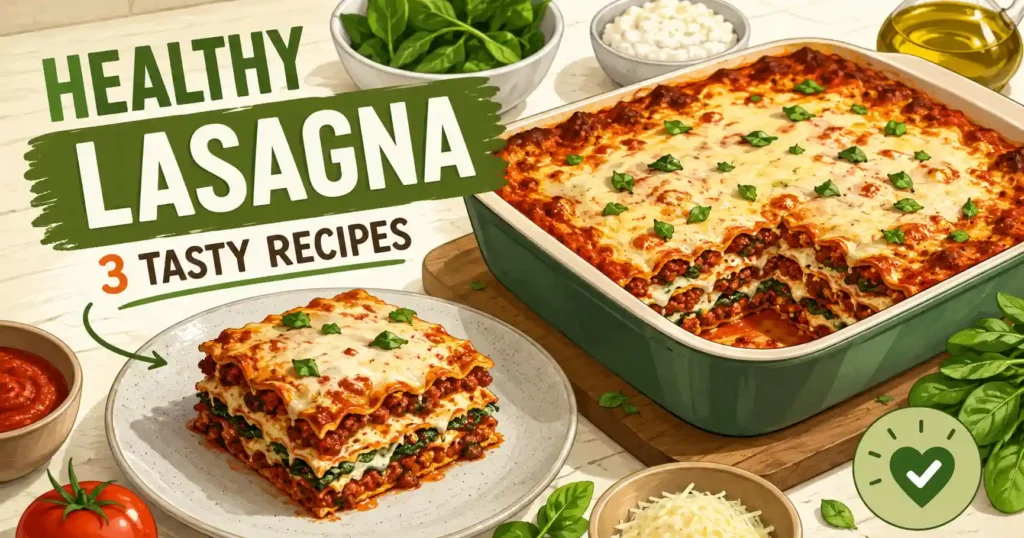
If you are trying to make a tasty Lasagna, which is also very healthy, then you should start by controlling calories, protein, and moisture without destroying texture or flavor. A healthier lasagna usually uses leaner proteins, more vegetables, and smarter cheese choices while still keeping enough richness to feel satisfying. The best versions are not the lowest-calorie versions. They are the ones people actually want to eat again.
A lot of “healthy lasagna” recipes fail for the same reason: they remove fat but never rebuild flavor.
⚡ Quick Verdict
- Healthy lasagna works best when moisture is controlled properly.
- Lean protein improves nutrition without destroying flavor.
- Part-skim cheese usually performs better than fat-free cheese.
- Vegetable-heavy lasagna needs pre-cooking or roasting.
- High-protein versions are often more satisfying than ultra-low-calorie versions.
- Thin layers cook more evenly and reheat better.
What Makes Lasagna Healthy Without Ruining It?
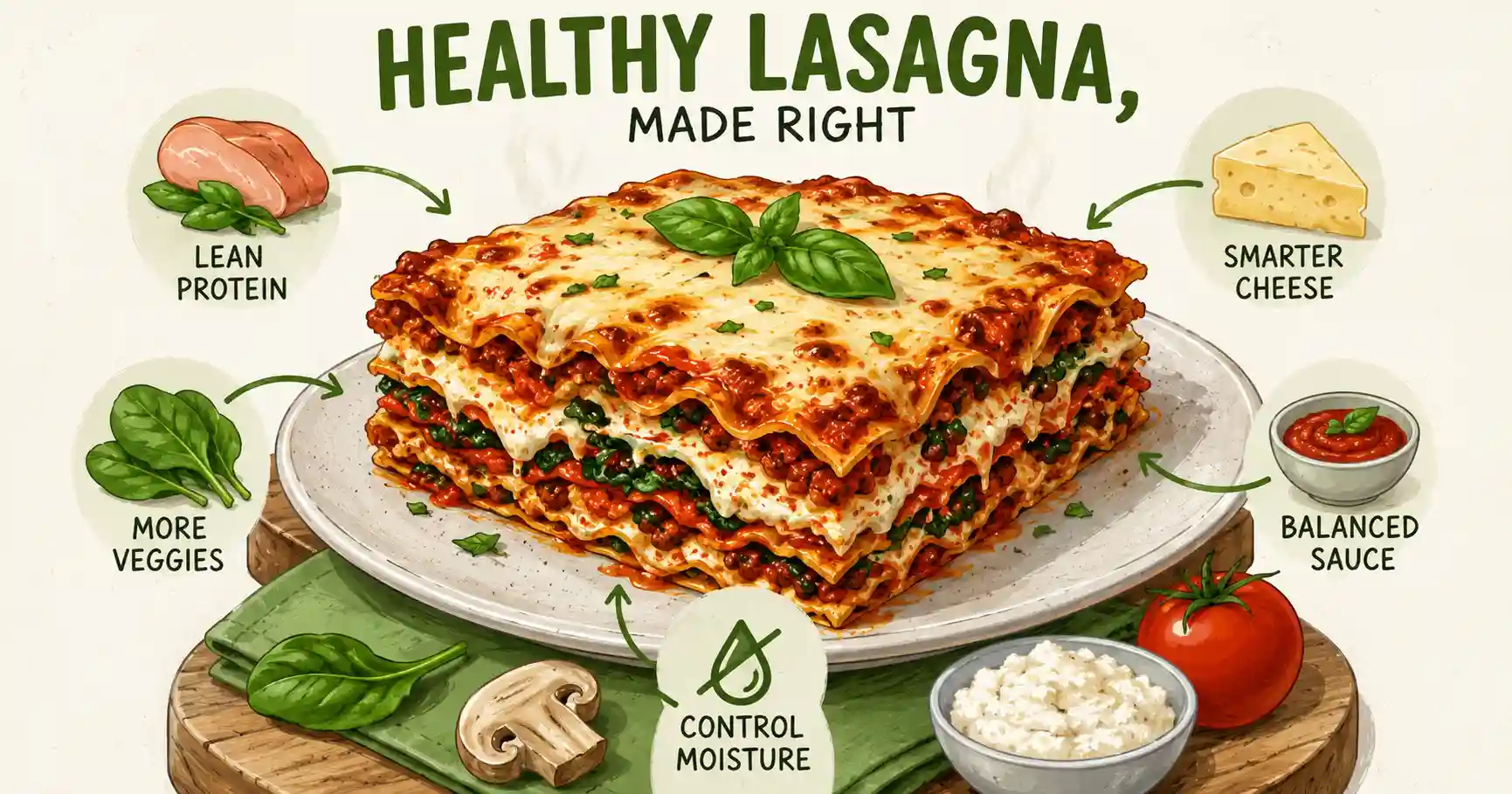
A healthy lasagna keeps the parts that matter most — protein, texture, sauce depth, and satisfaction — while reducing the things that push calories and sodium too high.
That sounds obvious. Most recipes still get it wrong.
The common mistake is treating lasagna like a math problem:
- less cheese
- less meat
- fewer noodles
Then people wonder why it tastes flat.
Healthy lasagna works better when you improve the dish’s structure rather than just stripping ingredients away. The biggest upgrades usually come from:
- Using lean protein instead of fatty meat
- Adding vegetables for fiber
- controlling cheese portions
- reducing excess oil
- managing moisture carefully
The moisture part matters more than most people realize.
Vegetables like zucchini, spinach, and mushrooms release water during baking. If you do not cook or salt them first, the lasagna turns soupy. That watery texture is what many people think of as “healthy lasagna taste.” It is not a health issue. It is a cooking issue.
Research from the Harvard T.H. Chan School of Public Health continues to support meals built around vegetables, moderate protein, and less saturated fat as part of long-term heart and metabolic health patterns.
If a meal leaves people hungry an hour later, they often compensate elsewhere. A balanced lasagna with enough protein and fiber usually works better than an ultra-low-calorie version that feels depressing after three bites.
Quick Takeaway: Healthy lasagna tastes good when it controls moisture and builds flavor, rather than simply removing calories.
Is Homemade Lasagna Healthy?
Homemade lasagna is usually healthier than restaurant lasagna because you control the sodium, cheese quantity, oil, and portion size.
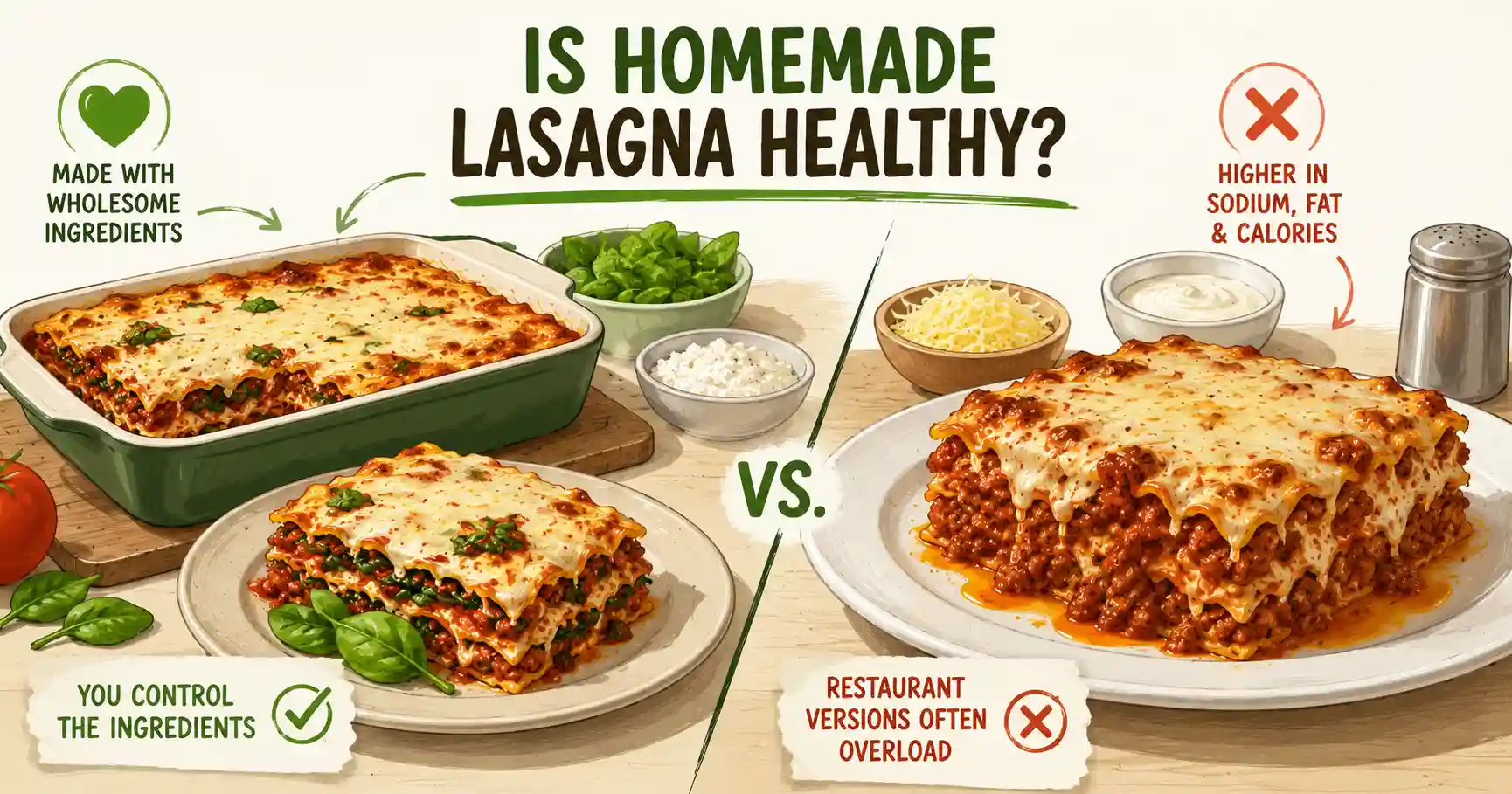
Restaurant lasagna can easily exceed:
- 1,200 calories
- 2,000+ mg sodium
- an entire day’s saturated fat
Homemade versions do not automatically become healthy, though. A tray loaded with processed sausage, heavy cream, and thick cheese layers can still be extremely calorie-dense.
Here is where homemade versions usually improve things:
| Component | Restaurant Version | Smarter Homemade Version |
|---|---|---|
| Protein | Fatty sausage/beef | Lean beef or turkey |
| Cheese | Heavy mozzarella + ricotta | Moderate cheese portions |
| Sauce | High sodium | Lower-sodium tomato sauce |
| Fiber | Low | Added vegetables or whole wheat noodles |
| Portion Size | Oversized | Controlled |
According to the American Heart Association, reducing excess sodium and saturated fat may help support cardiovascular health over time. Lasagna can fit into that framework if portions and ingredients are balanced realistically.
This is where wellness content gets strange sometimes. Some articles act like pasta itself is the problem. Current nutrition research does not really support demonizing pasta alone. Portion size and meal composition matter far more.
A lasagna with:
- vegetables
- protein
- moderate cheese
- reasonable portions.
It is very different from eating half a tray alone at 11 PM.
How To Make A Healthy Lasagna That Still Tastes Good
Healthy lasagna tastes good when the flavor gets concentrated instead of diluted.
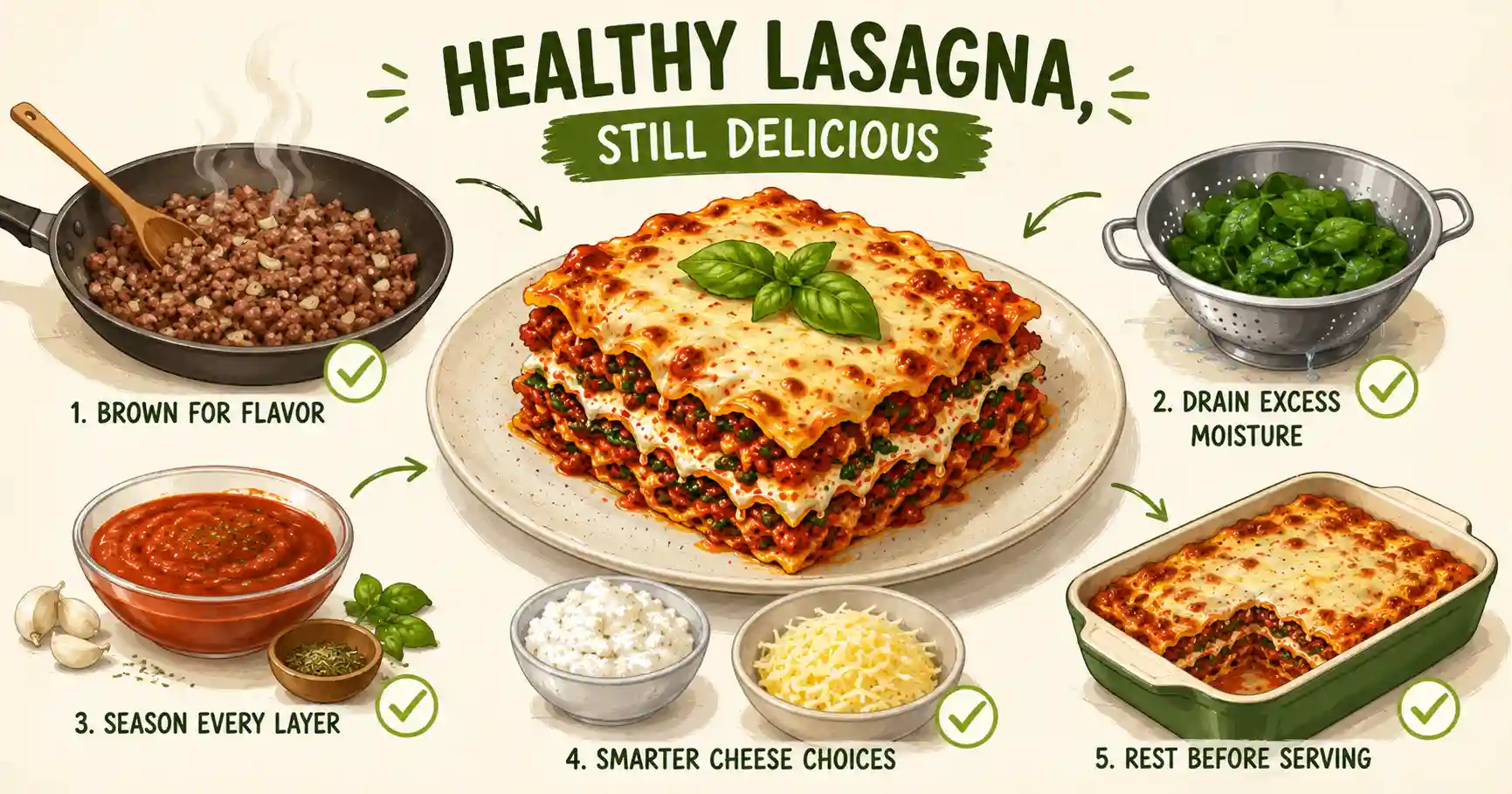
That usually comes down to five things:
1. Brown The Meat Properly
Gray steamed meat creates a weak flavor.
Let lean beef or turkey actually brown before adding sauce. Browning creates a deeper savory flavor through the Maillard reaction. That matters more in lower-fat cooking because fat is not carrying the flavor anymore.
2. Reduce Watery Vegetables First
This is the biggest mistake in healthy lasagna recipes.
- Cook mushrooms first.
- Drain spinach.
- Salt zucchini slices before layering.
Otherwise, water leaks into the sauce during baking.
3. Use Enough Salt In Layers
Healthy recipes often become bland because every component is under-seasoned individually.
Lasagna works better when:
- The meat is seasoned
- The ricotta mixture is seasoned
- Vegetables are seasoned
- The sauce is seasoned
Not aggressively. Just properly.
4. Keep Some Full-Fat Cheese
Completely fat-free cheese usually melts poorly.
A mix works better:
- Part-skim mozzarella
- A small amount of Parmesan
- Cottage cheese or ricotta
That combination gives better texture without becoming excessively heavy.
5. Let It Rest Before Cutting
Fresh lasagna straight from the oven falls apart because steam is still trapped inside.
Resting for 15–20 minutes allows layers to firm up. People skip this constantly.
Quick Takeaway: Most healthy lasagna failures come from excess moisture and weak seasoning, not from removing noodles.




What Is The Best Healthy High-Protein Lasagna Recipe?
The best healthy high-protein lasagna keeps traditional flavor while increasing protein density and reducing excess fat.
Ingredients
- 9 lasagna noodles
- 1 lb lean ground turkey or 93% lean beef
- 1 onion, diced
- 3 garlic cloves
- 4 cups spinach
- 24 oz lower-sodium marinara sauce
- 2 cups cottage cheese
- 1 egg
- 2 cups part-skim mozzarella
- 1/2 cup parmesan
- Italian seasoning
- Salt and pepper
Instructions
- Brown the meat with onions and garlic.
- Stir in the sauce and simmer 10 minutes.
- Cook spinach separately until the moisture reduces.
- Mix cottage cheese, egg, and seasoning.
- Layer sauce, noodles, cheese mixture, spinach, and mozzarella.
- Repeat layers.
- Bake at 375°F for about 40 minutes.
Why This Version Works
Cottage cheese increases protein while keeping its texture creamy. According to USDA FoodData Central, cottage cheese usually contains substantially more protein per calorie than ricotta.
The flavor difference is smaller than many people expect once the lasagna is baked.
What Is An Easy Healthy Lasagna Recipe For Busy Weeknights?
A fast, healthy lasagna works best when it minimizes prep steps without destroying texture.
Most “easy” recipes become mushy because shortcuts pile up:
- watery sauce
- uncooked vegetables
- overfilled layers
A smarter shortcut strategy works better.
Fast Weeknight Method
- Use no-boil noodles
- Buy pre-washed spinach
- Use jarred marinara with low added sugar
- Skip ricotta mixtures entirely
- Build thinner layers
Quick Ingredient List
- No-boil noodles
- Lean turkey
- Jarred marinara
- Spinach
- Part-skim mozzarella
- Parmesan
Biggest Shortcut That Actually Helps
Use a wider baking dish with thinner layers.
Thicker lasagna takes longer to set properly and traps more moisture. Thin layers cook more evenly and reheat better the next day.
That part rarely gets discussed in recipe blogs.
What Is The Healthiest Low-Carb Lasagna Recipe?
The healthiest low-carb lasagna usually replaces noodles with zucchini or eggplant while keeping enough structure to still feel like lasagna.
Zucchini versions fail constantly because zucchini is mostly water.
Here is the fix:
- Slice zucchini thinly
- Salt it heavily
- Let it sit for 20 minutes
- Pat dry
- Roast briefly before layering
That extra step changes everything.
Low-Carb Layering Setup
- Roasted zucchini strips
- Lean turkey
- Thick tomato sauce
- Cottage cheese
- Mozzarella
- Mushrooms
- Spinach
Why Roasting Matters
Raw zucchini releases water while baking. Pre-roasting removes much of that moisture beforehand. Without that step, the lasagna often collapses into soup.
Which Healthy Lasagna Ingredients Work Best?
| Ingredient | Health Benefit | Possible Downside | Best Use |
|---|---|---|---|
| Cottage Cheese | Higher protein | Slight tangy taste | High-protein recipes |
| Ricotta | Creamier texture | Higher calories | Traditional flavor |
| Whole Wheat Noodles | More fiber | Firmer texture | Balanced recipes |
| Zucchini Sheets | Lower carbs | Water release | Low-carb lasagna |
| Lean Turkey | Less saturated fat | Milder flavor | Everyday cooking |
| Parmesan | Strong flavor in small amounts | Higher sodium | Finishing layers |
A recipe that is satisfying, balanced, and realistic often works better long term than aggressively restrictive versions.
What Are The Most Common Healthy Lasagna Mistakes?
Healthy lasagna usually fails in predictable ways.
Watery Lasagna
Cause:
- uncooked vegetables
- thin sauce
- overloaded layers
Fix: Reduce moisture before baking.
Rubbery Cheese
Cause:
- fully fat-free cheese
- overheating
Fix: Use part-skim cheese instead of fat-free.
Bland Flavor
Cause:
- under-seasoning
- lean meat without browning
Fix: Season each layer individually.
Dry Noodles
Cause:
- not enough sauce
- uncovered baking
Fix: Cover with foil during the first half of baking.
FAQs
Is homemade lasagna healthy?
Homemade lasagna can be healthy when it uses moderate cheese portions, lean protein, vegetables, and balanced serving sizes. It is usually healthier than restaurant lasagna because sodium, saturated fat, and calories are easier to control. Portion size still matters. Even healthier lasagna can become calorie-heavy if servings are oversized.
What cheese is healthiest for lasagna?
Cottage cheese and part-skim mozzarella are usually among the healthier options because they provide protein with less saturated fat than heavier cheeses. Parmesan also works well in small amounts because its strong flavor means you need less of it. Completely fat-free cheese often creates poor texture and weaker flavor.
Does cottage cheese taste better than ricotta in lasagna?
Ricotta usually tastes richer and creamier, while cottage cheese tastes slightly lighter and tangier. In baked lasagna, the difference becomes much smaller than many people expect. Cottage cheese also adds more protein, which is why many healthier lasagna recipes now use it instead of ricotta.
Can you freeze healthy lasagna?
Healthy lasagna freezes very well if moisture is controlled properly before baking. Let the lasagna cool completely, slice portions, and freeze in airtight containers. Vegetable-heavy versions sometimes release extra water after thawing, so thicker sauce and roasted vegetables usually freeze better.
Final Thoughts
How To Make Lasagna That’s Healthy & Tasty is less about removing ingredients and more about balancing them intelligently. The best versions keep enough richness to feel satisfying while improving protein, fiber, and portion control. As of 2026, the strongest healthy lasagna recipes are moving away from extreme “diet food” thinking and toward realistic, sustainable comfort food that people actually enjoy eating again.
