
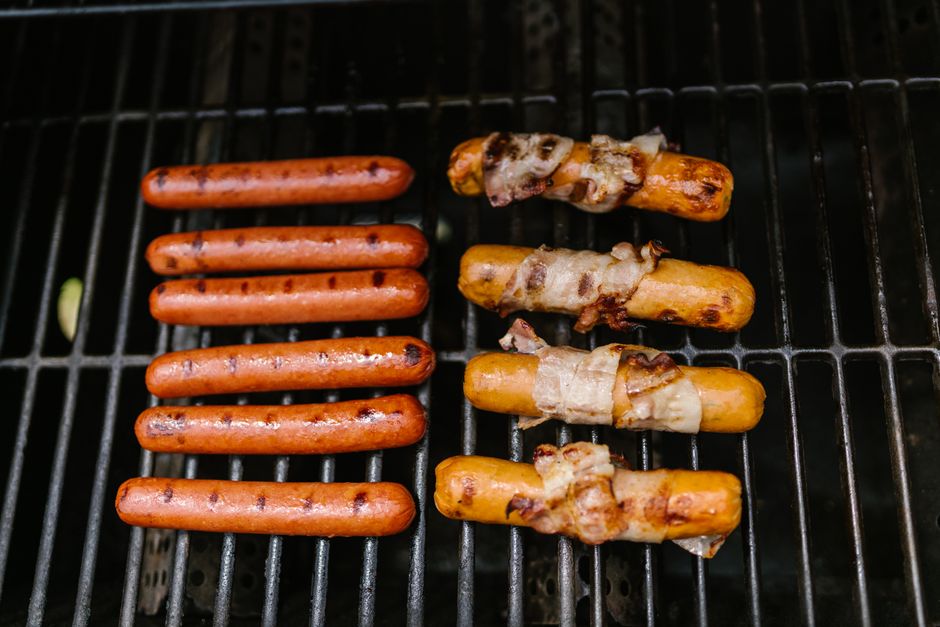
Turkey bacon is not fully cooked when you buy it. It is cured and sometimes smoked, but it is still raw meat. The package label will tell you to cook it before eating.
Many people assume the pink color and firm texture mean it is ready to eat. That is not the case. The curing process changes the color and flavor, but it does not cook the meat through. You still need to apply heat until it reaches a safe internal temperature.
Is Turkey Bacon Already Cooked When You Buy It?
No. Turkey bacon is raw meat that has been cured, and often smoked, but not cooked. The curing salts and smoking process preserve it and give it that familiar pinkish color, but they do not make it safe to eat straight from the package.
Curing is a preservation method. It uses salt, nitrites, or nitrates to slow bacterial growth and change the texture and color of the meat. Smoking adds flavor and some preservation, but it is not the same as cooking. The internal temperature of smoked turkey bacon does not reach the level needed to kill harmful bacteria.
Some brands sell “fully cooked” turkey bacon. If the label says that, you can eat it without further cooking. But most turkey bacon on store shelves is not fully cooked. Check the package. If it says “cook before eating” or gives cooking instructions, treat it as raw.
The confusion comes from the appearance. Cured turkey bacon looks similar to cooked bacon. The pink color, the firm texture, the smoky smell — these are all from curing and smoking, not from heat. It is an easy mistake to make.
What Happens If You Eat Raw Turkey Bacon?
Eating raw turkey bacon carries the same risks as eating any raw poultry product. Turkey can harbor harmful bacteria like Salmonella and Campylobacter. These bacteria cause foodborne illness, which can lead to diarrhea, fever, stomach cramps, and vomiting.
Most healthy adults recover from foodborne illness without treatment. But some people face higher risks. Older adults, young children, pregnant women, and people with weakened immune systems are more likely to get seriously ill. For these groups, a bacterial infection can lead to hospitalization or worse.
The curing process does reduce some bacterial risk. Salt and nitrites create an environment where bacteria struggle to grow. But curing does not eliminate all bacteria. It slows their growth. It does not kill everything.
Some people believe that because the meat looks cooked and smells smoky, it must be safe. That is not true. Appearance and smell are not reliable indicators of safety. Only proper cooking can make turkey bacon safe to eat.
If you accidentally eat a small piece of raw turkey bacon, you are probably fine. But it is not a risk worth taking repeatedly. Cook it properly every time.
How Do You Know When Turkey Bacon Is Fully Cooked?
Turkey bacon is fully cooked when it reaches a safe internal temperature of 165°F (74°C). This is the temperature that kills harmful bacteria like Salmonella. The USDA recommends this temperature for all poultry products, including turkey bacon.
Visual cues can help, but they are not reliable on their own. Cooked turkey bacon becomes crispy or firm. The color darkens. The edges may curl. But these changes can happen before the meat reaches a safe temperature. Using a food thermometer is the only way to be certain.
Here is what to look for:
- Internal temperature: 165°F (74°C) measured with a food thermometer
- Texture: Crisp or firm, not soft or rubbery
- Appearance: Darker color, edges may curl slightly
- No pink spots: Fully cooked turkey bacon should not have raw-looking pink areas
If you are cooking turkey bacon in a pan, it usually takes about 5 to 8 minutes over medium heat. In the oven, it typically takes 10 to 15 minutes at 400°F. Microwaving takes about 1 to 2 minutes per slice, depending on the wattage. These times vary by thickness and brand, so always check the package instructions.
The best approach is to follow the package directions and use a thermometer if you want to be sure. Do not rely on time alone.


Why Does Turkey Bacon Look Pink If It Is Not Cooked?
The pink color comes from the curing process, not from cooking. Curing salts, specifically nitrites, react with myoglobin in the meat. Myoglobin is a protein that stores oxygen in muscle tissue. When nitrites interact with myoglobin, they lock in a pink color that survives cooking.
This is the same reason ham and hot dogs are pink. They are cured, not necessarily cooked to the same degree. The pink color is a chemical reaction, not a sign of doneness.
Fresh turkey meat is pale beige or light brown. When you see pink turkey bacon, you are seeing the result of curing. The color tells you nothing about whether the meat is safe to eat.
Some turkey bacon products are also smoked. Smoking adds flavor and can deepen the color. But smoking alone does not cook the meat to a safe temperature. It is a flavor and preservation step, not a cooking step.
Is Turkey Bacon Healthier Than Pork Bacon?
Turkey bacon is often marketed as a healthier alternative to pork bacon. It is typically lower in fat and calories. But it is not necessarily a health food. It is still a processed meat, and processed meats are linked to health risks.
Here is a general comparison. Values vary by brand and serving size.
| Nutrient | Turkey Bacon (1 slice) | Pork Bacon (1 slice) |
|---|---|---|
| Calories | 30-35 | 40-50 |
| Total Fat | 2-3 g | 3-4 g |
| Saturated Fat | 0.5-1 g | 1-1.5 g |
| Sodium | 150-200 mg | 130-190 mg |
| Protein | 2-3 g | 3 g |
Turkey bacon tends to have less fat and slightly fewer calories. But it often has similar or higher sodium levels. Sodium is a concern for people with high blood pressure or heart conditions.
Both turkey bacon and pork bacon are processed meats. The World Health Organization classifies processed meats as carcinogenic to humans. This classification is based on evidence linking processed meat consumption to colorectal cancer. The risk increases with the amount consumed.
This does not mean you need to avoid turkey bacon entirely. But it is not a free pass to eat unlimited amounts. If you eat it, treat it as an occasional food, not a daily staple.
Some people choose turkey bacon for religious or dietary reasons. Others choose it because they prefer the taste. Whatever your reason, understanding what you are eating helps you make informed choices.
How Should You Store and Handle Turkey Bacon?
Turkey bacon should be stored in the refrigerator if you plan to use it within a few days. The USDA recommends keeping it at 40°F (4°C) or below. If you will not use it within about a week, freeze it.
Frozen turkey bacon can last for months in the freezer. Check the package for specific storage recommendations. Once thawed, use it within a few days.
Raw turkey bacon should be kept separate from ready-to-eat foods. Use a separate cutting board and utensils. Wash your hands thoroughly after handling raw meat. This prevents cross-contamination.
Cooked turkey bacon should be refrigerated within two hours of cooking. It can be stored in the refrigerator for up to four days. Reheat it until it is steaming hot before eating.
Do not leave turkey bacon at room temperature for more than two hours. Bacteria grow quickly at room temperature. If it has been out longer than that, throw it away.
Can You Eat Turkey Bacon Without Cooking It If It Says “Fully Cooked”?
Yes, if the label specifically says “fully cooked” or “ready to eat.” Some brands sell pre-cooked turkey bacon that is safe to eat straight from the package. These products have been cooked to a safe internal temperature during processing.
But most turkey bacon is not fully cooked. The label will say “cook before eating” or provide cooking instructions. If it does, you must cook it.
Even fully cooked turkey bacon can benefit from reheating. Many people prefer it warm and crispy. Reheating does not make it safer if it is already fully cooked, but it improves the texture and flavor.
Read the label carefully. Do not assume that all turkey bacon is the same. The cooking requirements depend on how the product was processed.
Frequently Asked Questions
Is turkey bacon already cooked when you buy it?
No, most turkey bacon is not fully cooked when you buy it. It is cured and sometimes smoked, but it still needs to be cooked before eating.
What temperature should turkey bacon be cooked to?
Turkey bacon should reach an internal temperature of 165°F (74°C). This is the USDA-recommended temperature for all poultry products.
Can you eat turkey bacon raw?
No, you should not eat raw turkey bacon. It can harbor harmful bacteria like Salmonella and Campylobacter that cause foodborne illness.
How long does it take to cook turkey bacon?
Cooking time varies by method and thickness. Pan-frying typically takes 5 to 8 minutes, oven baking takes 10 to 15 minutes at 400°F, and microwaving takes 1 to 2 minutes per slice.
