
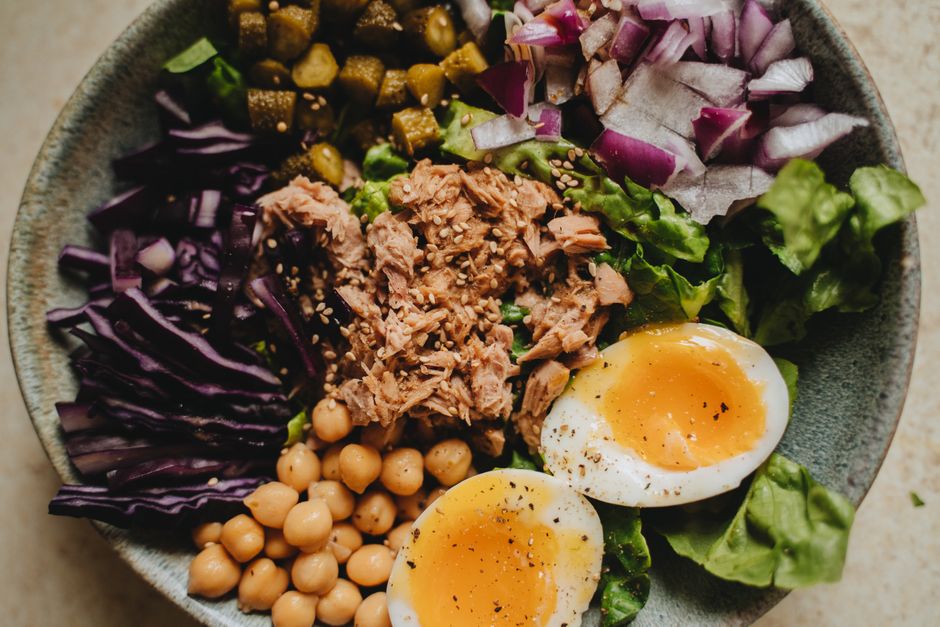
Tuna salad sits in a strange spot in American eating. It is a lunchbox staple, a diner classic, and a food many people reach for when they want something light. But it is also canned fish mixed with a fat-heavy dressing, which raises two fair questions at once: Is the mayo a problem, and is the mercury a risk? The short answer is that tuna salad can be a genuinely nutritious meal, and it can also be a high-calorie, high-sodium one, depending mostly on how it is made and how often it is eaten. Mercury is a real concern for canned tuna, but the level of concern depends heavily on which type of tuna you buy and how frequently you eat it.
What Is Actually in Tuna Salad?
Tuna salad is not one recipe. It is a category. The core is canned tuna, and everything else is variable.
A typical version combines canned tuna with mayonnaise, celery, onion, and sometimes pickle relish, mustard, lemon juice, or hard-boiled egg. It is usually served on bread, in a wrap, on a bed of lettuce, or with crackers. Each of those choices changes the nutrition picture substantially.
The two main ingredients — tuna and mayonnaise — are where nearly all the nutritional debate lives.
Canned tuna is a lean source of protein. It also provides vitamin D, selenium, and omega-3 fatty acids, though the amounts vary by species and by whether the fish is packed in water or oil. Mayonnaise is mostly fat and calories, with very little protein or micronutrients. That combination is why tuna salad can be both nourishing and calorie-dense at the same time.
Is Tuna Salad Healthy Nutrition Mayo And Mercury?
Whether tuna salad counts as healthy depends on two separate issues that people often blend into one. The first is the nutritional profile — protein, fat, calories, and sodium. The second is mercury, which is a safety question rather than a nutrition question. Both matter, but they are not the same kind of concern.
From a nutrition standpoint, tuna salad delivers solid protein and some beneficial fats. The problem is that mayonnaise can push the calorie and fat content up quickly, and the sodium can climb if you use salted tuna, added salt, or eat it on processed bread.
From a safety standpoint, canned tuna does contain mercury. This is not a myth and not a marketing scare — it is a well-documented fact. The question is whether the amount in a typical serving poses a risk, and for most adults the answer depends on frequency and tuna type.
Here is the honest framing: a tuna salad made with water-packed light tuna, a modest amount of mayonnaise, and plenty of vegetables is a reasonable, protein-rich meal. A tuna salad made with large amounts of full-fat mayo, eaten daily, on white bread, is a different food entirely.
How Much Mercury Is in Canned Tuna?
Mercury in fish is real and it is measured. Fish accumulate methylmercury from what they eat, and larger, longer-lived predatory fish tend to carry more of it. Tuna is a predatory fish, so it sits higher on that scale than smaller species like sardines or salmon.
The key practical point is that not all canned tuna is equal. Light tuna, which is usually skipjack, generally contains less mercury than albacore (white) tuna, which is a larger fish. This difference is consistent enough that public health guidance treats them differently.
Federal guidance in the United States advises that most adults can eat canned light tuna several times per week, while albacore should be eaten less often. For people who are pregnant, may become pregnant, or are breastfeeding, the guidance is more cautious, and it specifically distinguishes between light and white tuna.
If you want the exact current numbers, they are published by the FDA and EPA and are worth checking directly, because recommendations have been updated over time. The general direction — light tuna is lower in mercury than albacore, and frequency matters — has been stable.
One clarification that gets lost: the concern with mercury is about accumulation over time, not a single meal. A tuna sandwich now and then is not the issue. The issue is a pattern of frequent, high-mercury fish consumption.




Is the Mayonnaise a Problem?
Mayonnaise is not unhealthy by definition. It is oil, egg yolk, and acid, and the fat it provides is mostly unsaturated. The issue is quantity and context.
A standard tablespoon of regular mayonnaise runs around 90 to 100 calories and about 10 grams of fat. Many tuna salad recipes use far more than one tablespoon per serving. It is common for a single deli-style scoop to contain two to three tablespoons of mayo, which can add 200 to 300 calories before you even count the bread.
That does not make mayo bad. It makes it calorie-dense, which is a different statement. Fat carries more than twice the calories per gram of protein or carbohydrate, so a small amount of mayo goes a long way.
If you are watching calories or saturated fat, there are reasonable adjustments:
- Use less mayo and add Greek yogurt or mashed avocado for creaminess
- Choose a lighter mayonnaise, though these often add starch or sugar to compensate
- Bulk up the salad with celery, onion, cucumber, or chopped greens
- Serve it on whole grain bread, lettuce, or with vegetables instead of crackers
None of these are required. They are simply ways to shift the balance if that is your goal.
How Does Tuna Salad Compare Nutritionally?
The ranges below reflect typical preparations. Actual values vary widely by recipe, brand, and portion size, so treat these as general reference points rather than fixed numbers.
| Component | General Range per Serving |
|---|---|
| Calories | Varies widely — roughly 150 to 400 depending on mayo and bread |
| Protein | About 15 to 25 grams, mostly from tuna |
| Total fat | Rises sharply with mayonnaise content |
| Sodium | Often high — canned tuna and bread are both significant sources |
| Omega-3 fats | Present, but lower in light tuna than in fatty fish like salmon |
The pattern to notice is that protein stays fairly steady while calories, fat, and sodium swing based on how you build it. That is why two people can both say they had tuna salad and be describing very different meals.
Who Should Be Careful With Tuna Salad?
Most healthy adults do not need to worry about occasional tuna salad. The groups that warrant more attention are those with specific vulnerabilities.
People who are pregnant, may become pregnant, or are breastfeeding are the group with the clearest and most consistent guidance. Because methylmercury can affect a developing nervous system, public health agencies recommend limiting high-mercury fish and choosing lower-mercury options. This is not a fringe caution — it is standard guidance.
Young children are also generally advised to eat smaller portions of canned tuna than adults, following the same logic about body weight and developing systems.
People watching their sodium intake should note that canned tuna is often salted, and that sodium adds up fast when combined with bread, crackers, or pickles.
Anyone with a fish allergy should avoid tuna salad entirely, since the fish is the main ingredient.
Does Tuna Salad Fit a Healthy Diet?
Yes, for most people, in reasonable amounts. Tuna salad is a convenient way to get protein, and the fish brings nutrients that are genuinely hard to get elsewhere. It is not a superfood and it is not a junk food. It is a mixed dish whose health profile depends on how it is made.
The two variables that matter most are frequency and preparation. Eat it a few times a week with light tuna and moderate mayo and it fits comfortably into most eating patterns. Eat large portions of albacore-heavy salad daily with heavy dressing and white bread, and the calorie, sodium, and mercury picture changes.
The most useful habit is simply knowing which tuna you are buying. Reading the can tells you whether you have light or white tuna, and that single detail drives most of the mercury question.
Frequently Asked Questions
Is tuna salad good for you?
It can be, because tuna provides protein, vitamin D, selenium, and omega-3 fats. Whether it is a healthy choice depends mostly on how much mayonnaise and sodium it contains and how often you eat it.
Is the mercury in canned tuna dangerous?
Canned tuna does contain mercury, and the risk depends on the type of tuna and how frequently you eat it. Light tuna generally has less mercury than albacore, and public health guidance advises limiting high-mercury fish, especially during pregnancy.
Is light tuna or white tuna lower in mercury?
Light tuna, usually skipjack, generally contains less mercury than albacore, also called white tuna. This difference is why federal guidance treats the two types differently.
How often can I eat tuna salad?
For most adults, canned light tuna a few times per week fits within federal guidance, while albacore should be eaten less often. People who are pregnant, may become pregnant, or are breastfeeding should follow the more cautious guidance for their group.
