
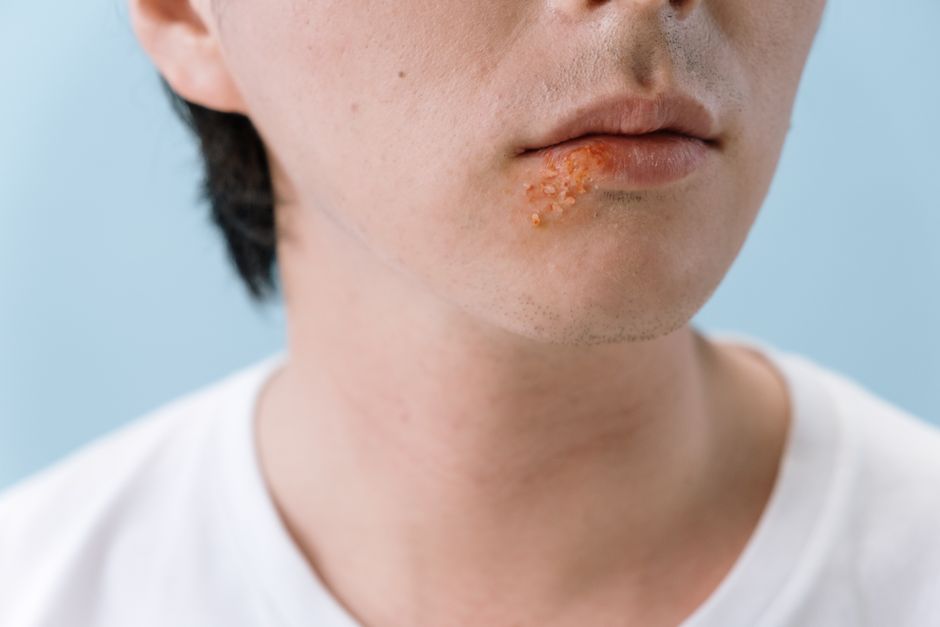
You feel a tingling spot on your lip, and the next morning a small bump appears. Your first question is usually: is this a cold sore or a pimple? The answer matters because the treatments are completely different. A cold sore is a viral infection caused by the herpes simplex virus, while a pimple is a blocked oil follicle. You can usually tell them apart by where they appear, how they feel, and what they look like over the first 24 hours.
Is This A Cold Sore Or Pimple? The Main Differences
The location is the fastest clue. Cold sores almost always appear on or directly around the lips, sometimes at the edge of the nostril. Pimples can appear anywhere on the face, including the lip line, but they are more common on the chin, forehead, and nose.
Feel the spot before it fully forms. A cold sore typically starts with a tingling, burning, or itching sensation hours before anything is visible. A pimple usually does not tingle. It may feel tender or sore to the touch, but that warning sensation is rare.
Appearance changes over time. A cold sore develops into a cluster of small, fluid-filled blisters that eventually crust over. A pimple stays as a single raised bump, often with a white or yellow head. If you see multiple tiny blisters grouped together, that is a cold sore.
What Causes Each Condition
Cold sores come from the herpes simplex virus, most often type 1. Once you are infected, the virus stays in your body for life. It hides in nerve cells near the face and can reactivate when triggered. Common triggers include stress, illness, fatigue, sun exposure, and hormonal changes. The virus is contagious, especially when blisters are present.
Pimples are not viral. They form when a hair follicle becomes clogged with oil and dead skin cells. Bacteria that normally live on your skin can multiply inside the blocked pore, causing inflammation. Hormones, genetics, and certain skin products influence how often you get pimples. A pimple is not contagious.
This distinction matters for how you treat each condition. Antiviral creams work on cold sores but do nothing for pimples. Acne treatments like benzoyl peroxide or salicylic acid will not stop a cold sore and may actually irritate the blistered skin.
What A Cold Sore Looks Like At Each Stage
A cold sore follows a predictable pattern. It starts with that tingling or burning sensation, which can last a day. Then small red bumps appear, quickly filling with clear fluid. These blisters may merge into one larger sore. After a few days, the blisters burst and leak fluid. A yellowish crust forms over the area. The crust cracks and flakes off over the next several days.
The entire process usually takes 8 to 12 days from first tingling to complete healing. The first outbreak you ever have can last longer, sometimes up to two weeks or more. Recurring outbreaks tend to be shorter and milder than the first one.
Cold sores can appear inside the nose or on the chin, but these spots are less common. If you have a cluster of blisters that crusts over, even in an unusual location, it is likely a cold sore.

What A Pimple Looks Like At Each Stage
A pimple begins as a small, firm bump under the skin. It may be red and slightly swollen. Over a day or two, a white or yellow center may form. This is pus, not the clear fluid of a cold sore blister. The pimple stays as a single lesion. It does not spread or form satellite blisters.
Some pimples never come to a head. These are called blind pimples or cystic acne. They sit deep under the skin, feel hard, and can be painful. They take longer to resolve, sometimes a week or more. But they never form the crusty scab that a cold sore does.
If you pop a pimple, it may bleed and scab. That scab can look similar to a cold sore crust. The key difference is that a pimple has a single point of origin, while a cold sore has multiple tiny blisters before it crusts.
Cold Sore Triggers And Prevention
If you get cold sores, you can learn to recognize your personal triggers. Sun exposure is a common one. Using lip balm with SPF can reduce outbreaks for many people. Stress is another frequent trigger. Some people notice outbreaks after illness, dental work, or lack of sleep.
Antiviral medications can help. Prescription creams like acyclovir or penciclovir work best when applied at the first sign of tingling. Oral antiviral pills are available for people with frequent or severe outbreaks. These are prescription medications, so you would need to discuss them with a doctor.
No product can cure the herpes simplex virus. The virus remains in your body. Treatment shortens the outbreak and reduces symptoms, but it does not eliminate the virus.
How To Treat A Cold Sore
Over-the-counter antiviral creams are available at most pharmacies. They work best when applied during the tingling stage, before blisters appear. Once blisters form, the medication is less effective but may still help.
Keep the area clean and dry. Wash your hands before and after touching the sore. Avoid picking at the crust, as this can delay healing and increase the risk of bacterial infection. Cold compresses can ease pain and reduce swelling.
Some people use lysine supplements to prevent outbreaks. The evidence is mixed. Some studies suggest lysine may reduce outbreak frequency, but results are not consistent. No large clinical trials have confirmed a clear benefit. If you choose to try lysine, it is generally considered safe at common supplement doses, but discuss it with your doctor first.
How To Treat A Pimple On The Lip Line
Pimples on the lip line are treated like pimples anywhere else on the face. Wash the area gently with a mild cleanser. Apply a spot treatment containing benzoyl peroxide or salicylic acid. These ingredients dry out the pimple and reduce bacteria.
Do not squeeze or pop it. Popping a pimple on the lip line can push bacteria deeper into the skin and cause more inflammation. It can also leave a dark spot that takes weeks to fade.
If you get frequent pimples around the mouth, consider what touches that area. Toothpaste can irritate the skin. Lip balms and lipsticks can clog pores. Phone screens and pillowcases can transfer bacteria. Changing these habits may reduce breakouts.
When To See A Doctor
Most cold sores and pimples resolve on their own. See a doctor if the sore does not heal within two weeks. A sore that persists longer could be something else, including a bacterial infection or, in rare cases, skin cancer.
See a doctor if you have frequent cold sores, more than six outbreaks per year. Prescription antiviral medication can reduce the frequency. See a doctor if the area becomes severely swollen, painful, or shows signs of spreading infection like red streaks.
If you have a weakened immune system from medication or illness, cold sores can be more severe. Talk to your doctor about the best treatment plan for your situation.
Can A Cold Sore And A Pimple Appear At The Same Time?
Yes, it is possible but uncommon. The herpes simplex virus and acne are completely separate conditions. They do not interact. You could have a cold sore on one side of your lip and a pimple on the other side. Treat each one with the appropriate method.
Do not use acne medication on a cold sore. The drying ingredients will irritate the blistered skin and slow healing. Do not use antiviral cream on a pimple. It will not help, and it may leave the area greasy.
How To Tell If It Is Something Else
Not every bump near the mouth is a cold sore or pimple. Canker sores are shallow ulcers inside the mouth, not on the outer lip. They are not caused by the herpes virus and are not contagious.
Angular cheilitis causes cracking and redness at the corners of the mouth. It can look like a cold sore but is often caused by a fungal or bacterial infection. It does not form blisters.
Molluscum contagiosum is a viral skin infection that causes small, pearly bumps. It can appear on the face but is more common in children. It does not tingle or crust like a cold sore.
If you are unsure what you have, take a photo and track it over 24 hours. The progression will usually make the diagnosis clear. Cold sores blister and crust. Pimples stay as single bumps. When in doubt, see a healthcare provider.
Frequently Asked Questions
Can you pop a cold sore like a pimple?
No. Popping a cold sore can spread the virus to other areas and increase the risk of bacterial infection. Let it heal on its own or use antiviral cream.
How long does it take to know if it is a cold sore or pimple?
Within 24 to 48 hours. Cold sores develop multiple small blisters and crust over, while pimples stay as a single bump that may form a white head.
Can toothpaste get rid of a cold sore?
No. Toothpaste has not been shown to treat cold sores and can irritate the skin. Use an antiviral cream instead.
Are cold sores contagious before they appear?
Yes. The virus can be shed from the skin even before visible blisters form, especially during the tingling stage. Avoid kissing and sharing utensils during this time.
