
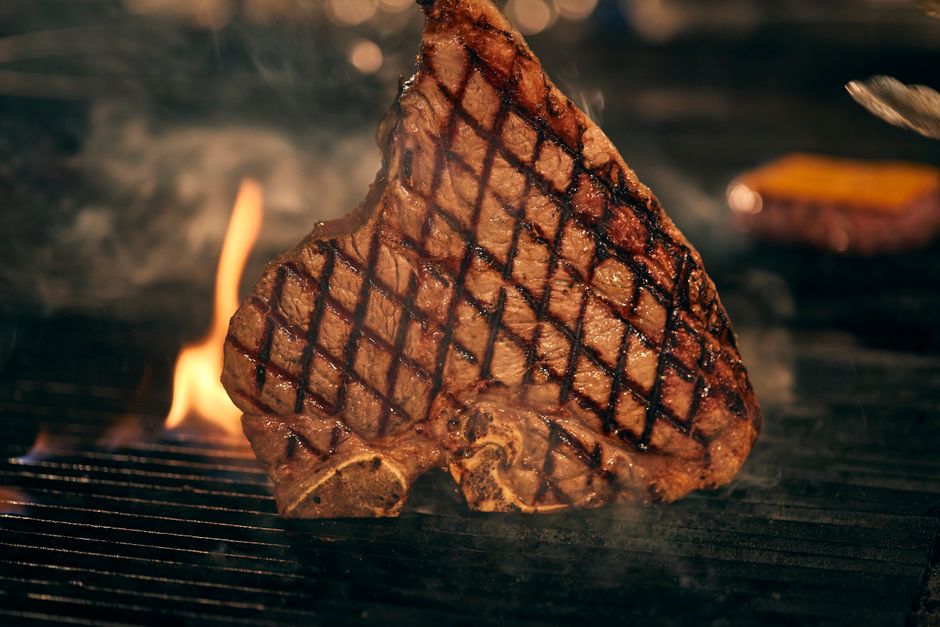
A T-bone steak is a cut of beef that contains two distinct muscles separated by a T-shaped bone. It is a substantial source of complete protein, iron, zinc, and vitamin B12 — nutrients the body needs. It is also high in saturated fat and dietary cholesterol, and how healthy it is depends heavily on portion size, cooking method, and how often you eat it.
What Is a T-Bone Steak Exactly?
A T-bone is not one muscle. It is two.
The bone runs through the middle of the cut in a T shape. On one side sits the strip loin, the same muscle used for a New York strip steak. On the other side sits a smaller portion of tenderloin, the muscle that becomes filet mignon when cut on its own.
This dual-muscle structure is why a T-bone can taste and feel different across its surface. The strip side is firmer with more fat marbling. The tenderloin side is leaner and softer. USDA grading and butchering standards determine how much tenderloin must be present for a cut to be labeled a T-bone rather than a porterhouse. A porterhouse is essentially a T-bone with a larger tenderloin portion.
Is T-Bone Steak Healthy to Eat? Nutrition Facts
A T-bone steak delivers a dense package of protein, minerals, and vitamins in a single serving. It also delivers saturated fat and cholesterol. Both things are true at once.
A 3-ounce cooked portion of beef strip steak — roughly the size of a deck of cards — contains approximately 180 calories, 23 grams of protein, and 9 grams of fat, according to USDA nutritional data. About 3.5 grams of that fat is saturated. The tenderloin side is leaner. A 3-ounce serving of cooked tenderloin contains roughly 180 calories, 26 grams of protein, and 8 grams of fat, with about 3 grams saturated.
Those figures apply to the lean portions. A T-bone with visible fat, cooked in butter or oil, and served at 12 ounces will carry substantially more calories and saturated fat than a 3-ounce trimmed portion.
Here is what the nutrients actually do in the body:
- Protein: Beef protein is complete, meaning it contains all nine essential amino acids the body cannot make on its own. Protein supports muscle maintenance, immune function, and enzyme production.
- Heme iron: The iron in red meat is heme iron, which the body absorbs more efficiently than the non-heme iron found in plants. Iron is required for hemoglobin, the protein in red blood cells that carries oxygen.
- Zinc: Red meat is one of the richest dietary sources of zinc, which supports immune function and wound healing.
- Vitamin B12: B12 is found almost exclusively in animal foods. It is needed for nerve function and red blood cell formation.
- Saturated fat: The fat in beef is predominantly saturated. Diets high in saturated fat are associated with elevated LDL cholesterol in many people.
One point that gets overlooked: the T-bone’s two muscles have meaningfully different fat profiles. If fat content is your concern, the tenderloin side is the leaner half. You are not eating a uniform piece of meat.
How Much Saturated Fat and Cholesterol Does It Have?
Saturated fat and cholesterol are the two nutrients most relevant to heart health in a T-bone steak. The amounts vary widely by portion and trim.
A 3-ounce serving of cooked beef strip steak provides roughly 3.5 grams of saturated fat and about 70 milligrams of cholesterol, based on USDA data. Scale that to a typical restaurant T-bone of 16 ounces or more, and the saturated fat climbs well past 15 grams in a single meal.
The relationship between dietary saturated fat and blood cholesterol is well established. For many people, replacing saturated fat with unsaturated fat — from olive oil, nuts, seeds, or fatty fish — lowers LDL cholesterol. The evidence on dietary cholesterol is more mixed. For most people, dietary cholesterol has a smaller effect on blood cholesterol than saturated fat does, though responses vary between individuals.
The American Heart Association and other major health organizations generally recommend limiting saturated fat. The specific target varies by guideline, but the general direction is consistent: less saturated fat from red meat, more unsaturated fat from plant sources.



Does Cooking Method Change How Healthy It Is?
Cooking method changes both the fat content and the formation of certain compounds. It matters more than most people assume.
Grilling, pan-searing, and broiling at high heat produce heterocyclic amines (HCAs) and polycyclic aromatic hydrocarbons (PAHs). These compounds form when meat is cooked at high temperatures or when fat drips onto a hot surface and creates smoke. Some research has linked high intake of well-done, charred meat to increased cancer risk, though the evidence in human studies is not definitive and other dietary and lifestyle factors are difficult to separate out.
Lower-heat methods — braising, slow cooking, roasting at moderate temperatures — produce fewer of these compounds. Trimming visible fat before cooking reduces flare-ups and smoke. Avoiding charring and not cooking meat directly over an open flame reduces HCA and PAH formation.
Cooking method also affects fat content directly. A steak cooked in butter or oil absorbs additional fat. A steak grilled on a rack lets more fat drip away.
How Does T-Bone Compare to Other Steaks?
T-bone sits in the middle of the steak spectrum for fat content. It is fattier than tenderloin alone but leaner than a ribeye.
| Cut (3 oz cooked) | Calories | Protein | Total Fat | Saturated Fat |
|---|---|---|---|---|
| Tenderloin | ~180 | ~26 g | ~8 g | ~3 g |
| Strip steak | ~180 | ~23 g | ~9 g | ~3.5 g |
| Ribeye | ~200 | ~22 g | ~13 g | ~5.5 g |
Values are approximate and based on USDA data for cooked beef. Actual numbers vary by grade, trim, and preparation.
The practical takeaway: if you want the beef nutrients with less saturated fat, the tenderloin side of a T-bone — or a whole tenderloin cut — is the leaner choice. A ribeye delivers more fat and more calories for a similar protein load.
How Often Can You Eat T-Bone Steak?
No official guideline sets a specific frequency for steak consumption. What exists instead is guidance on total red meat and saturated fat intake.
Major health organizations generally recommend limiting red meat, particularly processed red meat, and keeping saturated fat below a certain share of daily calories. The exact percentage varies by guideline. The consistent theme across them is moderation and variety — not elimination.
For someone eating a typical mixed diet, a T-bone steak a few times a month fits within most general dietary patterns. Eating it daily, especially in large portions, makes it harder to stay within saturated fat limits and to include enough fish, poultry, legumes, and plant foods.
The World Health Organization’s cancer research arm classifies red meat as a probable carcinogen, based on associations between high red meat intake and colorectal cancer risk. This classification reflects strength of evidence, not the size of the risk. The increased risk associated with red meat is modest compared to the risk from processed meats, which are classified as carcinogenic to humans. This is not a reason to avoid steak entirely. It is a reason not to make it a daily staple.
Who Should Be More Careful With T-Bone Steak?
Certain groups have stronger reasons to limit or adjust their intake.
People with elevated LDL cholesterol or existing cardiovascular disease are generally advised to limit saturated fat, which means limiting fatty red meat. People with type 2 diabetes or insulin resistance may benefit from moderating red meat intake, though the evidence here is more about overall dietary pattern than any single food.
People with hemochromatosis, a condition causing excess iron absorption, need to be cautious with heme iron sources. People with gout or a history of kidney stones may be advised to moderate red meat, since it contributes to purine and protein loads that can affect these conditions.
For most healthy adults, the question is not whether T-bone steak is good or bad. It is how it fits into the rest of what you eat. A steak alongside vegetables, whole grains, and fish during the week is a different dietary pattern than a steak alongside fries and no produce. The food does not exist in isolation.
Frequently Asked Questions
Is T-bone steak high in cholesterol?
A 3-ounce serving of cooked beef strip steak contains roughly 70 milligrams of cholesterol. A large restaurant portion of 16 ounces or more would contain several times that amount.
Is T-bone steak healthier than ribeye?
T-bone is generally leaner than ribeye, especially on the tenderloin side. A 3-ounce serving of ribeye has about 5.5 grams of saturated fat compared to roughly 3 to 3.5 grams for T-bone.
Can you eat T-bone steak on a low-fat diet?
The tenderloin portion of a T-bone is relatively lean, but the cut as a whole contains moderate saturated fat. Trimming visible fat and choosing smaller portions can reduce the fat content.
Does grilling T-bone steak make it less healthy?
High-heat grilling can form compounds called HCAs and PAHs, which some research links to increased cancer risk. Lower-heat cooking methods and avoiding charring reduce their formation.
