
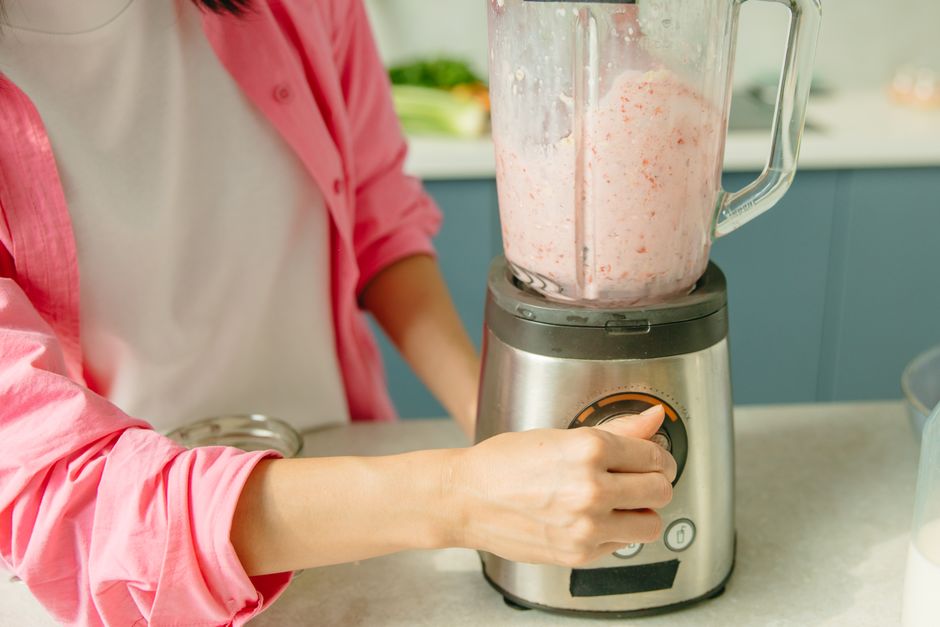
A strawberry banana smoothie can fit into a weight loss plan, but it is not automatically a weight loss food. The calories depend entirely on what goes into the blender. A smoothie made with whole fruit, plain yogurt, and no added sugar can be a filling, nutrient-dense meal or snack. One made with juice, honey, sweetened yogurt, or large portions of nut butter can carry as many calories as a full meal — or more.
Fruit itself is not the problem. The problem is portion size, added sweeteners, and the fact that liquids are less filling than solid food. Whether a strawberry banana smoothie helps or hinders weight loss comes down to how you build it and how it fits into your total calorie intake for the day.
How Many Calories Are in a Strawberry Banana Smoothie?
A basic homemade smoothie with one medium banana, one cup of strawberries, and half a cup of plain low-fat yogurt lands somewhere around 200 to 250 calories. That is a reasonable snack or light breakfast. The number climbs fast from there.
Add a cup of orange juice and you add roughly 110 calories with almost no fiber. Add two tablespoons of peanut butter and you add about 190 calories. Use sweetened vanilla yogurt instead of plain and you add sugar and calories. A large smoothie from a café or smoothie chain can easily reach 400 to 600 calories — sometimes more — depending on size and ingredients.
The calorie math for weight loss is straightforward. Weight loss requires a calorie deficit. A 500-calorie smoothie that does not keep you full can work against that deficit even if every ingredient sounds healthy.
Why Liquid Calories Matter for Weight Loss
Solid food takes time to chew and triggers stretch receptors in your stomach that signal fullness. Liquids pass through faster. Research consistently shows that calories consumed as liquids are less satiating than the same calories eaten as solid food.
This does not mean smoothies cannot be filling. Fiber, protein, and fat all slow digestion and promote satiety. A smoothie with whole fruit, Greek yogurt, and a small amount of healthy fat will keep you fuller than one made mostly of juice and fruit. But even a well-built smoothie tends to be less filling than eating the same ingredients as a meal.
One practical takeaway: sip slowly, and treat the smoothie as a meal replacement rather than a drink alongside a full meal. Drinking a 300-calorie smoothie with breakfast rather than instead of breakfast adds 300 calories without adding much fullness.
What Makes a Strawberry Banana Smoothie Good for Weight Loss?
The ingredients determine whether a strawberry banana smoothie supports weight loss or undermines it. Here is how common additions compare.
| Ingredient | Approximate Calories | Effect on Fullness |
|---|---|---|
| 1 medium banana | ~105 | Moderate (fiber, some protein) |
| 1 cup strawberries | ~50 | Low-moderate (fiber, high water content) |
| 1/2 cup plain low-fat yogurt | ~75 | Moderate (protein) |
| 1/2 cup Greek yogurt (plain) | ~100 | High (more protein) |
| 1 cup orange juice | ~110 | Low (little fiber, fast absorption) |
| 2 tbsp peanut butter | ~190 | Moderate-high (fat, protein) |
| 1 tbsp honey | ~64 | Low (added sugar) |
| 1 scoop protein powder | ~100-120 | High (protein) |
The best weight-loss version keeps total calories moderate and prioritizes protein and fiber. Plain Greek yogurt, a scoop of unflavored or lightly flavored protein powder, and water or unsweetened milk as the base all help. Skip the juice and the added sweeteners.
Frozen fruit works just as well as fresh and gives a thicker texture without needing ice. Using frozen strawberries and a frozen banana chunk means you can skip ice entirely, which keeps the flavor concentrated.
-
 What is a Good Weight Loss Smoothie? What the Experts Say
 -
How to Make Chia Seeds Smoothie for Weight Loss? What Experts Recommend
-
Is Banana Helpful for Weight Loss? What’s Actually True
-
Is Apple Cider Vinegar is Good for Weight Loss? The Real Answer
-
Hepato Burn Reviews (2025): Common Complaints Analyzed!

Is the Sugar in Fruit a Problem?
No. The sugar in whole fruit comes packaged with fiber, water, vitamins, and minerals. Your body processes it differently than added sugar because the fiber slows absorption. Whole fruit is not the reason smoothies get a bad reputation.
The issue is added sugar — honey, agave, maple syrup, sweetened yogurt, juice, or frozen yogurt. These add calories without fiber or protein. A smoothie with three types of added sugar can have more sugar than a can of soda.
Bananas are higher in sugar and starch than most fruits. That is not a reason to avoid them, but it is a reason to watch the total amount of fruit in one smoothie. Two bananas, a cup of strawberries, a cup of mango, and honey is a lot of sugar in one drink, even if all of it comes from fruit.
Can a Smoothie Replace a Meal for Weight Loss?
Yes, but only if it provides enough protein, fiber, and calories to keep you satisfied until your next meal. A smoothie that is mostly fruit and juice will leave you hungry within an hour or two. A smoothie with 25 to 30 grams of protein and 8 to 10 grams of fiber is more likely to hold you.
Meal replacement shakes and smoothies have been studied for weight loss. Some research suggests that replacing one or two meals per day with a portion-controlled shake can lead to weight loss, at least in the short term. But most of those studies use products with controlled calorie and protein content — not a homemade smoothie with unknown portions.
If you use a smoothie as a meal replacement, measure your ingredients at least a few times so you know roughly how many calories you are actually drinking. Most people underestimate liquid calories by a wide margin.
What Is the Best Way to Make a Weight-Loss Strawberry Banana Smoothie?
Start with a base of unsweetened almond milk, skim milk, or water. Add one medium banana and one cup of strawberries. Add half a cup of plain Greek yogurt or a scoop of protein powder. Blend with ice or frozen fruit.
That combination gives you roughly 250 to 300 calories with 20 or more grams of protein and several grams of fiber. It works as a breakfast or a post-workout meal.
- Use frozen fruit instead of ice for better texture and flavor.
- Choose plain yogurt over flavored to avoid added sugar.
- Measure nut butter — two tablespoons is a serving, not a spoonful from the jar.
- Skip juice entirely; use water or unsweetened milk.
- Add spinach or another mild green if you want more volume without many calories.
- Drink it slowly and treat it as a meal, not a beverage alongside a meal.
Does Timing Matter for Weight Loss?
Total daily calorie intake matters more than when you drink a smoothie. Some people find that a smoothie in the morning keeps them from snacking later. Others find that drinking calories early in the day leaves them hungrier by lunch.
There is no strong evidence that smoothies specifically need to be consumed at a particular time for weight loss. What matters is whether the smoothie helps you eat fewer total calories over the day or adds extra calories on top of what you already eat.
If you are not sure which camp you fall into, try tracking your intake for a week with and without the smoothie. How you feel and what you eat the rest of the day will tell you more than any general rule.
When a Smoothie Can Work Against Weight Loss
A smoothie works against weight loss when it adds calories without replacing anything. This happens more often than people realize. A 400-calorie smoothie alongside a normal breakfast is 400 extra calories. Over a week, that is 2,800 extra calories — enough to stall or reverse a modest deficit.
It also happens when the smoothie is not filling. If you drink it at 8 a.m. and are hungry by 9:30, you have added calories and still end up eating a morning snack. In that case, eating the banana, strawberries, and yogurt as solid food would likely keep you fuller for the same calories.
The fix is not to avoid smoothies. It is to build them with enough protein and fiber to actually satisfy you, and to count them as part of your daily intake rather than as a free food.
Frequently Asked Questions
Is a strawberry banana smoothie good for weight loss?
It can be, if it is made with whole fruit, plain yogurt or protein powder, and no added sugar, and if it replaces a meal rather than adding to one. A smoothie loaded with juice, honey, and sweetened yogurt can contain as many calories as a full meal.
How many calories are in a strawberry banana smoothie?
A basic homemade version with one banana, one cup of strawberries, and half a cup of plain low-fat yogurt has roughly 200 to 250 calories. Café smoothies can range from 300 to over 600 calories depending on size and ingredients.
Should I avoid bananas in a smoothie for weight loss?
No. Bananas provide fiber, potassium, and about 105 calories each. The issue is quantity — using one banana is fine, but piling in multiple fruits plus sweeteners raises the sugar and calorie content quickly.
Can I drink a strawberry banana smoothie every day and still lose weight?
Yes, if it fits within your daily calorie needs and does not crowd out other nutritious foods. Tracking your total intake for a week will show you whether the smoothie is helping or adding extra calories.
