
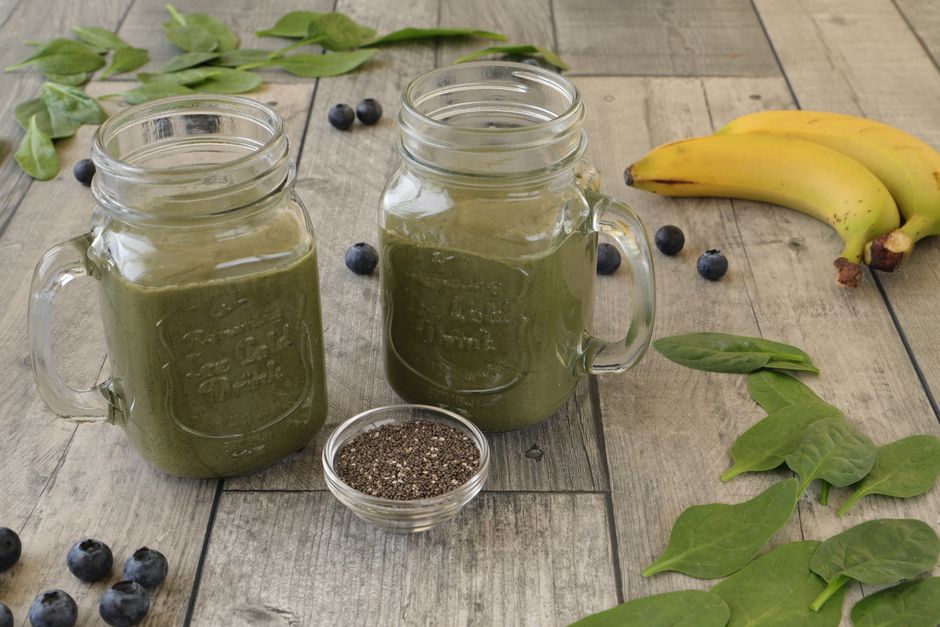
A chia seed smoothie can support weight loss when it replaces a higher-calorie meal or snack and fits inside your daily calorie needs. Chia seeds add fiber, protein, and healthy fat, which can help you feel full longer. But blending chia into a smoothie does not burn fat or cancel out calories eaten elsewhere. The drink works only as part of an overall eating pattern that keeps you in a calorie deficit.
How to Make Chia Seeds Smoothie for Weight Loss
The basic method is simple. Soak the seeds first, then blend them with liquid and low-calorie ingredients. Soaking matters for texture and safety, not for weight loss itself.
Start with one to two tablespoons of dry chia seeds. Add them to about half a cup of water, milk, or unsweetened plant milk. Let them sit for at least 20 minutes. The seeds absorb liquid and form a gel. If you blend dry chia straight into a smoothie, the drink thickens over time and can turn gritty.
Then add your base and flavor. A workable template looks like this:
- 1 to 2 tablespoons soaked chia seeds
- 1 cup unsweetened liquid (water, unsweetened almond milk, or skim milk)
- 1 cup frozen berries or half a banana
- 1 scoop unsweetened protein powder or half a cup of plain Greek yogurt
- Ice as needed
That combination lands in a moderate calorie range and delivers protein and fiber together. Both nutrients are linked to greater satiety in controlled studies. Satiety means you feel full, which can make it easier to eat less later.
What you leave out matters as much as what you put in. Fruit juice, honey, sweetened yogurt, and large amounts of nut butter can push a single smoothie past 500 calories. At that point it stops being a weight-loss tool and becomes a full meal with a lot of sugar.
Why Chia Seeds May Help With Weight Loss
Chia seeds absorb several times their weight in liquid and form a gel. That gel adds volume and slows digestion, which can extend fullness. This is a well-established physical property of the seed.
The nutrition profile supports that effect. A one-ounce serving of chia seeds, about two tablespoons, provides roughly 138 calories, close to 10 grams of fiber, and about 5 grams of protein, according to USDA data. It also contains alpha-linolenic acid, a plant-based omega-3 fat.
Fiber is the main player here. Most adults in the US eat well below the recommended daily fiber intake, which is about 25 grams for women and 38 grams for men on a 2,000-calorie diet. A smoothie with chia, berries, and vegetables can close part of that gap. Higher fiber intake is consistently associated with lower body weight in observational research, though association is not the same as proof of cause.
One clarification worth making: chia seeds are not a fat burner. No food is. The mechanism is appetite and calorie control, not metabolism.
Do Chia Seeds Actually Cause Weight Loss?
The evidence is mixed and should be described honestly. Some small short-term studies have found that chia seeds increased fullness or reduced food intake at a later meal. Other trials found no meaningful difference in weight compared with a control group.
A commonly cited trial in healthy overweight adults with type 2 diabetes found that chia seed supplementation for several months did not produce significant weight loss compared with placebo, though it did improve some cardiovascular markers. That result matters. It suggests chia is not a stand-alone weight-loss agent.
The reasonable conclusion is this. Chia seeds can support weight loss by increasing fiber and protein in a controlled-calorie diet. They are unlikely to cause weight loss on their own. Anyone selling chia as a direct fat-loss solution is overstating what the research shows.

Common Mistakes That Add Calories
Most chia smoothies fail for the same few reasons. They are too large, too sweet, or treated as a snack on top of normal meals instead of a replacement for something.
Watch for these traps:
- Using juice as the base instead of water or unsweetened milk
- Adding honey, agave, or sweetened yogurt
- Pouring in several tablespoons of nut butter
- Making a 24-ounce smoothie and drinking it in five minutes
- Drinking it alongside a full breakfast rather than instead of one
Liquid calories are also less filling than solid food for many people. Chewing sends stronger fullness signals than drinking. If a smoothie leaves you hungry an hour later, eating the same ingredients as a bowl with a spoon may work better for you.
How Chia Smoothies Fit Into a Weight Loss Plan
A smoothie is a tool, not a strategy. It helps most when it replaces a meal or snack that was higher in calories and lower in nutrients.
Timing is a personal choice. Some people find a chia smoothie works well as breakfast because the fiber and protein hold them until lunch. Others prefer it as an afternoon snack to avoid vending machine food. Both can work if total daily calories stay in a deficit.
Pair the smoothie with habits that have stronger evidence behind them:
- Eat protein at each meal to protect muscle during weight loss
- Fill half your plate with vegetables at main meals
- Aim for gradual loss, roughly one to two pounds per week, which most guidelines describe as a sustainable pace
- Get regular physical activity, including strength training
- Sleep enough, since short sleep is linked to higher appetite and weight gain over time
No single drink replaces these fundamentals. A smoothie that supports them is useful. A smoothie that distracts from them is not.
Safety and Who Should Be Careful
Chia seeds are generally well tolerated, but a few cautions are worth stating plainly.
Dry chia seeds absorb liquid and expand. Eating a large amount dry, especially with little fluid, has been linked to rare cases of esophageal blockage. Always soak the seeds or blend them with plenty of liquid, and drink fluids with them.
Chia is high in fiber. Adding too much too quickly can cause bloating, gas, and cramping. Increase gradually over a week or two and drink enough water.
If you take blood thinners such as warfarin, talk to your doctor before making chia a regular part of your diet. Chia contains omega-3 fats that may interact with these medications. This is a precaution based on the seed’s nutrient content, and clinical guidance on the interaction is limited.
People with swallowing disorders, a history of bowel obstruction, or narrowed esophagus should avoid chia unless a doctor approves it. For pregnancy and breastfeeding, chia is generally considered safe in normal food amounts, but no clinical guidelines set a specific recommended dose for these groups, so keep intake moderate and check with your provider.
If you have diabetes, monitor how chia smoothies affect your blood sugar, especially if they replace a meal. The fiber can slow glucose absorption, but the fruit and any added sweeteners still count.
Frequently Asked Questions
How much chia should I put in a weight loss smoothie?
One to two tablespoons is a practical amount for most adults and matches a standard serving. More than that adds calories and fiber quickly, which can cause digestive discomfort.
Can I drink a chia smoothie every day for weight loss?
Yes, if it fits within your daily calorie needs and you vary the rest of your diet. Drinking the same smoothie daily is fine, but relying on it alone will not meet your nutrient needs.
Do I need to soak chia seeds before blending?
Soaking is not required for safety if the smoothie has enough liquid, but it improves texture and helps prevent the seeds from swelling uncomfortably in your throat. A 20-minute soak is the simplest approach.
Will chia seeds alone help me lose weight?
No. Research does not support chia seeds as a stand-alone weight-loss method. They help mainly by adding fiber and protein that support fullness within a calorie-controlled diet.
