
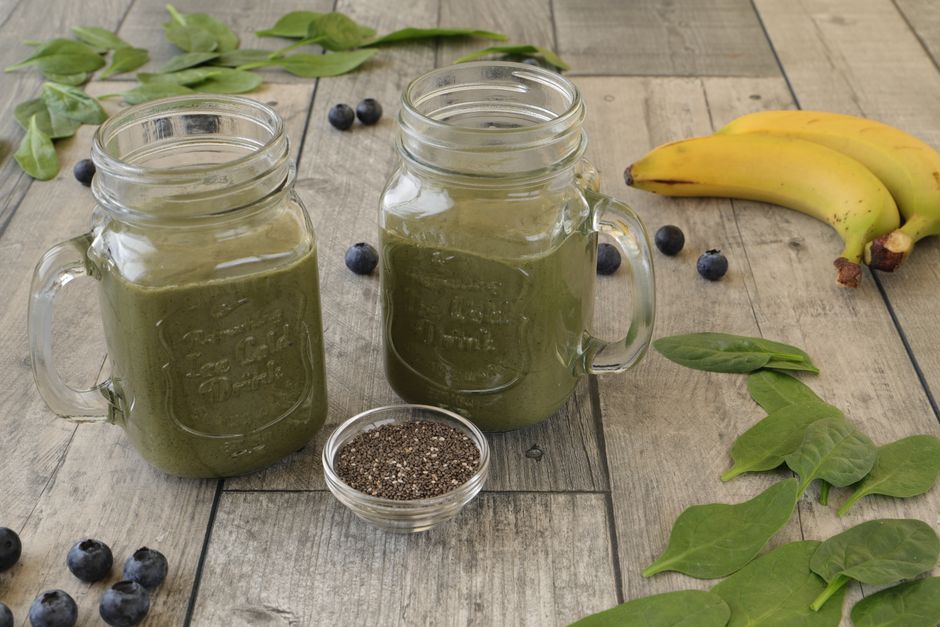
A good weight loss smoothie is a liquid meal built around protein, fiber, and controlled calories. It is not a fruit juice blend with a scoop of protein powder tossed in. The difference matters more than most people realize.
Here is the core issue. Liquid calories do not trigger the same fullness signals as solid food. Research on satiety has shown this repeatedly. When you drink 400 calories, you tend to eat nearly the same amount at your next meal as if you had eaten nothing. When you chew 400 calories, you eat less later. That does not make smoothies useless for weight loss. It means the composition has to work harder to compensate.
Most smoothies people buy or make are high in sugar and low in protein. They taste like a healthy choice. Nutritionally, they behave more like a dessert. A good weight loss smoothie reverses that ratio.
What Should a Weight Loss Smoothie Actually Contain?
Protein is the anchor. It has the strongest effect on satiety of the three macronutrients, and it helps preserve lean muscle during a calorie deficit. A smoothie with 20 to 30 grams of protein will keep you full far longer than one with 5 grams.
Fiber is the second pillar. It slows digestion, adds volume, and feeds gut bacteria. Most adults in the US fall short of recommended fiber intake, which is roughly 25 grams per day for women and 38 grams for men based on federal dietary guidelines. A smoothie is an easy place to add several grams.
Fat should be present but modest. A little fat helps with absorption of fat-soluble vitamins and adds creaminess. Too much fat pushes calories up quickly without adding much fullness in liquid form.
Here is what a solid template looks like:
- Protein base: plain Greek yogurt, cottage cheese, unsweetened protein powder, or silken tofu
- Liquid: unsweetened almond milk, skim milk, or water
- Fiber and volume: spinach, frozen cauliflower, or zucchini
- Fruit: half a banana, a cup of frozen berries, or half an apple
- Healthy fat: a tablespoon of chia seeds, ground flax, or nut butter
That combination typically lands between 250 and 400 calories depending on portions. It delivers 25 to 35 grams of protein and 8 to 12 grams of fiber. Those numbers matter because they are in the range that actually affects appetite.
Why Do Most Smoothies Fail for Weight Loss?
They fail because of what gets poured in without measuring. Fruit juice, honey, agave, sweetened yogurt, and large portions of banana or mango can push a smoothie past 600 calories without anyone noticing. Liquid calories are easy to underestimate.
There is a second problem. Many commercial smoothies and smoothie kits are marketed as meal replacements but contain very little protein. Without protein, a liquid meal empties from the stomach quickly. You feel hungry within an hour or two and eat more at your next meal. The calorie deficit disappears.
Blending also breaks down cell walls in fruit. This releases sugars that would otherwise be digested more slowly. The effect is modest compared to juicing, which removes fiber entirely, but it is real. Whole fruit keeps its structural fiber intact. Blended fruit does not.
None of this means smoothies are bad. It means the margin for error is smaller than with solid food. You have to be deliberate about what goes in.
What Is the Best Protein for a Weight Loss Smoothie?
Whey and casein both work well. Whey digests faster. Casein digests slower and may keep you full slightly longer. Both are complete proteins with all essential amino acids. Plant-based options like pea protein and soy protein are also complete and perform similarly for satiety in most comparisons.
Greek yogurt and cottage cheese are excellent whole-food options. They add protein plus texture and some naturally occurring fats. A half-cup of plain Greek yogurt provides around 12 to 15 grams of protein depending on the brand. Cottage cheese runs similar or higher.
Collagen powder is not a good primary protein source for a meal replacement. It lacks tryptophan, one of the essential amino acids, so it is an incomplete protein. It has uses, but building a filling meal is not one of them.
Protein powders vary widely in quality and added ingredients. Some contain added sugars, artificial sweeteners, or heavy metals at levels that have raised concern in independent testing. Choosing a product with third-party testing is a reasonable precaution, though no regulatory standard requires it.
Can a Smoothie Replace a Meal Every Day?
It can, but the evidence on long-term meal replacement for weight loss is mixed. Short-term studies show that replacing one or two meals per day with a structured, nutritionally complete shake can produce weight loss. The key phrase is nutritionally complete. Most homemade smoothies are not.
If you replace a meal with a smoothie, you need to account for what that meal would have provided. A smoothie with 300 calories and 25 grams of protein is not equivalent to a 500-calorie balanced meal with vegetables, whole grains, and lean protein. You will likely be hungry sooner, and you may end up eating more later.
Replacing breakfast with a smoothie tends to work better than replacing dinner. Appetite regulation is generally stronger later in the day, and a liquid breakfast is easier to accept than a liquid dinner for most people. This is practical observation more than a hard rule from clinical trials.
If you use smoothies as a regular meal replacement, tracking your overall intake for a week is worth doing. Most people find they need to adjust portions or add solid food to avoid overeating later.
What About Store-Bought Smoothies?
Most are not designed for weight loss. They are designed to taste good. A large smoothie from a national chain can easily exceed 500 calories and contain 60 grams or more of sugar. Some exceed 800 calories. That is a meal’s worth of calories in a cup you drink in five minutes.
Reading the nutrition label helps, but portion sizes at smoothie shops are often much larger than a standard serving. A 24-ounce smoothie is three cups. If the label lists nutrition for 8 ounces, you are getting three times those numbers.
If you buy smoothies, ask for no added sugar or juice, choose a smaller size, and add protein. It still will not match a homemade version you control, but it can fit into a reasonable day.
Do Smoothies Help or Hurt Metabolism?
They do not change your metabolism in any meaningful way. The idea that blending food alters metabolic rate is not supported. What blending changes is how quickly you consume calories and how full you feel afterward.
There is a common claim that blending destroys enzymes or makes food “more bioavailable” in a way that affects weight. Enzymes in food are broken down in the stomach regardless of whether the food was blended. The body makes its own digestive enzymes. This claim does not hold up.
What does matter is the total calorie balance over days and weeks. If a smoothie helps you eat fewer calories overall because it is filling and convenient, it supports weight loss. If it adds calories on top of what you already eat, it works against you. The food itself is neutral. The context decides.
Frequently Asked Questions
How many calories should a weight loss smoothie have?
Most weight loss smoothies work best between 250 and 400 calories when used as a meal replacement. If used as a snack, 150 to 250 calories is more appropriate.
What is the best liquid to use in a weight loss smoothie?
Water, unsweetened almond milk, or skim milk are the lowest-calorie options. Fruit juice adds sugar and calories without adding fullness, so it is best avoided.
Can I drink a smoothie every day and still lose weight?
Yes, if it fits within your daily calorie needs and contains enough protein and fiber to keep you full. A smoothie that leaves you hungry an hour later will likely lead to eating more, not less.
Are smoothies better than juicing for weight loss?
Smoothies retain fiber from whole fruits and vegetables, while juicing removes most of it. That fiber supports fullness and blood sugar stability, making smoothies the better choice in most cases.
