
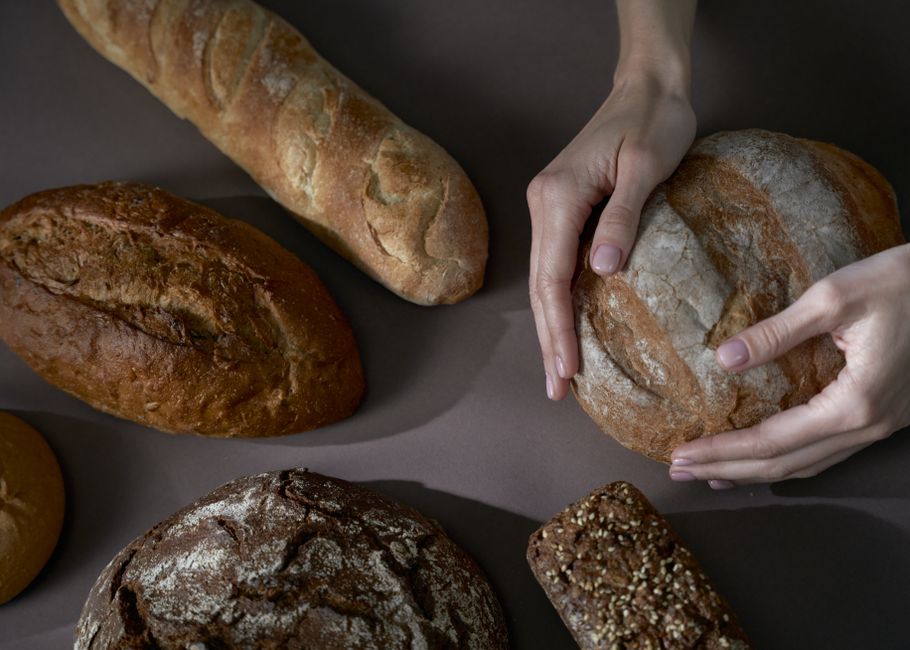
Whether sourdough bread causes weight gain depends far more on how much you eat and what you eat it with than on the bread itself. Sourdough is a carbohydrate-dense food, so it does contain calories — roughly the same as other breads of similar flour content. But the fermentation process changes its structure in ways that may affect digestion, blood sugar response, and satiety. None of that makes it a weight-loss food, and none of it makes it uniquely fattening either.
Is Sourdough Bread Fattening?
Gram for gram, sourdough bread carries about the same calories as conventional yeast bread — typically in the range of 120 to 140 calories per two-ounce slice, depending on flour, hydration, and added ingredients. Weight gain comes from eating more calories than you burn over time. No single food causes it on its own.
What makes sourdough different is how it is made. Traditional sourdough relies on a live culture of wild yeast and lactic acid bacteria instead of commercial baker’s yeast. That fermentation process predigests some of the starch and breaks down part of the gluten. It also produces organic acids — lactic and acetic acid — that give sourdough its tang and may slow how quickly the bread’s carbohydrates reach the bloodstream.
That slower absorption is where most of the “sourdough is healthier” claims come from. It is a real physiological difference. Whether it translates into meaningful weight control over months and years is a different question, and the evidence there is much thinner.
How Does Sourdough Fermentation Change the Bread?
The fermentation step is not a gimmick. It measurably alters the bread’s composition.
During a long ferment, the bacteria and wild yeast consume some of the flour’s sugars and starches. This reduces the amount of rapidly digestible carbohydrate left in the finished loaf. The acids produced also lower the bread’s pH, which affects how enzymes in your gut break down the starch.
The practical result is a bread that tends to raise blood glucose more slowly than a fast-risen commercial loaf made from the same flour. The size of that difference varies widely. A short-fermented “sourdough” from a supermarket may behave almost identically to regular bread, because the fermentation was brief or the loaf was also leavened with commercial yeast.
One important clarification: “sourdough” on a label does not guarantee a long, slow ferment. Some commercial products use sourdough flavoring or a quick acid addition rather than a genuine live culture. If the fermentation was not real, you do not get the structural changes.
Does Sourdough Bread Have Fewer Calories Than Regular Bread?
No. The calorie content is essentially the same as other breads made from the same flour. Fermentation does not remove calories in any meaningful way.
What it can change is how satisfying the bread feels and how your body handles the carbohydrate load. Those are different from calorie count. A food can be equally calorie-dense and still affect appetite or blood sugar differently.
Here is a rough comparison of a typical two-ounce slice:
| Bread type | Approximate calories | Fiber (approx.) |
|---|---|---|
| White sourdough | 120–140 | 1 g |
| Whole wheat sourdough | 120–140 | 2–3 g |
| White commercial sandwich bread | 120–140 | 1 g |
| Whole wheat commercial bread | 120–140 | 2–3 g |
The numbers land in the same range because the base ingredient is the same: wheat flour, water, and salt. The type of flour matters more for fiber than the type of leavening.





Does Sourdough Affect Blood Sugar and Weight?
Sourdough tends to produce a lower blood glucose rise than fast-fermented breads made from the same flour. Some studies have found this effect, though results vary by loaf, fermentation time, and the person eating it.
Why would blood sugar matter for weight? Large, rapid glucose spikes trigger a corresponding insulin release. Insulin is a storage hormone — it signals the body to take up glucose and can promote fat storage when energy is abundant. This has led to the idea that blunting glucose spikes helps with weight control.
The evidence for that idea is mixed. Blood sugar response is one factor among many. Total calories, overall diet quality, activity, sleep, and genetics all play larger roles in long-term weight than the glycemic response to any single food. A lower glucose spike from sourdough is a modest advantage, not a weight-loss mechanism on its own.
People with diabetes or prediabetes sometimes find sourdough easier on their blood sugar than regular bread. That is a reasonable thing to discuss with a clinician, since individual responses vary and monitoring is the only way to know for sure.
Why Sourdough Might Feel More Filling
Satiety — how full and satisfied a food leaves you — is one of the more practical factors in weight management. Sourdough may have a slight edge here for a few reasons.
The organic acids produced during fermentation can slow stomach emptying, which means food stays in the stomach longer and you feel full for longer. The denser texture of a real sourdough loaf also tends to encourage slower eating compared with soft commercial bread.
Whole grain sourdough brings additional fiber, which supports fullness and feeds gut bacteria. Fiber’s role in appetite control is well established, even if the specific contribution of sourdough’s fermentation is not fully pinned down.
None of this means sourdough is a diet food. It means that if you are going to eat bread, a genuine whole grain sourdough may leave you more satisfied per slice than a soft white loaf — and feeling satisfied is one of the things that helps people eat less overall without white-knuckling it.
What Actually Determines Whether Bread Causes Weight Gain
Bread itself is rarely the problem. The pattern around it usually is.
Weight gain happens when calorie intake consistently exceeds calorie expenditure. Bread is calorie-dense and easy to overeat, especially soft breads that go down quickly. The toppings matter enormously too — butter, jam, nutella, cheese, and olive oil can add more calories than the bread itself.
Portion size is the biggest lever. One slice of sourdough with a meal is very different from four slices as a snack. Frequency matters as well. Daily bread is not the same as occasional bread.
- Portion: A single slice is roughly 120–140 calories. Two or three slices add up fast.
- Toppings: What you put on the bread often outweighs the bread’s own calories.
- Flour type: Whole grain versions add fiber, which supports fullness.
- Context: Bread alongside protein, fat, and vegetables behaves differently than bread alone.
- Total diet: One food cannot outweigh an otherwise poor eating pattern.
If your weight is climbing, the answer is almost never “cut the sourdough.” It is usually about the total picture — how much you eat, how active you are, and how much of your diet is highly processed and easy to overconsume.
Is Sourdough Better for You Than Other Bread?
For most people, genuine sourdough made with whole grain flour is a reasonable choice within a balanced diet. It offers the same basic nutrition as other bread plus the potential benefits of fermentation — slower glucose response, slightly better mineral absorption, and a texture that may support slower eating.
But “better” is not the same as “low calorie” or “weight loss food.” Sourdough is still bread. It is still mostly carbohydrate. It still contains gluten unless specifically made gluten-free, and fermentation reduces but does not eliminate gluten — so it is not safe for people with celiac disease.
If you enjoy sourdough and it fits your overall eating pattern, there is no reason to avoid it for weight reasons. If you are eating a lot of it and gaining weight, the bread is one place to look — but rarely the only one.
Frequently Asked Questions
Is sourdough bread fattening compared to regular bread?
No — sourdough has roughly the same calories as regular bread made from the same flour. Weight gain depends on total calorie intake, not on the type of leavening used.
Does sourdough bread spike blood sugar?
Genuine long-fermented sourdough tends to raise blood glucose more slowly than fast-risen commercial bread. The size of the effect varies by loaf and by person.
Can I eat sourdough bread if I’m trying to lose weight?
Yes, if it fits within your overall calorie needs. Portion size and what you put on the bread matter more than the bread itself.
Is sourdough bread gluten-free?
No. Fermentation reduces some gluten but does not remove it, so sourdough is not safe for people with celiac disease or serious gluten sensitivity.
