
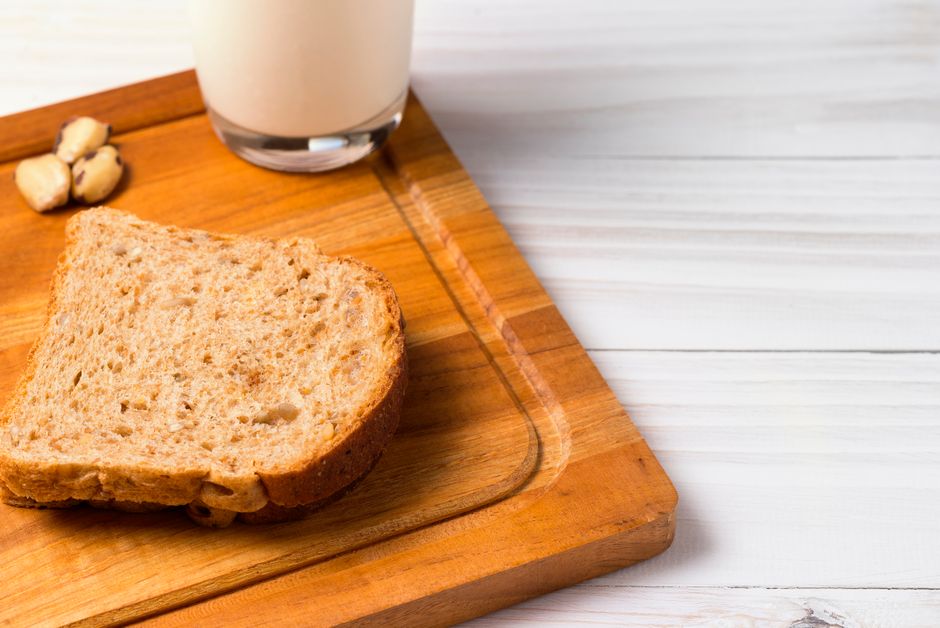
Most bread sold in the United States does not contain dairy. The basic ingredients in a standard loaf are flour, water, yeast, and salt. But dairy can show up in bread more often than people expect, especially in enriched, flavored, or specialty loaves. If you are avoiding milk for an allergy, intolerance, or personal choice, the answer depends entirely on which bread you pick up.
This guide explains where dairy hides in bread, how to read a label correctly, and which types are most likely to be safe. It also covers why some breads that seem dairy-free may not be.
What Are the Basic Ingredients in Most Bread?
Traditional bread is made from four ingredients. Flour provides structure, water hydrates the dough, yeast makes it rise, and salt adds flavor and controls fermentation. None of these contain dairy.
This is true for lean doughs like French bread, Italian bread, ciabatta, and many sourdough loaves. The dough is simply flour and water, sometimes with a starter culture instead of commercial yeast. These breads are dairy-free by nature.
Problems start when bakers add ingredients for texture, flavor, or shelf life. That is where milk, butter, and whey enter the picture.
Commercial bread is also often enriched with vitamins and minerals. Enrichment adds niacin, iron, thiamine, riboflavin, and folic acid back into flour after processing. These are added nutrients, not dairy, even though some people assume enriched means milk was added. It does not.
Which Breads Usually Contain Dairy?
Several common breads almost always contain dairy. Knowing which ones helps you shop faster.
- Brioche — made with butter and often milk
- Challah — traditionally contains eggs, and some recipes add milk or butter
- Milk bread and Japanese shokupan — built around milk as a main ingredient
- Buttermilk biscuits and rolls — buttermilk is the defining ingredient
- Croissants and Danish pastries — laminated with butter
- Many sandwich breads and soft white loaves — often include milk or whey for softness
- Cheese breads, garlic bread with butter, and stuffed breads — dairy is part of the design
Soft, sweet, or rich breads are the ones to watch. If a bread tastes buttery, tender, and stays soft for days, there is a good chance dairy is involved.
One detail worth knowing: eggs are not dairy. A challah made with eggs but no milk is dairy-free in the medical sense, even though it is not vegan. People with a milk allergy can usually eat egg-based breads unless milk is also listed. This distinction matters because the two allergies are unrelated.
How Do You Tell If a Bread Contains Dairy?
The ingredient list is the only reliable way to know. You cannot judge by color, texture, or how the bread tastes.
Look for these terms on the label:
- Milk, whole milk, skim milk, milk powder, dry milk solids
- Butter, butterfat, butter oil
- Whey, whey protein, whey powder
- Casein, caseinate, sodium caseinate
- Cream, cream powder
- Cheese, cheese powder
- Lactose
- Ghee (clarified butter)
Some of these are easy to miss. Whey and casein are milk proteins that show up in processed breads without the word milk anywhere on the front of the package. Sodium caseinate is common in commercial baked goods.
In the United States, federal law requires major food allergens to be listed in plain language. Milk is one of the eight major allergens. That means a package should say milk clearly, either in the ingredient list or in a contains statement below it. This rule makes label reading easier than it used to be, but it does not cover every possible trace of dairy, and it does not apply to all products the same way.
If a label says contains milk, treat it as containing dairy. If it does not, the product is very likely dairy-free, though cross-contamination is always possible in shared facilities.





Does Bread Contain Dairy if It Is Labeled Vegan or Dairy-Free?
Bread labeled vegan does not contain dairy by definition. The term vegan means no animal products at all, which rules out milk, butter, whey, and casein.
Dairy-free is a looser term. It generally means no dairy ingredients were added, but it is not a regulated claim in the same way milk allergen labeling is. A product can say dairy-free and still be made in a facility that handles milk.
For most people avoiding dairy by choice, this distinction does not matter. For someone with a milk allergy, it can. Cross-contact during manufacturing can leave trace amounts of milk protein in a product that has no dairy ingredients. Reactions to these trace amounts are possible but uncommon, and sensitivity varies widely from person to person.
If you have a serious milk allergy, talk to your doctor or a dietitian about how strict you need to be. The answer is not the same for everyone.
Is Sourdough Bread Dairy-Free?
Traditional sourdough is dairy-free. It is made from flour, water, salt, and a live starter culture of wild yeast and bacteria. No milk or butter is required.
The catch is that sourdough has become a marketing term. Many supermarket loaves labeled sourdough are regular yeast breads with a sour flavoring added, and some of those contain milk or butter. The word on the package does not guarantee the traditional recipe.
Check the ingredient list. Real sourdough lists few ingredients. If you see milk, whey, or butter, it is not a traditional sourdough loaf.
Sourdough fermentation does change the bread in ways beyond flavor. The long fermentation process breaks down some of the starches and proteins in flour. This is why some people who avoid regular bread for digestive reasons find sourdough easier to tolerate. That said, sourdough is still wheat bread. It is not safe for someone with celiac disease, and it is not a dairy-free issue at all. The two concerns are separate.
Why Does Dairy Get Added to Bread?
Bakers add dairy for practical reasons, not just flavor.
Milk proteins and fats change how dough behaves. They make the crumb softer and more tender. They help the crust brown. They slow staling so the bread stays fresh longer on a shelf. For commercial bakeries, that added shelf life has real value.
Butter adds richness and flavor. Whey and milk powder are cheap ways to get some of these effects without using liquid milk. That is why they appear in so many packaged breads.
None of this is a health claim. Dairy in bread is a functional ingredient, not a nutritional feature. A slice of milk bread does not deliver meaningful calcium or protein compared to a glass of milk.
What About People With a Milk Allergy or Lactose Intolerance?
These are two different conditions, and they affect how you handle bread differently.
A milk allergy is an immune reaction to milk proteins, mainly casein and whey. Even small amounts can trigger symptoms in sensitive people, ranging from hives to more serious reactions. For this group, avoiding all sources of milk protein matters, including breads with whey or casein.
Lactose intolerance is a digestive issue. The body does not make enough lactase, the enzyme that breaks down lactose, a sugar in milk. Symptoms like bloating, gas, and diarrhea show up after eating lactose. The amount that causes symptoms varies a lot from person to person.
Here is where bread gets interesting. Most breads that contain dairy use small amounts, and the baking process plus fermentation can reduce lactose content. Many people with lactose intolerance tolerate bread made with milk without symptoms. But this is not universal, and there is no fixed threshold that applies to everyone. If you are unsure, your own experience and your doctor’s guidance matter more than any general rule.
For a diagnosed milk allergy, the safer approach is to avoid bread with any milk-derived ingredient, including trace sources.
How Can You Find Dairy-Free Bread?
Finding dairy-free bread is straightforward once you know what to look for.
- Read the ingredient list every time, even for brands you trust. Recipes change.
- Look for a contains statement. If milk is listed, skip it.
- Choose lean breads: French, Italian, ciabatta, traditional sourdough, and plain baguettes.
- Check the bakery section carefully. Fresh bread often lacks a full ingredient label, so ask staff or check the store’s website.
- Be cautious with soft sandwich breads, sweet breads, and anything described as rich or buttery.
Bread from an in-store bakery is one of the trickiest areas. Loaves baked on site may not carry a complete allergen label. If you have a milk allergy, ask directly. Staff can usually check the recipe or the dough supplier.
Frozen and shelf-stable breads almost always carry full labels, which makes them easier to screen.
Does Bread Contain Dairy? The Short Answer
Plain bread does not contain dairy. Most artisan loaves, baguettes, and traditional sourdough are made from flour, water, yeast, and salt. Dairy appears in richer breads and in many commercial soft breads, where milk, whey, or butter is added for texture and shelf life.
The label is your best tool. Milk is a major allergen in the United States, so it must be declared in plain language. If you do not see milk, whey, casein, butter, or cheese in the ingredients, the bread is very likely dairy-free. For a milk allergy, also consider cross-contact and ask about bakery breads without labels.
Frequently Asked Questions
Does white bread contain dairy?
Some white breads do and some do not. Soft commercial white sandwich breads often contain milk, whey, or butter, while plain white baguettes and lean white loaves usually do not. Check the ingredient list to be sure.
Is sourdough bread dairy-free?
Traditional sourdough made from flour, water, salt, and starter is dairy-free. However, some supermarket loaves labeled sourdough contain milk or butter, so read the ingredients rather than trusting the name.
Does bread contain dairy if it has eggs?
No. Eggs are not dairy. A bread made with eggs but no milk, butter, whey, or casein is dairy-free in the medical sense, even though it is not vegan.
Can I eat bread if I am lactose intolerant?
Many people with lactose intolerance tolerate bread made with small amounts of milk, since baking and fermentation reduce lactose. Tolerance varies by person, so pay attention to your own symptoms and follow your doctor’s advice.
