
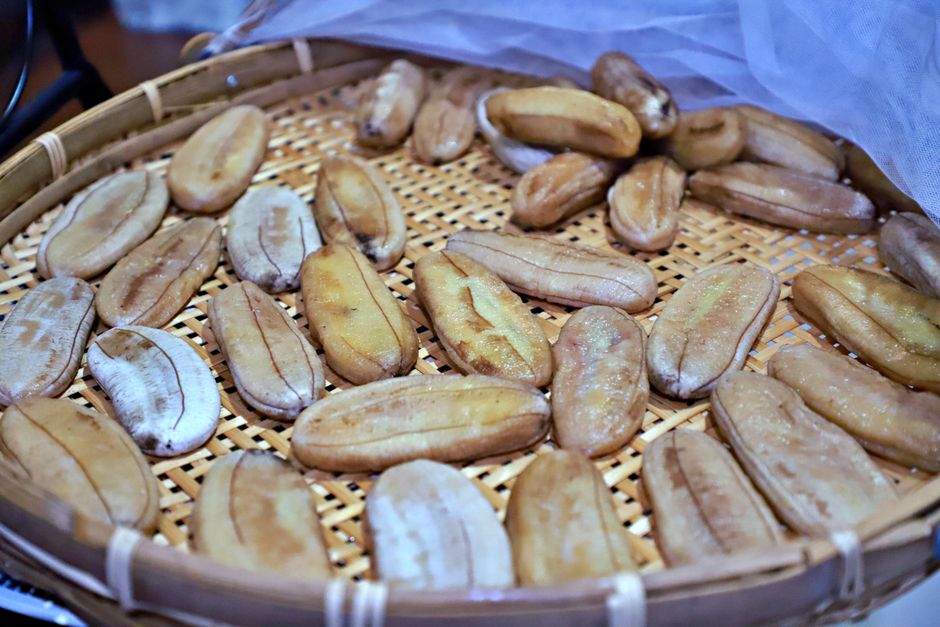
Banana chips are calorie-dense by any measure, and how they are made matters more than the banana itself. A one-ounce serving of typical fried banana chips contains roughly 140 to 150 calories and about 10 grams of fat, while the same weight of dried banana has almost no fat and more sugar. Whether they lead to weight gain depends on how many you eat and what else is in your diet — not on the banana alone.
Are Banana Chips Fattening?
The short answer is that they can be, but not because bananas are inherently fattening. The issue is calorie concentration and preparation method.
Fresh banana is roughly 90 percent water. That water gives it volume and weight, which helps you feel full. When a banana is sliced and fried or dried, most of that water is removed. What remains is a small, dense, shelf-stable snack that delivers a lot of calories in a very small package.
Fried banana chips are typically cooked in coconut oil or palm oil. Coconut oil is high in saturated fat — about 80 to 90 percent of its fat content. That fat is not automatically harmful, but it adds calories quickly. A 100-gram portion of fried banana chips often contains around 500 calories, compared with about 89 calories in 100 grams of fresh banana. That is not a small difference.
Dried banana chips without added fat are a different food. They are mostly concentrated carbohydrate and sugar. They still deliver a lot of calories per bite, but the fat content is minimal.
How Many Calories Are in Banana Chips?
Calorie counts vary widely depending on brand, slice thickness, oil type, and added sugar. The numbers below reflect typical commercial products and USDA reference data for fresh banana.
| Food (per 100 g) | Calories | Fat | Carbohydrate | Sugar |
|---|---|---|---|---|
| Fresh banana | ~89 | ~0.3 g | ~23 g | ~12 g |
| Fried banana chips (sweetened) | ~500–520 | ~30–35 g | ~55–60 g | ~25–35 g |
| Baked or freeze-dried banana chips (no added fat) | ~340–380 | ~1–3 g | ~80–85 g | ~40–50 g |
These figures are approximate because formulation varies. Always check the nutrition label on the specific product.
The key takeaway is that fried banana chips are roughly five to six times more calorie-dense than fresh banana by weight. That density is what makes them easy to overeat.
Why Calorie Density Matters for Weight Gain
Body weight is regulated by energy balance over time. Eat more calories than you burn, and you gain weight. Eat fewer, and you lose it. This is not the whole story — hormones, genetics, sleep, and gut health all play roles — but it is the foundation.
Calorie-dense foods like fried banana chips make it easier to consume more calories before your body signals fullness. Satiety signals — the feeling of being full — are driven partly by stomach stretching, partly by hormones like leptin and GLP-1, and partly by the volume and composition of what you eat.
A small handful of banana chips might contain 200 calories but occupy very little space in your stomach. A whole fresh banana has about 105 calories and takes up far more room. The fresh fruit is more likely to make you feel satisfied.
This does not mean banana chips are uniquely fattening. Any calorie-dense snack — potato chips, nuts, cheese, chocolate — can contribute to weight gain if eaten in large amounts. The question is whether you are eating them as a occasional treat or as a daily staple.




Are Baked Banana Chips Healthier Than Fried?
Baked banana chips generally contain less fat than fried ones. That is a meaningful difference if you are watching your fat intake or your total calories.
However, baked and freeze-dried banana chips often contain more sugar by weight because the banana’s natural sugars become more concentrated when water is removed. Some manufacturers also add sugar or honey before drying.
From a weight-gain perspective, the difference between baked and fried is real but modest. Baked chips might have 340 to 380 calories per 100 grams, while fried chips have around 500. Both are far more calorie-dense than the fresh fruit.
If you are choosing between the two, baked or freeze-dried without added sugar is the lower-calorie option. But neither is a low-calorie food.
Do Banana Chips Have Any Nutritional Value?
Yes, but less than you might expect. The drying and frying process degrades some vitamins, particularly vitamin C, which is heat-sensitive.
Banana chips do retain potassium, magnesium, and some fiber. Potassium is important for blood pressure regulation and muscle function. Magnesium supports hundreds of enzymatic reactions in the body.
That said, the amounts are modest. You would need to eat a significant number of chips to match the potassium in a single fresh banana — and by then you would have consumed far more calories and fat.
Some brands add preservatives like sulfur dioxide to prevent browning. This is generally recognized as safe for most people, but individuals with sulfite sensitivity should check labels.
How to Eat Banana Chips Without Gaining Weight
There is no single rule that works for everyone. But a few evidence-based principles can help.
- Portion them out. Do not eat from the bag. Measure a serving — typically about one ounce — and put the rest away.
- Pair with protein or fiber. Eating banana chips with Greek yogurt, nuts, or a piece of fruit can increase satiety and slow digestion.
- Choose baked or freeze-dried versions. These have less fat and often fewer calories per gram.
- Treat them as a snack, not a health food. They are not a substitute for fresh fruit.
- Watch total calorie intake. If you add 200 calories of banana chips to your day, you need to subtract 200 calories elsewhere to maintain your weight.
None of this is unique to banana chips. The same advice applies to any calorie-dense snack.
Are Banana Chips Worse Than Other Snacks?
Not necessarily. Compared with potato chips, fried banana chips have similar calorie and fat content. Compared with candy, they have more fiber and potassium. Compared with fresh fruit, they are far more calorie-dense.
The comparison depends on what you are replacing. If banana chips replace a candy bar, they may be a slight improvement. If they replace a fresh apple, they are probably a step backward for weight management.
What matters most is the overall pattern of your diet. No single food determines your weight. A diet rich in vegetables, fruits, lean proteins, and whole grains — with occasional treats — is associated with better health outcomes than a diet built around processed snacks.
Some research suggests that ultra-processed foods may promote weight gain through mechanisms beyond calorie content alone. The evidence is still emerging, and not all studies agree. But the general direction is that whole, minimally processed foods tend to support healthier weight regulation than highly processed ones.
Do Banana Chips Cause Weight Gain More Than Fresh Bananas?
Yes, if you eat the same weight of each. But that is an unfair comparison because they are different foods with different water content.
A more useful comparison is per calorie or per serving. One ounce of fried banana chips (about 28 grams) has roughly 140 to 150 calories. One medium fresh banana (about 118 grams) has about 105 calories.
So a small handful of chips has more calories than a whole banana. And because chips are less filling, you are more likely to eat more than one ounce.
Fresh bananas also contain water and fiber that help with fullness. They are not a low-calorie food, but they are self-limiting in a way that chips are not.
Frequently Asked Questions
Are banana chips fattening?
Banana chips are calorie-dense and easy to overeat, so they can contribute to weight gain if eaten in large amounts. Fried banana chips are especially high in fat and calories compared with fresh banana.
How many calories are in a serving of banana chips?
A typical one-ounce serving of fried banana chips contains roughly 140 to 150 calories. Baked or freeze-dried versions may have slightly fewer calories but often more sugar.
Are baked banana chips healthier than fried?
Baked banana chips generally have less fat and fewer calories than fried ones. However, they often contain more concentrated sugar, so they are not a low-calorie food.
Can I eat banana chips on a diet?
You can include banana chips in a balanced diet if you watch portion size and account for the calories. They are best treated as an occasional snack rather than a daily staple.
