
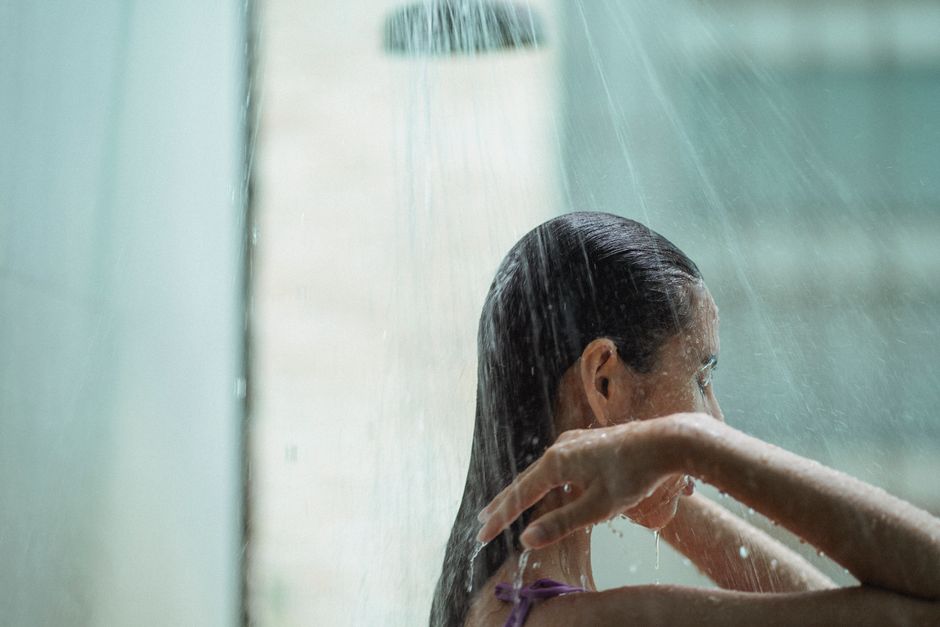
Soft water is not automatically better for your hair. It can help in some ways and cause problems in others. The effect depends on your hair type, how the water is softened, and what products you use.
Hard water contains dissolved minerals, mostly calcium and magnesium. Soft water contains far fewer of them. That single difference changes how shampoo lathers, how conditioners coat the hair, and how the hair shaft feels afterward. But “soft” is not the same as “pure,” and the way water is softened matters more than most people realize.
What Does Hard Water Actually Do to Hair?
Hard water leaves mineral deposits on the hair shaft. Calcium and magnesium ions bind to the surface of the hair and can build up over repeated washes. This is the mechanism behind the dull, stiff feeling many people notice after moving to a hard water area.
The minerals form a thin film that interferes with how conditioning ingredients attach to the hair. They can also make the cuticle — the outer layer of overlapping scales on each strand — feel rougher. A rougher cuticle reflects less light, which is one reason hard water is often linked to hair that looks less shiny.
How much this matters depends on the water’s mineral content. Water hardness is measured in grains per gallon or milligrams per liter of calcium carbonate. What counts as “hard” varies by region, and municipal water supplies across the US range widely. Someone in a soft water region may never notice a problem. Someone on well water with high mineral content may notice it within weeks.
There is no established threshold at which hair damage from hard water begins. The relationship is gradual, not a switch that flips.
How Does Softened Water Change the Way Hair Feels?
Softened water lathers more easily. That is the most consistent and noticeable difference. Soap and shampoo form suds more readily because there are fewer minerals competing with the surfactants — the cleaning agents — in the product.
Less mineral buildup means conditioner can do its job more effectively. Hair often feels smoother and is easier to detangle. For people who have struggled with hard water for years, the change can feel significant.
But there is a catch that gets left out of most conversations. Most “soft water” in American homes is not naturally soft. It is hard water that has passed through an ion-exchange water softener. That process removes calcium and magnesium and replaces them with sodium or potassium.
That distinction matters. You are not removing minerals so much as swapping one set for another.
Does Softened Water Leave Residue on Hair?
Yes, it can. This is the part of the soft water story that rarely gets told.
Ion-exchange softeners replace calcium and magnesium with sodium. When you wash with sodium-rich water, a small amount of that sodium can remain on the hair. Some people describe a slick, weighed-down, or even slightly greasy feeling that is hard to rinse away. Others notice their hair seems to get dirty faster.
This is more likely with very soft water or with softeners set to a high regeneration level. It is also more noticeable on fine hair, which has less volume to hide residue.
The effect is not universal. Many people use softened water for years with no complaints at all. But if your hair feels limp and coated after a switch to soft water, mineral replacement is a reasonable place to look.
Potassium-based softeners, which some systems use instead of sodium, may produce a different feel. There is not much published research comparing how hair responds to sodium-based versus potassium-based softened water. Most of what is known comes from consumer experience and product testing rather than controlled clinical studies.





Is Soft Water Really Better For Your Hair Than Hard Water?
For most people, soft water is gentler on hair than very hard water. That is the general direction of the evidence and the experience of most people who make the switch. Less mineral buildup means less roughness, better conditioner performance, and easier detangling.
But “better than hard water” is not the same as “ideal for hair.” Softened water brings its own trade-offs — mainly the sodium residue issue described above. And naturally soft water, which is low in all minerals rather than high in sodium, behaves differently again.
There is no large body of controlled research directly comparing hair outcomes in hard versus softened water over time. Most claims in this space come from product manufacturers, salon experience, and individual reports. That does not make them wrong, but it does mean the evidence is not as strong as the confident marketing suggests.
What is well established: water chemistry affects how hair products perform. What is less established: how much that translates into measurable long-term differences in hair health for the average person.
What About People With Color-Treated or Damaged Hair?
Hair that has been bleached, colored, or chemically straightened tends to be more porous. A more porous hair shaft absorbs and holds onto minerals more readily. That means hard water buildup can be more noticeable on damaged or color-treated hair.
Softened water may help here by reducing mineral deposits. But the sodium in softened water can also affect how color molecules sit in the hair over time. Some colorists report that color fades differently in soft water versus hard water areas. The evidence for this is largely anecdotal.
If you have color-treated hair and are considering a water softener, it is worth talking to your stylist about what they have seen in your area. Local water chemistry varies enough that general advice has limited value.
Do Water Softeners Remove Everything That Affects Hair?
No. Ion-exchange softeners target calcium and magnesium specifically. They do not remove chlorine, chloramine, iron, copper, or other dissolved substances that can also affect hair.
Chlorine is a common concern for hair, particularly for people who swim or shower frequently. It can strip natural oils and make hair feel dry. Standard water softeners do not address it. Carbon filtration or a dedicated shower filter is what removes chlorine.
Iron is another one. In some well water supplies, iron leaves rust-colored stains and can make hair feel rough. Softeners handle some iron, but high levels require different treatment.
So if your goal is truly better water for hair, a softener alone may not get you there. You may need to address multiple water quality issues.
What Can You Do If You Are Not Sure About Your Water?
Test it first. Water test kits are widely available and inexpensive. They tell you the hardness level and often flag other issues like chlorine or iron. Without knowing what is in your water, you are guessing.
If your water is very hard and you are noticing dullness, stiffness, or poor product performance, a softener may help. If your water is already moderately soft, adding a softener may not change much — and could introduce the sodium residue problem.
Some practical steps that do not require a whole-house system:
- Use a clarifying shampoo occasionally to remove mineral buildup. These are formulated to strip deposits that regular shampoo leaves behind.
- Consider a shower filter if chlorine is a concern. Look for one that specifically states it removes chlorine or chloramine.
- Adjust your conditioner if you switch to soft water. You may need less, not more, because it will spread more easily.
- Rinse with cooler water. Heat can worsen the feel of residue on hair regardless of water type.
None of these are proven fixes in controlled trials. They are reasonable steps based on how water chemistry and hair interact.
Frequently Asked Questions
Does soft water make hair softer?
Soft water often makes hair feel smoother because there is less mineral buildup on the shaft. But softened water can leave sodium residue that makes some hair feel limp or coated.
Is hard water bad for your hair?
Hard water leaves calcium and magnesium deposits that can make hair feel rough and interfere with conditioner. Whether it causes lasting damage depends on your water’s mineral level and how often you wash.
Can soft water cause hair loss?
No established evidence links soft water to hair loss. Hair loss has many causes, and water hardness is not recognized as one of them in clinical literature.
Do I need a water softener for my hair?
Not necessarily. If your water is very hard and you notice dullness or poor product performance, a softener may help. If your water is already moderately soft, the benefit is likely small.
