
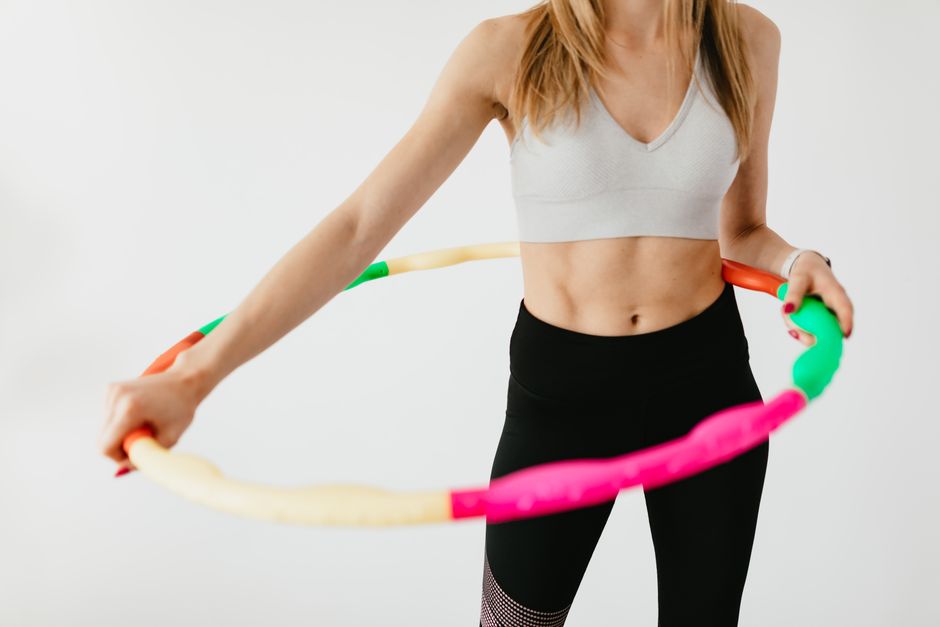
Hula hooping can burn a meaningful number of calories and raise your heart rate, so it can support weight loss as part of an overall calorie deficit. But it cannot target belly fat. No exercise can. Where hula hooping may have an edge is that it works your core muscles continuously, which can improve core strength and waist circumference over time when combined with a reduced-calorie diet.
Hula hooping is one of the few forms of exercise that feels like play. That matters, because the best workout is the one a person actually keeps doing. Below is what the research shows, what it does not show, and how to think about hooping if your goal is losing weight or changing your midsection.
Is Hula Hooping Good For Weight Loss And Belly Fat?
Yes for weight loss, no for spot reduction. Those are two separate questions, and conflating them is where most confusion about hula hooping comes from.
Weight loss happens when you burn more calories than you take in. Hula hooping burns calories, so it contributes to that equation. Belly fat loss is governed by the same overall energy balance, not by which muscles you happen to be moving. Your body does not pull fat from the area you are exercising. It draws on fat stores systemically, and where you lose fat first is largely determined by genetics, sex, and hormones.
This is not a hula hoop problem. It applies equally to crunches, planks, and every abdominal machine in every gym. The idea that working a muscle burns the fat sitting on top of it is one of the most durable myths in fitness.
What hooping does offer is a genuine core workout. Keeping the hoop spinning requires continuous, small contractions of the abdominal muscles, obliques, and lower back. That can build core strength and endurance. A stronger core changes how your midsection looks and functions, even though it is not the same thing as losing fat there.
How Many Calories Does Hula Hooping Actually Burn?
Hula hooping burns roughly 4 to 7 calories per minute for most adults, depending on body weight and how vigorously you hoop. That puts it in the moderate-intensity range, comparable to brisk walking or light cycling.
To put that in context, a 30-minute session might burn somewhere in the range of 120 to 210 calories. That is a real contribution to a day’s energy expenditure, but it is not enormous. A single candy bar can erase it.
Intensity is the variable you control. A slow, steady hoop while watching television sits at the low end. Faster hooping, interval-style bursts, or hooping with weighted hoops pushes the number up. So does body weight — a heavier person burns more calories doing the same movement.
Some small studies have measured heart rate during hooping and found it reaches moderate-intensity territory, which is the range public health guidelines point to for cardiovascular benefit. That is a reasonable finding. But be cautious about any specific calorie figure you see online. Calorie burn varies too much between individuals for a single number to be reliable.
Does Hula Hooping Target Belly Fat?
No. Hula hooping does not selectively burn fat from your waist, and no exercise does.
Here is the physiology. Fat is stored in adipose tissue throughout the body. When you are in a calorie deficit, hormones signal fat cells to release stored energy, and that release happens across your fat stores rather than at the specific site you are working. Blood flow increases to exercising muscles, but that does not mean fat is liberated from the tissue directly above them.
Where you lose fat first is mostly a matter of biology you did not choose. Men often lose from the abdomen later than from other areas. Women’s patterns shift with age and hormonal changes. Two people doing identical workouts can see very different changes in their waistlines.
What hooping can do is strengthen the muscles underneath. If you build the obliques and deeper abdominal muscles while also losing overall fat, your midsection can look firmer and more defined. The muscle change is real. The fat loss is coming from your overall calorie balance, not from the hoop.




How Does Hula Hooping Compare To Other Cardio?
Hula hooping holds its own against common cardio options for calorie burn, but it does not beat them by a wide margin. The bigger difference is in what you will stick with.
The comparison below reflects general intensity ranges. Actual calorie burn depends on your body weight, effort level, and fitness.
| Activity | Approximate Intensity | Notes |
|---|---|---|
| Hula hooping | Moderate | Core-focused, low impact, easy to do at home |
| Brisk walking | Moderate | Very accessible, low injury risk |
| Jogging | Vigorous | Higher calorie burn, more joint stress |
| Stationary cycling | Moderate to vigorous | Adjustable intensity, low impact |
| Swimming | Moderate to vigorous | Full body, low impact, needs pool access |
Jogging and vigorous cycling generally burn more calories per minute than hooping. Walking burns less. Hooping sits comfortably in the middle, with the added benefit of core engagement and no need for special facilities.
The activity you will actually do three or four times a week beats the one you dread. That is not a motivational slogan — it is the practical reality of how adherence shapes outcomes. If hooping is fun enough to keep you moving, it is doing more for your goals than a treadmill you avoid.
Can Hula Hooping Help With Waist Circumference?
Some research suggests regular hula hooping may reduce waist circumference, but the effect appears modest and the studies are small. It is worth understanding what those studies can and cannot tell us.
Waist circumference is a useful measure because it reflects abdominal fat, including the visceral fat around your organs. Visceral fat is the type most associated with metabolic risk. Reducing it matters more for health than how your stomach looks.
Small trials have reported reductions in waist circumference among participants who hooped regularly for several weeks, often alongside other lifestyle changes. The problem is that these studies tend to be short, involve few people, and sometimes lack a strong comparison group. That limits how much weight we can put on them.
What we can say with confidence is that any waist reduction from hooping is most likely coming from overall fat loss driven by a calorie deficit, with core strengthening as a secondary benefit. Hooping is a reasonable way to add activity to your week. It is not a targeted fat-burning tool.
Is Hula Hooping Safe For Everyone?
Hula hooping is generally low impact and well tolerated, but it is not right for everyone, and beginners should ease in.
The main risks are muscle soreness and, less commonly, back strain. The motion loads the lower back and obliques through repeated rotation. Starting with long sessions before your muscles are conditioned is a common way to end up sore for days.
Some people should check with a clinician before starting:
- Anyone with a recent back injury or chronic lower back pain
- People with hip or knee problems
- Anyone who is pregnant or recently postpartum
- People with a history of hernia
- Anyone recovering from abdominal surgery
Weighted hoops deserve a specific caution. A heavier hoop is easier to keep spinning because it carries more momentum, which is why they are marketed to beginners. But the extra weight also means more force through your spine and soft tissue with every rotation. Some clinicians advise against heavy weighted hoops entirely, and there is no strong evidence that they produce better results than a standard hoop. A lighter, larger hoop is usually the better choice for learning.
Start with short sessions — a few minutes at a time — and build up. Stop if you feel sharp pain rather than muscle fatigue.
How Should You Use Hula Hooping For Weight Loss?
Use hooping as one part of a plan, not as the plan. That framing is not a hedge. It reflects how weight loss actually works.
Weight loss requires a calorie deficit. Exercise helps create one, but it is generally easier to create a meaningful deficit through diet than through exercise alone, because it takes a lot of movement to burn off a modest amount of food. The most effective approach combines both.
Public health guidelines generally recommend at least 150 minutes of moderate-intensity aerobic activity per week for adults, plus muscle-strengthening activity on two or more days. Hula hooping can count toward the aerobic portion. It does not replace strength training, which helps preserve muscle mass during weight loss.
A practical structure might look like this:
- Hoop for 20 to 30 minutes several days a week, building up gradually
- Add strength training twice a week for your whole body, not just your core
- Keep an eye on overall calorie intake, since that drives the deficit
- Track waist measurements and how clothes fit, not just the scale
One clarification worth making: the scale can stall while your body composition improves. If you are building muscle and losing fat at similar rates, weight may hold steady even as your waist shrinks. That is why waist measurements and progress photos often tell a fuller story than weight alone.
None of this makes hooping a lesser choice. It is accessible, inexpensive, low impact, and genuinely enjoyable for many people. Those qualities make it easier to sustain, and sustainability is what separates a workout that works from one that does not.
Frequently Asked Questions
Does hula hooping burn belly fat?
No. Hula hooping cannot burn fat from your belly specifically, because the body releases stored fat systemically rather than from the area being exercised. It can strengthen your core muscles and contribute to overall fat loss when paired with a calorie deficit.
How long do you need to hula hoop to lose weight?
There is no set duration that guarantees weight loss, since it depends on your calorie intake, body weight, and total activity. Public health guidelines generally recommend at least 150 minutes of moderate-intensity activity per week, which hooping can contribute to.
Is a weighted hula hoop better for weight loss?
No evidence shows weighted hoops produce better weight loss results than standard hoops. They are easier to keep spinning but place more force on your spine and soft tissue, and some clinicians advise against them.
Can hula hooping replace other exercise?
It can cover the aerobic portion of a fitness routine but does not replace strength training, which helps preserve muscle during weight loss. A mix of both is more effective than hooping alone.
